Last updated October 31, 2026
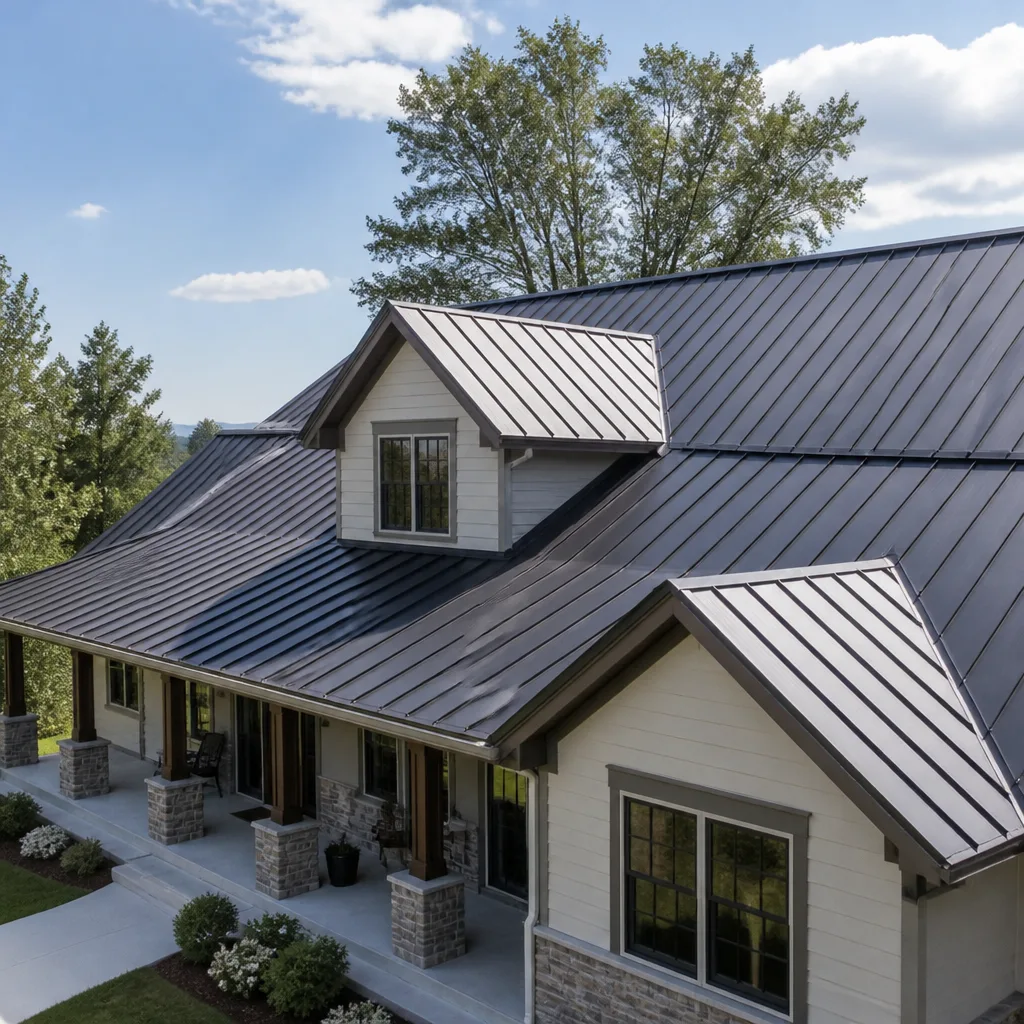 Metal roofing
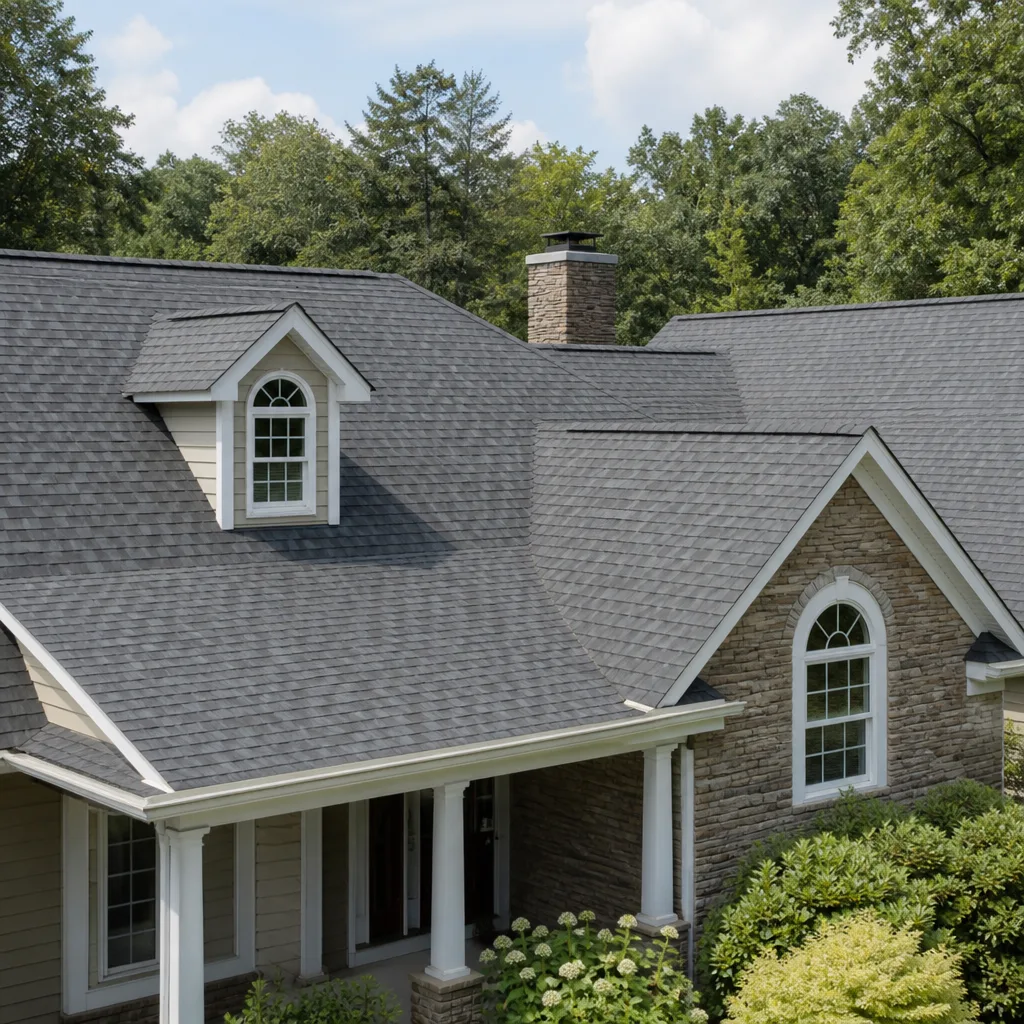 Architectural shingles
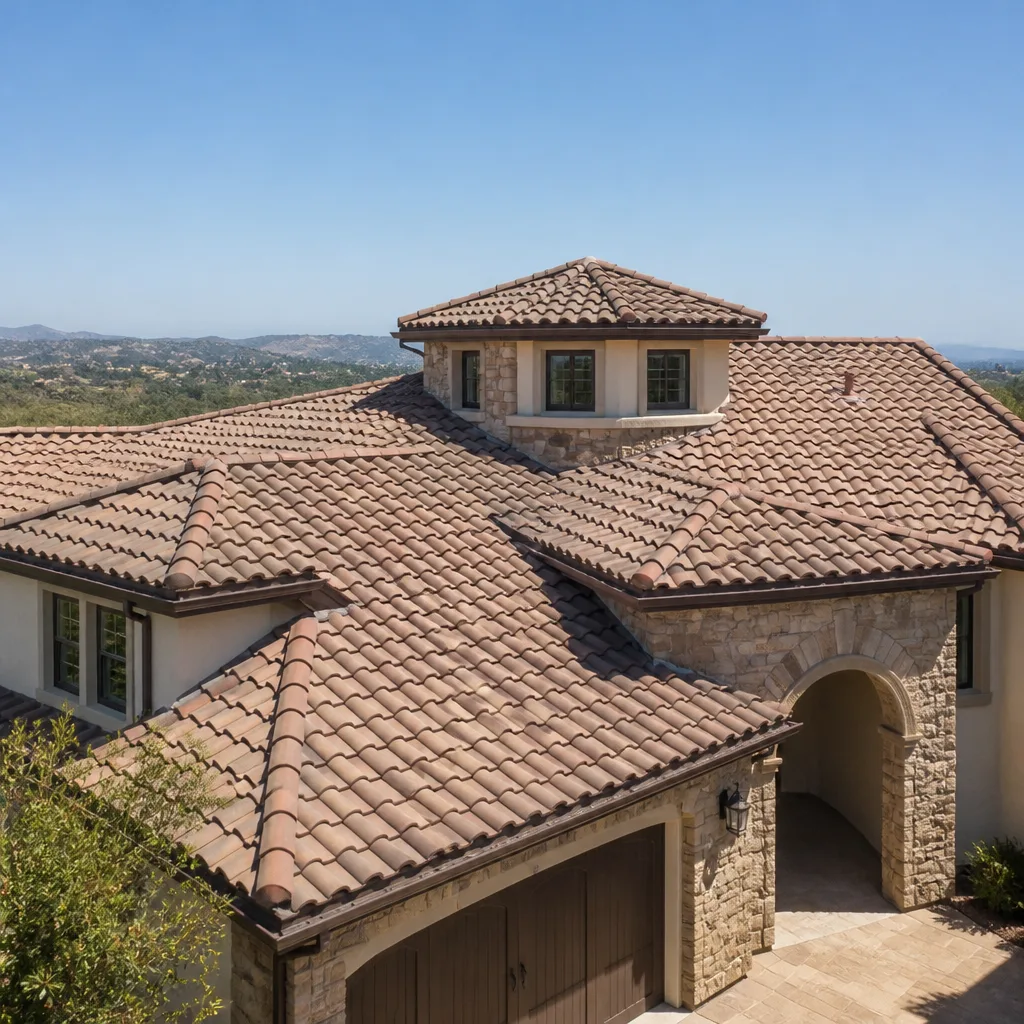 Tile roofing
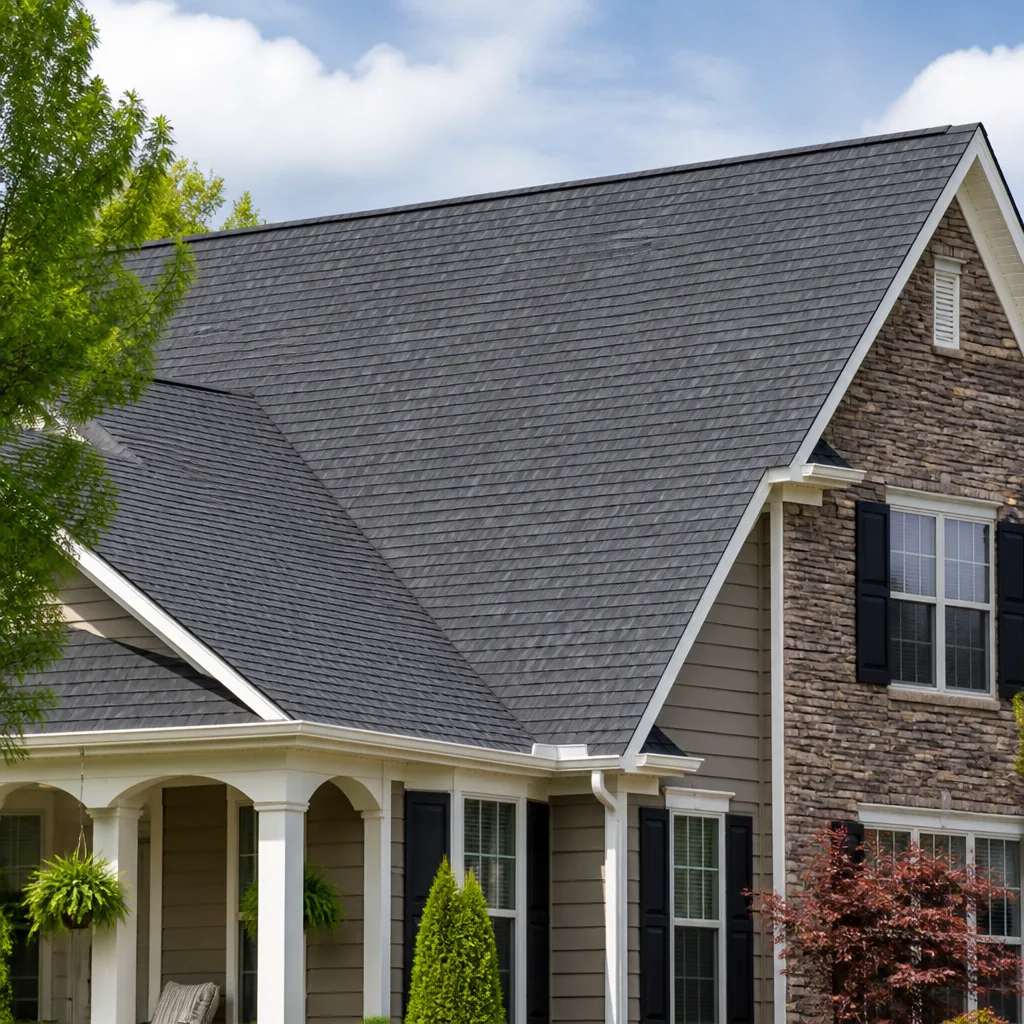 GAF
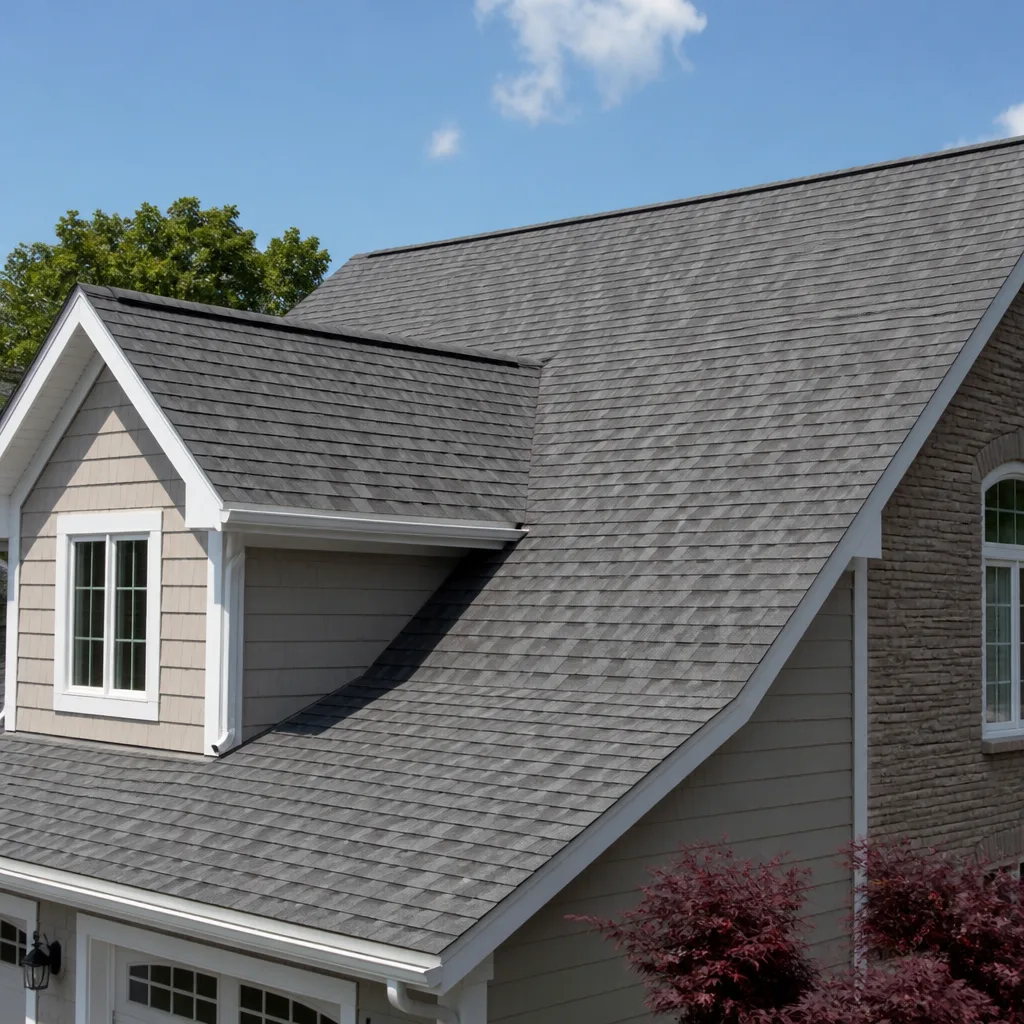 Owens Corning
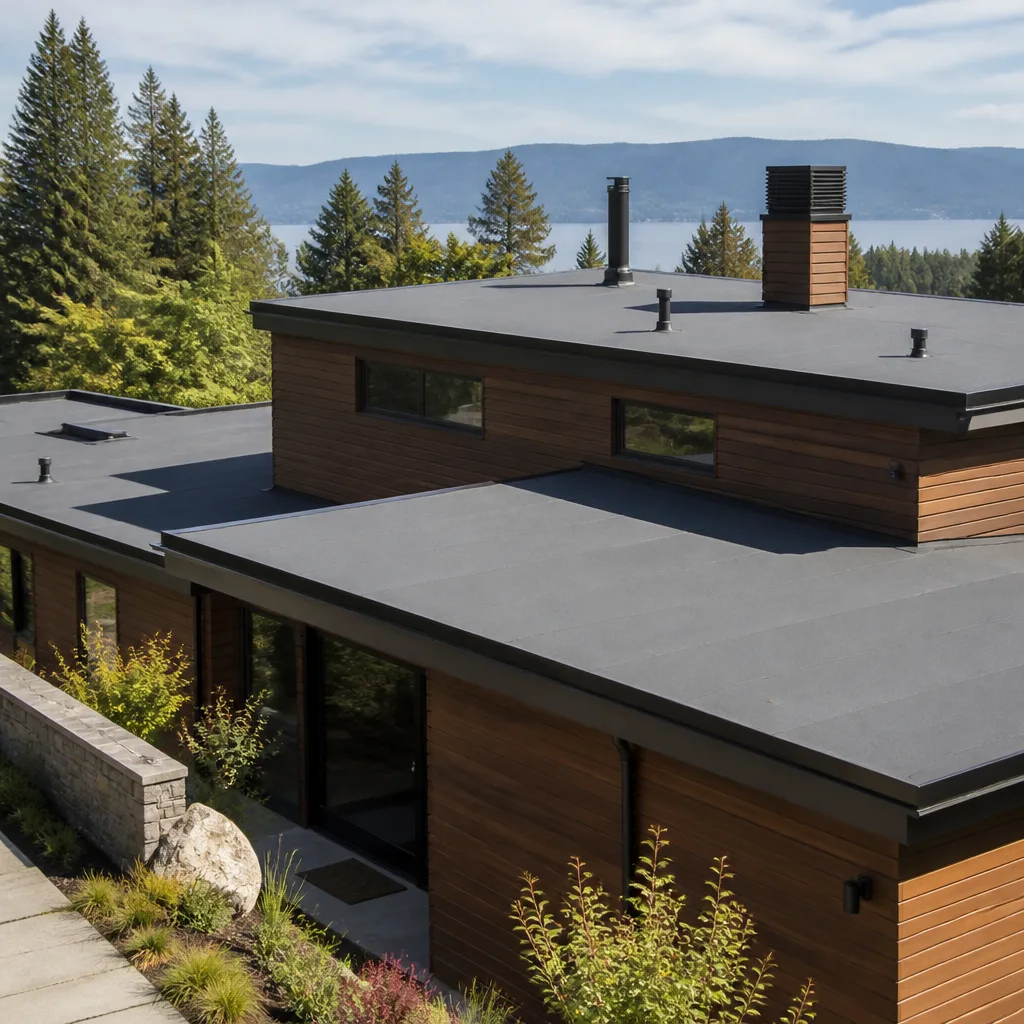 Flat & low-slope
Free roof inspection with deck photos before we talk money - GAF and Owens Corning certified installation
How to Hire a Roofing Contractor in Buena Park: A Step-by-Step Guide
A contractor can be fully licensed, bonded, insured, and five-star reviewed and still install your roof in a way that voids the manufacturer warranty on day one. That’s the uncomfortable truth most hiring guides never mention, because they stop at the surface-level screening that filters out obvious fraud but misses the practices that separate competent roofers from mediocre ones who happen to pass a background check. In Buena Park, where summer heat bakes asphalt shingles at 90-plus degrees and winter rain tests every flashing detail, installation errors don’t stay hidden for long. This guide walks you through the screening process that actually matters: the questions to ask, the documentation to verify, and the red flags that signal a roofer who looks legitimate but doesn’t know what a proper installation requires.
Quick Answer
To hire a roofing contractor in Buena Park, verify their CSLB license classification is C-39 (roofing, not general building), confirm they hold manufacturer certifications from brands like GAF or CertainTeed if their warranty matters to you, require a written proposal with line-item detail, ask past customers about cleanup and unexpected costs rather than just overall satisfaction, and cap your deposit at California’s legal maximum of 10% or $1,000, whichever is less. A legitimate roofer will welcome these checks; a contractor who resists any of them is telling you something important.
Styles & brands we work with
Table of Contents
- Step 1: Verify the License Beyond the Number
- Step 2: Ask About Manufacturer Certifications
- Step 3: Read the Proposal Like an Auditor
- Step 4: Interview References Without Star Ratings
- Step 5: Negotiate Payment Terms That Protect You
- Step 6: Understand What the Warranty Actually Covers
- Step 7: Recognize the Red Flags You Can’t Unsee
- Common Mistakes to Avoid
Step 1: Verify the License Beyond the Number
Every hiring guide says to ask for a license number. That advice is nearly useless on its own, because a license number only proves the contractor passed a background check and paid a fee. It doesn’t tell you whether they’re licensed for the work you need. In California, the Contractors State License Board (CSLB) issues licenses by classification. A C-39 classification is specifically for roofing contractors. A general building contractor with a B license can legally pull permits and even install a roof, but roofing isn’t their specialty, and their knowledge of manufacturer installation specs is often thinner than a dedicated roofer’s.
Here’s what actually matters when you verify a license in Buena Park:
- Go to the CSLB website and look up the license number. Don’t rely on the contractor’s printed card or website claim. The database is free and takes about two minutes to search.
- Confirm the classification is C-39. If it says B (general building), ask why they’re doing roofing work instead of a specialist. There are legitimate answers to that question, but you should hear one.
- Check for disciplinary history. The CSLB records license suspensions, revocations, and civil judgments. A contractor with a history of complaints about abandoned projects or deposit disputes should be crossed off your list, no matter how many stars their reviews show.
- Check workers’ compensation coverage. California requires roofing contractors to carry workers’ comp. If a worker falls off your roof and the contractor doesn’t have coverage, that claim can come back to you through your homeowner’s insurance.
Buena Park sits in Orange County, and the CSLB serves the entire state, so the same verification process applies whether you’re hiring a contractor based in Buena Park or one driving in from Anaheim or Fullerton. We recommend running this check before you even schedule an estimate, because it takes five minutes and eliminates the worst actors immediately. A roofing contractor who passes the classification and history check is worth the time to interview further.
Step 2: Ask About Manufacturer Certifications
Most homeowners don’t realize that shingle manufacturers like GAF, CertainTeed, and Owens Corning operate certification programs for installers. These programs aren’t marketing gimmicks. In many cases, the manufacturer’s strongest warranty coverage, especially the non-prorated coverage on materials and labor for the first several years, is only available when a certified installer does the work. An uncertified roofer can buy the same shingles and install them, but the warranty that protects you against defects and installation errors may be substantially weaker or entirely void.
Here’s how to confirm a contractor actually holds the certification they claim:
- Ask for the certification ID number. GAF, CertainTeed, and Tamko each maintain public directories where you can verify a contractor’s status. A legitimate certified installer will give you their number without hesitation.
- Don’t settle for “we use their products.” Buying shingles from a supply house is not the same as holding a manufacturer certification. The certification process involves training, ongoing education, and regular inspection of completed installations.
- Ask which specific certification level they hold. GAF has Master Elite, CertainTeed has SELECT ShingleMaster, and Tamko has Pro Certified or Master Craftsman. Each program has different requirements and different warranty implications. A contractor who can explain the difference between levels knows their material.
- Be wary of contractors who push one brand only. A roofer who installs exclusively GAF isn’t wrong, but they’re limited. A roofer who works with seven major manufacturers, including CertainTeed, Tamko, and Boral, can match your existing roof more accurately for partial repairs and give you a real choice for replacements. That flexibility matters more than most homeowners realize.
In Buena Park’s climate, material choice affects how a roof performs over a decade or more. Asphalt shingles from CertainTeed and Tamko have different ratings for wind resistance, algae growth, and heat reflection. A contractor who can explain those differences and recommend a material based on your home’s exposure rather than their inventory levels is doing the work of a specialist. A contractor who says “we only use one brand because it’s the best” is making your choice for you.
Step 3: Read the Proposal Like an Auditor
The difference between a legitimately competent Roofer and a mediocre one shows up most clearly in the written proposal. A vague bid says “remove existing roof, install new shingles, clean up.” A legitimate proposal breaks the work into specific line items that force the contractor to acknowledge exactly what they’re doing and what they’re not doing. This matters because the details they leave out of the proposal are often the details they leave out of the roof.
Here’s what a serious roofing proposal from a Buena Park contractor should include:
- Underlayment specification. Not just “underlayment” but the specific product and class. Synthetic underlayment versus felt, and the specific ASTM rating. In Orange County, where winter rains test roofs without snow loading, the underlayment choice affects leak resistance directly.
- Flashing replacement scope. Does the proposal include removing and replacing pipe boot flashings, chimney flashing, and valley metal? Or does the contractor plan to “reuse existing flashing where possible”? Reused flashing is the most common source of leaks after a reroof.
- Ventilation plan. Is the contractor calculating intake and exhaust ventilation based on attic square footage, or just matching what’s already there? Southern California attics get brutally hot in summer, and improper ventilation shortens shingle life and raises cooling bills.
- Deck assessment procedure. A line item that says “inspect roof deck and replace deteriorated sections at $X per sheet” tells you the contractor is accounting for the reality that some decking will be rotten. A proposal that doesn’t mention decking at all leaves you exposed to a mid-project change order.
- Specific materials by manufacturer and product line. “GAF Timberline HDZ” tells you what you’re getting. “Architectural shingles” could mean anything from a premium product to a builder-grade house brand.
- Permit line item. In Buena Park, a reroof typically requires a city permit. A proposal that includes the permit cost and the contractor’s commitment to pull it, schedule the inspection, and close it out tells you they’re legitimate. A proposal that says “permit not included” or “permit available on request” tells you they’d rather work uninspected.
We’ve seen proposals in Buena Park that were three pages of detail and proposals that were one paragraph. The detailed ones come from contractors who have thought through the job. The one-paragraph ones come from contractors who plan to figure it out when they show up. You can guess which roofs hold up better when the Santa Ana winds hit.
Step 4: Interview References Without Star Ratings
Every contractor can produce five-star reviews, and an entire industry exists to help them get more. Reviews tell you whether past customers were happy with the finished roof, but they rarely capture the details that predict whether you’ll be happy with your experience. That information comes from asking past customers the right questions directly. A contractor who won’t give you the phone numbers of two or three past customers within 15 minutes of Buena Park is hiding something.
Here are the questions to ask a past customer that reviews never answer:
- “Who was on your roof every day?” If the answer is “the owner or a dedicated project lead,” that’s a good sign. If the answer is “different crews all the time,” that’s a signal of subcontracting, which affects quality control.
- “Did the crew clean up every day or just at the end?” Roofing generates thousands of nails. A crew that cleans up magnetically each day protects your tires, your kids’ feet, and your neighbor’s driveway. A crew that cleans only at the end leaves nails embedded in the grass where magnets don’t reach.
- “Were there any costs that surprised you, and how did the contractor handle them?” Some unexpected costs are legitimate, like discovering rotted decking under the old shingles. The telling detail is whether the contractor explained the situation, gave a written change order, and gave the customer the choice before proceeding. If the past customer says “they just added it to the bill at the end,” that’s a dealbreaker.
- “Has anything failed since the job was completed, and how fast did they come back to fix it?” A roofer who hasn’t had a single callback probably hasn’t done many roofs. The question is how they respond when something does go wrong. “They came back the next day” is the answer you want.
- “Would you hire them again for the next roof?” This is the only question that really matters, because it forces the past customer to compress everything they know into one decision. Listen for qualifiers. “Yes, but only if I could be home during the job” is not the same as an unqualified yes.
You can also look for workmanship in the wild. Drive around Buena Park neighborhoods and look at recently reroofed homes. A clean roof line, straight shingle courses, and consistent overhang at the eaves tell you the installer cared about the details. Wavy shingle lines, visible nails in odd places, and mismatched drip edge tell you the opposite. A Roof Inspection in Buena Park on your own property will tell you about your roof’s condition, but looking at the contractor’s past work tells you about their standards.
Step 5: Negotiate Payment Terms That Protect You
California law is unusually protective of homeowners when it comes to contractor deposits. Under state law, a contractor cannot demand more than 10% of the total project cost or $1,000, whichever is less, as a down payment before work begins. Any contractor in Buena Park who asks for more than that upfront is either ignorant of the law or deliberately violating it, and neither is a quality you want on your roof.
Beyond the legal maximum, the payment schedule itself is a window into the contractor’s business. Here’s what different schedules signal:
- 10% deposit, then progress payments tied to inspection milestones. This is the structure of a contractor with a healthy business. They have trade accounts with suppliers so they don’t need your cash to buy materials, and they’re confident enough in their work to wait for payment until you’ve seen progress.
- Large upfront payment “for materials.” A contractor who needs 50% or more before they start is telling you they don’t have the cash flow to float a materials purchase for the week or two between ordering and installation. In roofing, materials are typically ordered within a day or two of installation, so the float is small. A contractor who can’t cover that float is one missed payment away from insolvency.
- Multiple progress payments with clear triggers. A legitimate schedule might look like: 10% at contract signing, 40% after tear-off and deck inspection, 40% after installation and before final inspection, 10% after city inspection passes and final cleanup is complete. Each trigger is tied to something you can verify by looking at the roof.
- No written payment schedule at all. This is a red flag so big you can see it from the 91 freeway. Every legitimate roofing proposal includes a payment schedule. If it’s not there, the contractor is planning to negotiate payment terms after they have your roof torn off, and that’s not a negotiation, it’s a hostage situation.
For a Roof Repair in Buena Park, the scope is smaller and payment is often split between a small deposit and the balance on completion. For a Roof Replacement in Buena Park, the schedule above applies in full. Either way, keep a written record of every payment, and never pay in cash without a receipt.
Step 6: Understand What the Warranty Actually Covers
Two different warranties protect a new roof, and most homeowners can’t tell them apart until they’re reading the fine print after a leak has already occurred. The manufacturer’s warranty covers the shingles themselves, and the contractor’s workmanship warranty covers the installation. They work together, but they are not the same thing, and the failure of one does not automatically trigger the other.
Here’s what to understand before you sign:
- Manufacturer warranties cover material defects, not installation errors. If a GAF shingle fails because of a manufacturing flaw, the manufacturer’s warranty covers the replacement shingle. It does not cover the labor to install it, and it definitely does not cover damage caused by the contractor installing the shingle incorrectly in the first place.
- The strongest manufacturer warranties require certified installers. CertainTeed’s strongest coverage, including the non-prorated labor coverage on qualified installations, requires a SELECT ShingleMaster. Tamko’s best coverage requires a Pro Certified or Master Craftsman installer. If your contractor isn’t certified, you’re getting a weaker warranty even if the shingles are identical.
- Workmanship warranties are only as good as the contractor’s lifespan. A 10-year workmanship warranty from a company that goes out of business in year three is worthless. Look for a contractor with enough history in Buena Park that they’ll still be around to honor the warranty when water shows up in the ceiling.
- Registration matters. Some manufacturer warranties require registration within a specific window after installation. A good contractor will handle the registration paperwork and give you a copy of the confirmation. A contractor who says “don’t worry about it” is leaving that window open to close without you.
- Transferability affects resale. If you might sell your Buena Park home in the next decade, ask whether the warranty transfers to the new owner. Some do, some don’t, and some transfer with restrictions that make the warranty worth less than it appears.
Contractors who work with multiple manufacturers, including Boral and CertainTeed, can often provide a side-by-side comparison of warranty terms between brands. That’s the kind of information that helps you make a real decision instead of accepting whatever warranty happens to come with the shingles the contractor happens to stock.
Step 7: Recognize the Red Flags You Can’t Unsee
By the time you’ve verified a license, checked certifications, read a proposal, and interviewed references, you’ll have eliminated most of the bad actors. But some red flags only appear during the estimating process itself, and recognizing them in the moment can save you from a contractor who is competent on paper and risky in practice. These are the patterns we’ve seen cause problems for Buena Park homeowners over the years.
- The estimate is free, but the inspection is a sales pitch. A legitimate roofer spends 45 minutes to an hour on your roof and in your attic, then gives you a written report of what they found and what they recommend. A salesperson dressed as a roofer spends 15 minutes, never opens the attic hatch, and then gives you a binder full of reasons why you need a full Roof Replacement in Buena Park immediately. One of these people inspected your roof. The other inspected your credit limit.
- The bid expires tomorrow. Time pressure is universally a sales tactic to prevent you from getting competing bids. A legitimate roofer knows that a thoughtful homeowner takes a week or more to decide, and their price doesn’t change that fast. If the urgency is real, the roof problem is visible from the street, not hidden in a sales pitch.
- The contractor won’t go in the attic. Half the information about your roof’s condition lives in the attic: water stains, daylight through the decking, ventilation problems, and rusted fasteners. A contractor who refuses to access the attic during the estimate is deliberately limiting what they can see, either because they don’t know what to look for or because they’d rather not find problems that complicate their sales pitch.
- The proposal includes “other” as a line item. No serious contractor writes a proposal with a vague “other” category. Every dollar of the price should be attached to a specific piece of work. “Other” is where change orders live.
- The contractor can’t name their material suppliers. Ask where they buy their shingles and underlayment. A contractor who names a specific local supply house is established in the area. A contractor who gives you a vague answer or says “we have our sources” might be buying seconds, overstock, or product from out of state that doesn’t meet California fire codes.
None of these red flags is fatal on its own, but two or three of them together tell you everything you need to know. The contractor is optimizing for the sale, not the roof. In our experience, the best roofers in Buena Park are the ones who seem almost boring during the estimate because they’re spending their energy on the inspection, not the performance.
Common Mistakes to Avoid
- Hiring the first contractor who answers the phone. A responsive contractor is good, but responsiveness is a marketing trait, not a workmanship trait. Get at least three bids for any full replacement in Buena Park, and compare the proposals line by line, not just the bottom-line price.
- Choosing a contractor based on the lowest bid without reading the exclusions. The low bid is almost always missing something: a permit, a decking allowance, proper underlayment, or cleanup in the price. When that item appears as a change order mid-project, the low bid becomes the high bid.
- Skipping the attic inspection. If you hire a contractor without ever having them look in your attic, you’re hiring someone who hasn’t seen half the roof system. Water damage, ventilation issues, and deck rot all show up in the attic long before they show up on the exterior.
- Paying in full before the city inspection passes. In Buena Park, the reroof permit requires a city inspection before the job is legally complete. Don’t release the final payment until the inspection is passed and you’ve seen the report. A contractor who wants full payment before the inspection isn’t confident the inspection will go well.
- Signing without reading the material specification line by line. “Architectural shingle” covers a huge range of products from different manufacturers at different price points. If the proposal doesn’t name the specific brand and product, you don’t know what you’re buying, and you can’t verify what was delivered.
- Ignoring the ventilation plan. Buena Park’s summer heat makes attic ventilation a performance issue, not just a building code checkbox. A contractor who doesn’t calculate ventilation needs isn’t installing a complete roof, no matter how good the shingles look from the curb.
- Letting a storm chaser put a roof on your house. After major storms, out-of-state crews follow the weather and knock on doors in Buena Park offering “insurance specials.” Some do decent work, but many are gone before the first winter rain reveals the defects. A local contractor has a reputation in the community and a phone number that still works when you need them.
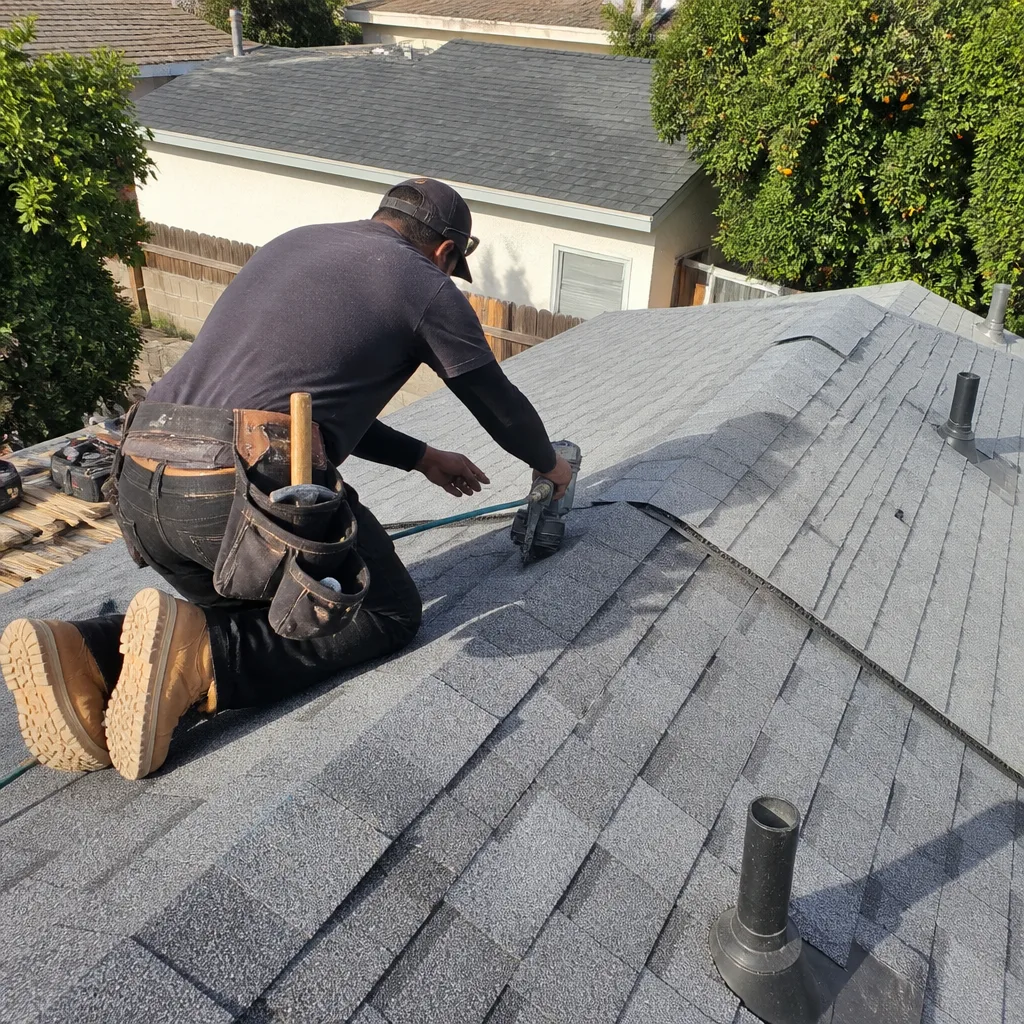
See the difference
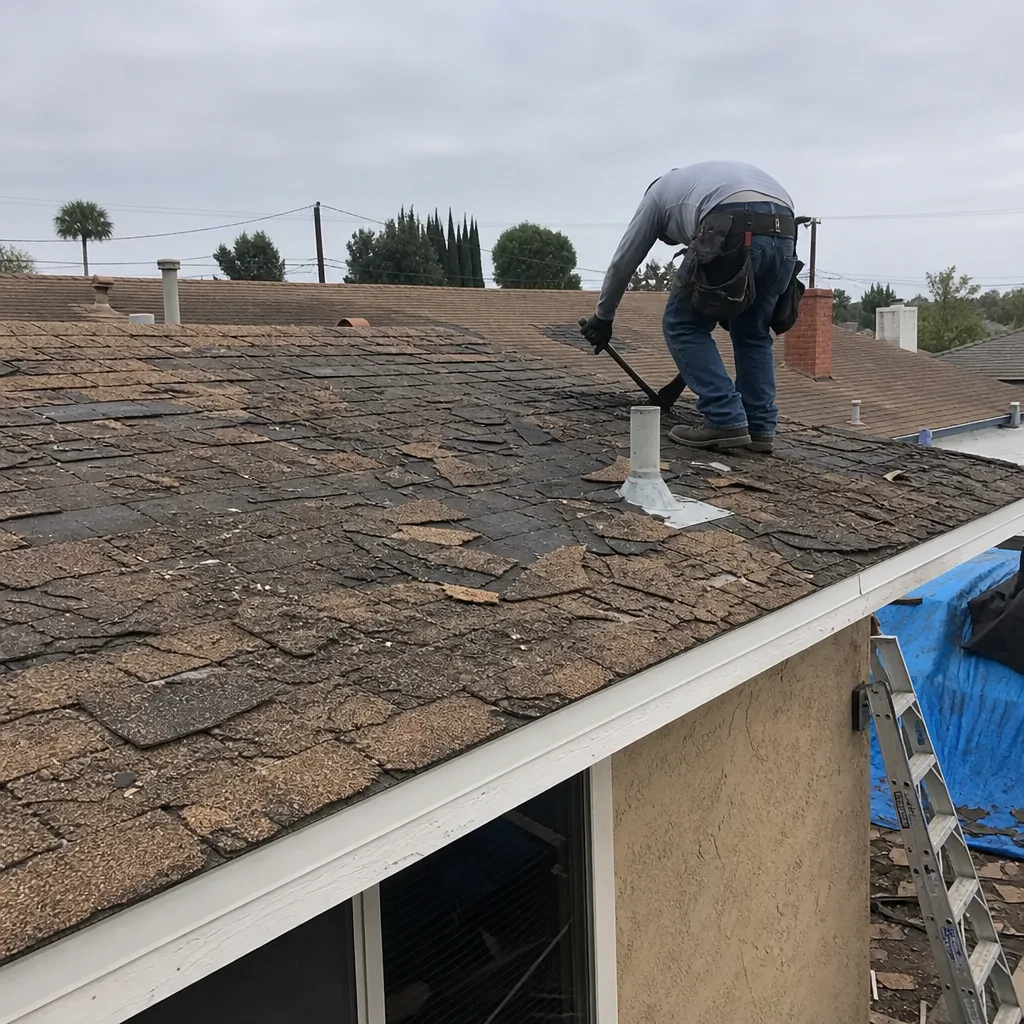 Before
 After
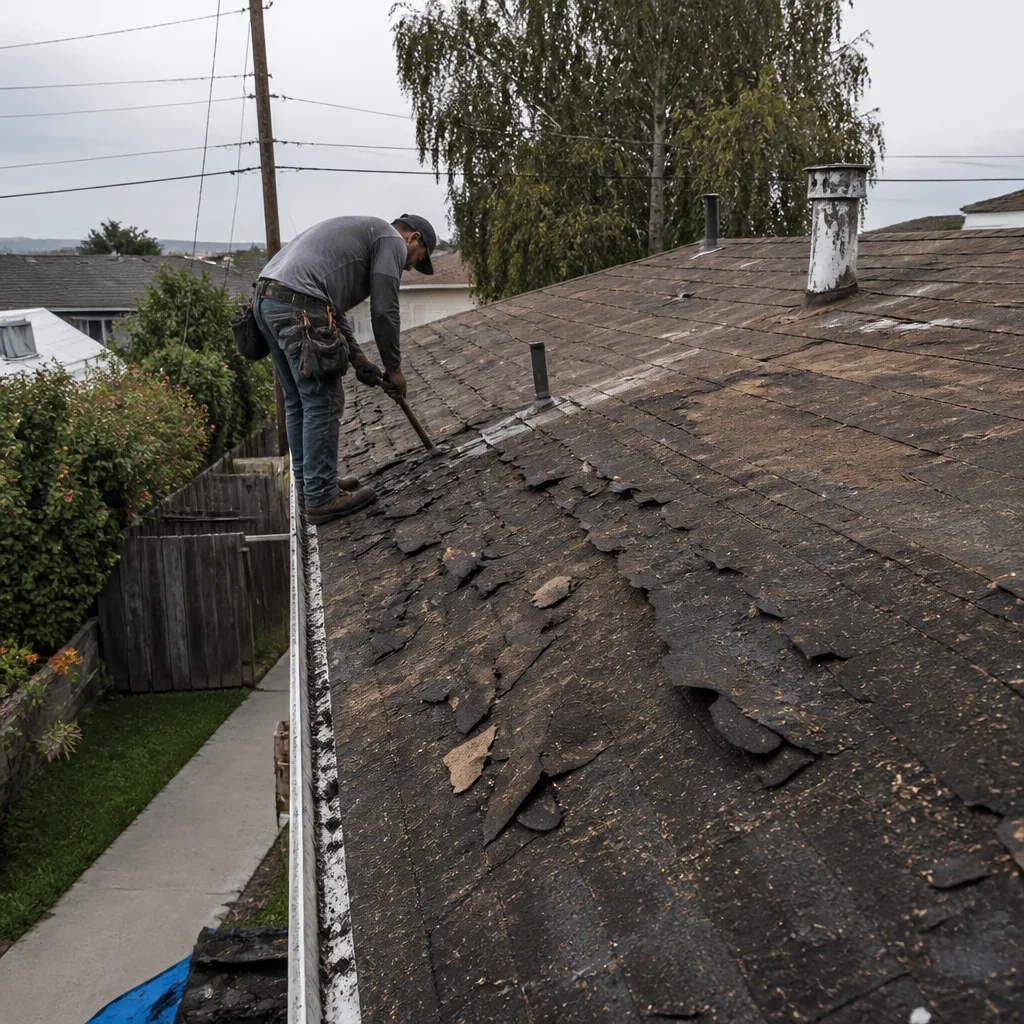 Before
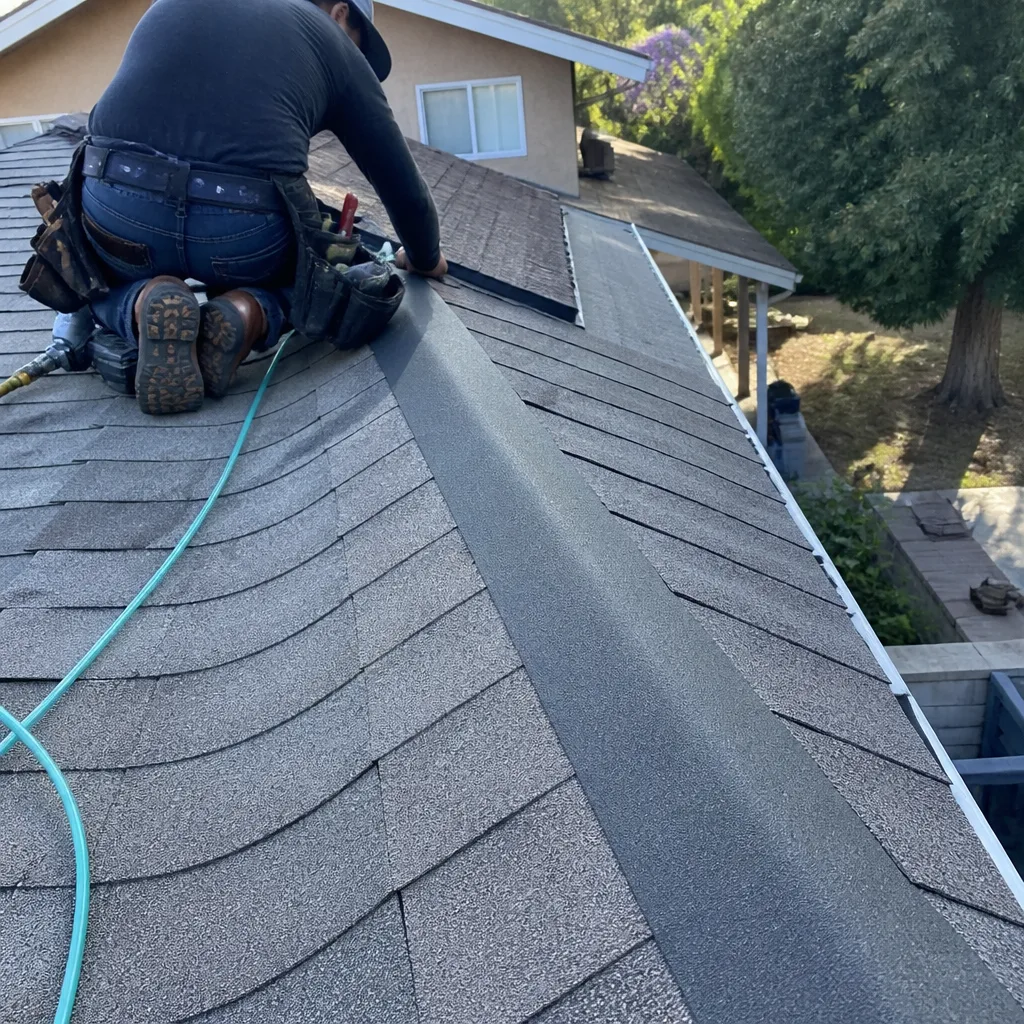 After
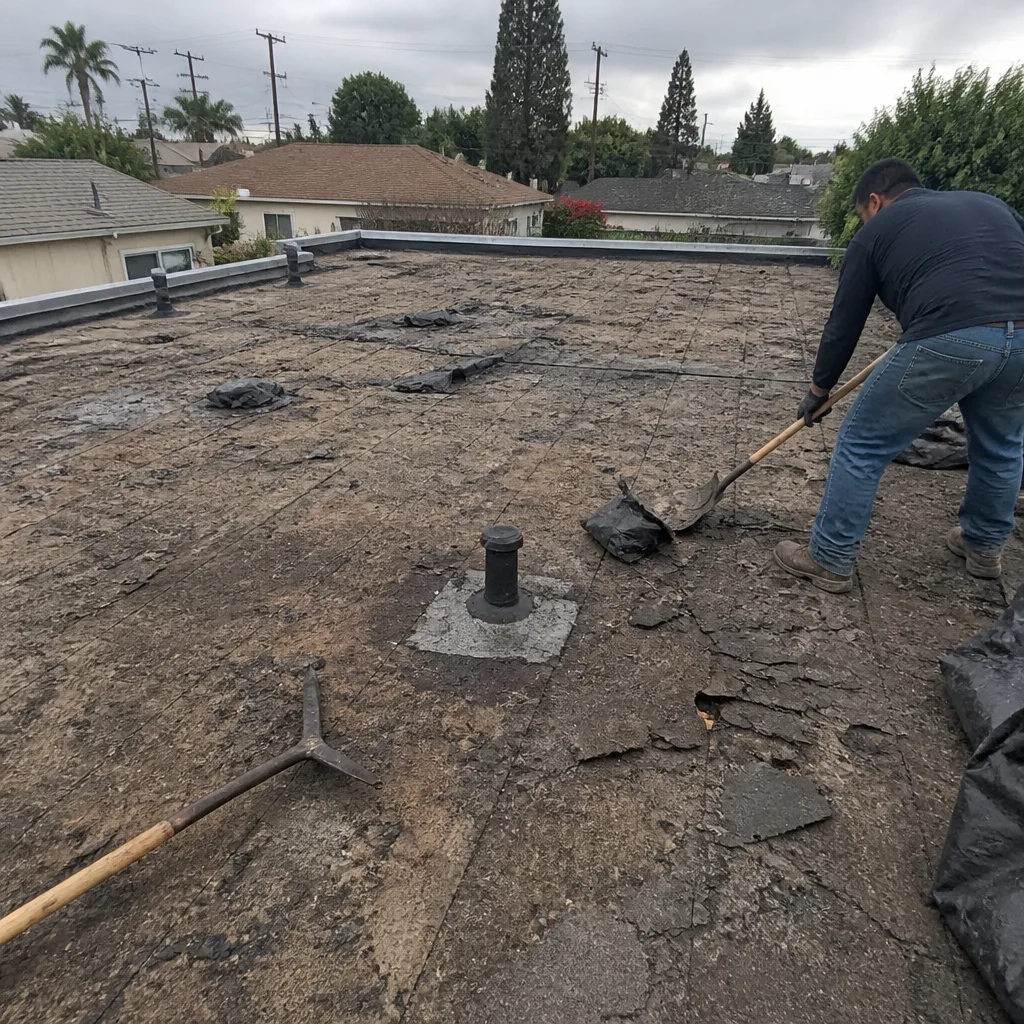 Before
 After
When to Call a Professional
Some roofing decisions can wait, and some can’t. If you see water stains on a ceiling, curling or missing shingles, granules collecting in gutters, daylight visible through the attic roof deck, or shingles that have blown into the yard after a Santa Ana wind event, don’t wait for the problem to get worse. A small leak in August becomes a ceiling collapse by the first heavy rain in December, and a few missing shingles become a full deck replacement once water has been sitting on the plywood for months. Buena Park Roof Repair home gives you a starting point for understanding your roof’s condition, and the team at Buena Park Roof Repair offers free estimates in Buena Park. Call (866) 282-5070 to schedule an inspection before a small repair becomes a full replacement.
Frequently Asked Questions
A full roof replacement in Buena Park typically costs between $8,000 and $18,000 for an average single-family home, depending on the material, the complexity of the roof, and the condition of the underlying deck. Asphalt architectural shingles are the most common choice and sit at the lower end of that range, while premium materials from manufacturers like Boral can push the price significantly higher. The best way to get an accurate number is to have a contractor inspect the roof and provide a written line-item estimate. Call (866) 282-5070 for a free estimate on your specific roof.
A typical shingle roof replacement on a single-family home in Buena Park takes between one and three days once the crew is on site. Tear-off of the existing roof, decking repairs, underlayment, and shingle installation all move quickly with a competent crew, but the timeline extends if your roof has multiple layers, complex valleys, or significant deck damage. The permit inspection adds a few days on the back end before the job is finally closed out.
Yes, the City of Buena Park requires a building permit for roof replacement, and a legitimate contractor will include the permit cost in the proposal and handle the paperwork. Working without a permit can create problems when you sell the home, and unpermitted work can also invalidate the manufacturer warranty on your new shingles. A contractor who suggests skipping the permit is not doing you a favor.
A roof repair addresses specific damaged areas, such as replacing missing shingles, resealing flashing, or patching a localized leak, while a roof replacement removes the entire roof down to the deck and installs a new system. The decision between the two depends on the age of the roof, the extent of the damage, and the condition of the underlying structure. A contractor with a repair-first philosophy, like Roof Repair in Buena Park from Buena Park Roof Repair, will evaluate whether the roof can be extended with targeted repairs before recommending replacement. That approach can save thousands of dollars.
Storm damage usually appears suddenly and is localized, such as shingles missing from one section after high winds or water stains appearing immediately after heavy rain, while age-related damage develops slowly and evenly across the entire roof. A professional inspection can determine the cause by looking at the pattern of damage, the condition of the shingles, and the history of the roof. This matters for insurance claims, since storm damage may be covered while normal aging is not.
Yes, a roofer who works with multiple manufacturers like CertainTeed, Tamko, and GAF can often match replacement shingles to your existing roof more accurately than a contractor who only installs one brand. The challenge is that shingle colors and styles change over time, and even the same product from the same manufacturer can look different after years of sun exposure. An experienced roofer will know how to blend replacement sections and source products that minimize the visual difference, which protects both the look of your home and the integrity of the repair.
The Bottom Line
Hiring a roofing contractor in Buena Park comes down to verifying the things most people never check and asking the questions most guides never mention. Confirm the C-39 classification and disciplinary history on the CSLB database, require manufacturer certification if the warranty matters to you, read the proposal for specific line items like underlayment and flashing scope, interview past customers about cleanup and surprise costs, and cap your deposit at the legal 10% or $1,000 maximum. A contractor who passes these checks is competent on paper and accountable in practice. A contractor who resists any of them is telling you something you should hear clearly. When you’re ready to have your roof looked at by a team that will tell you what it actually needs, call (866) 282-5070.
Written by the team at Buena Park Roof Repair, serving Buena Park since 2018.