Last updated October 31, 2026
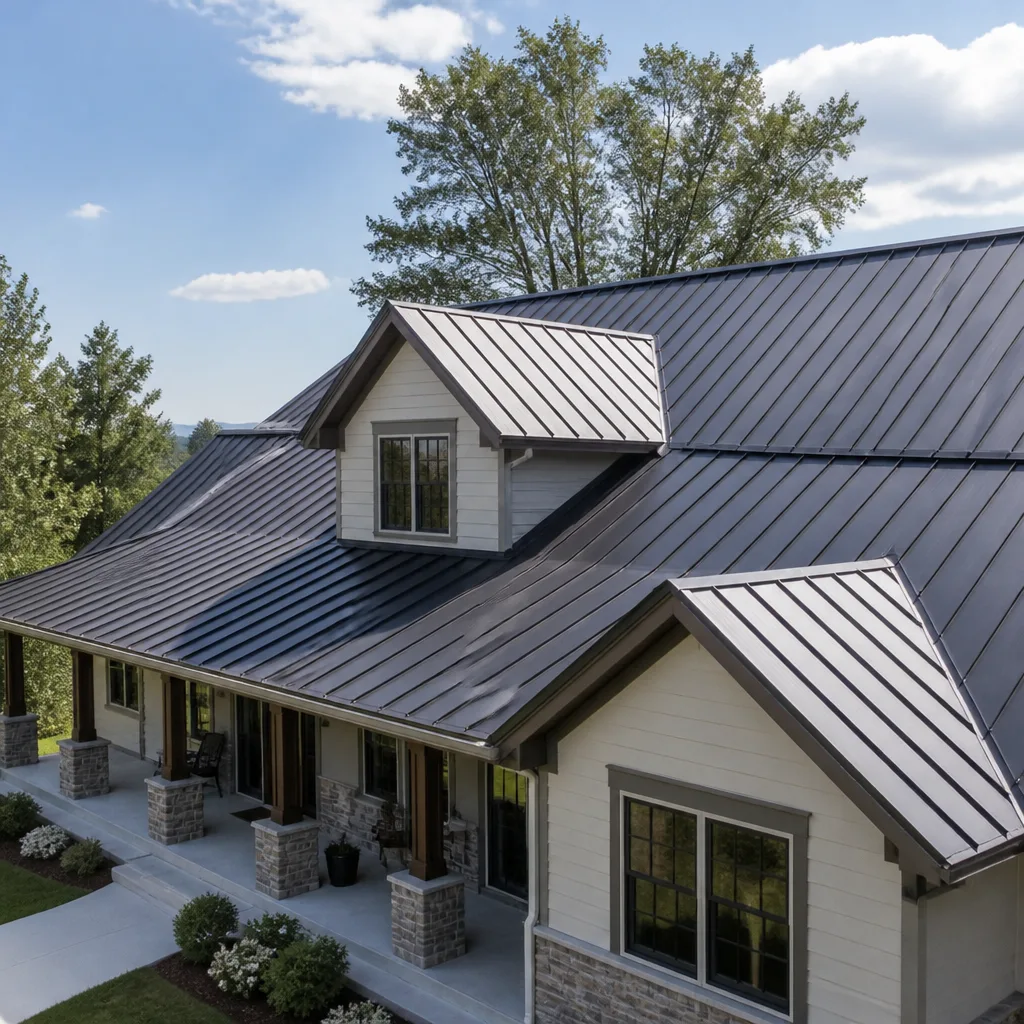 Metal roofing
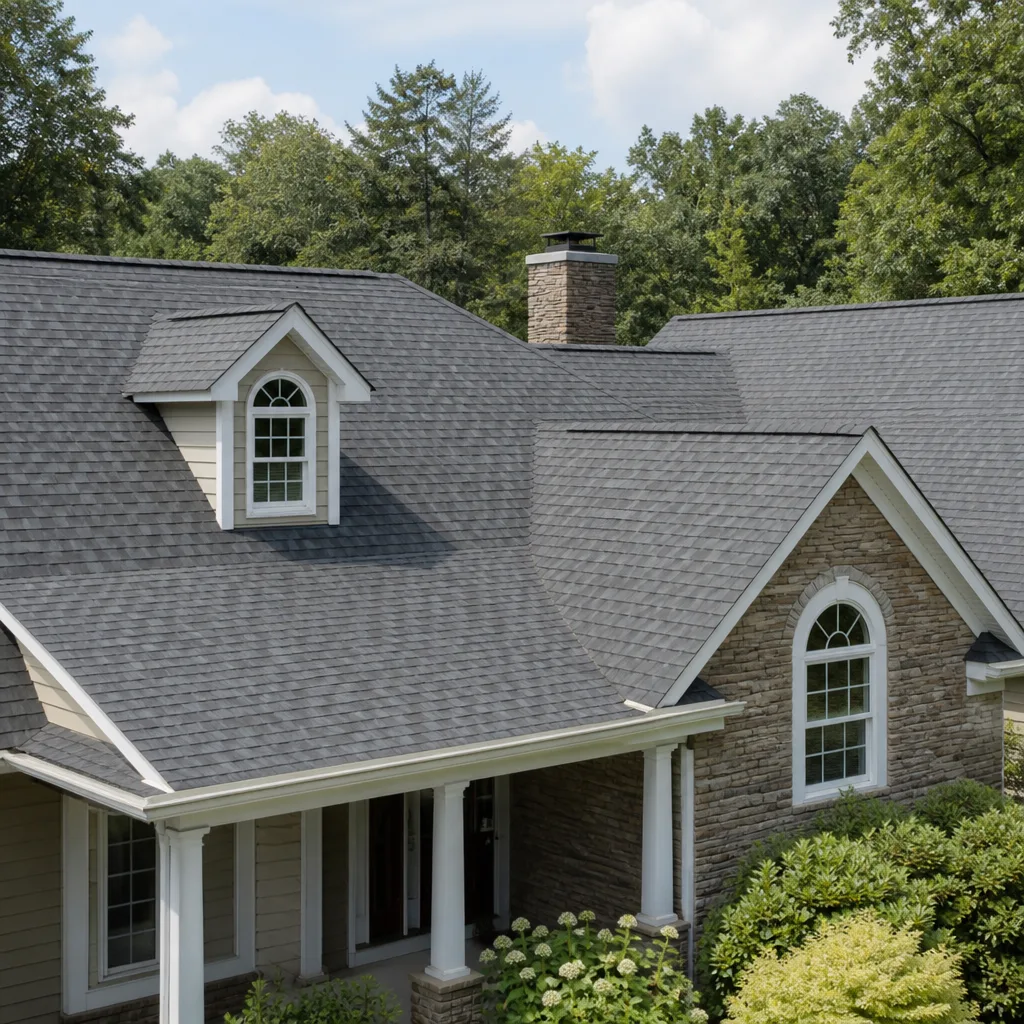 Architectural shingles
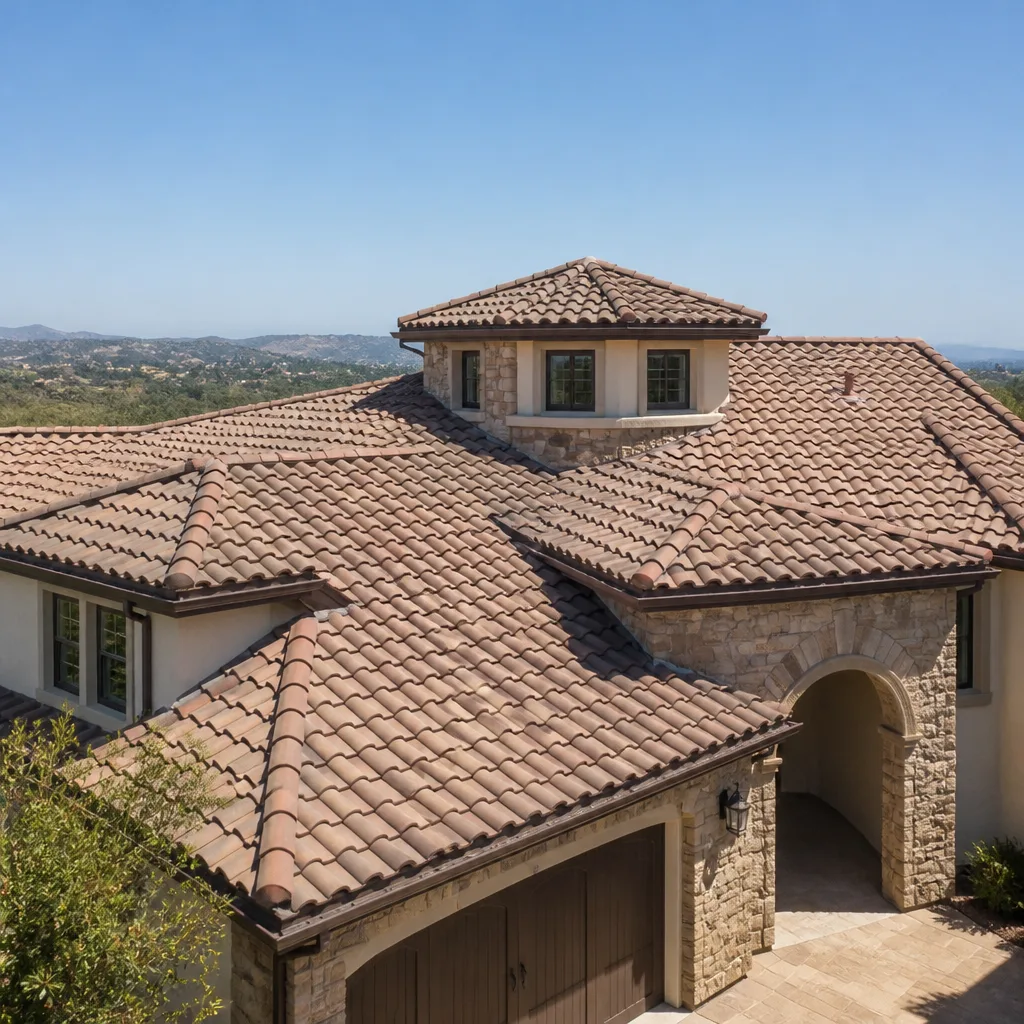 Tile roofing
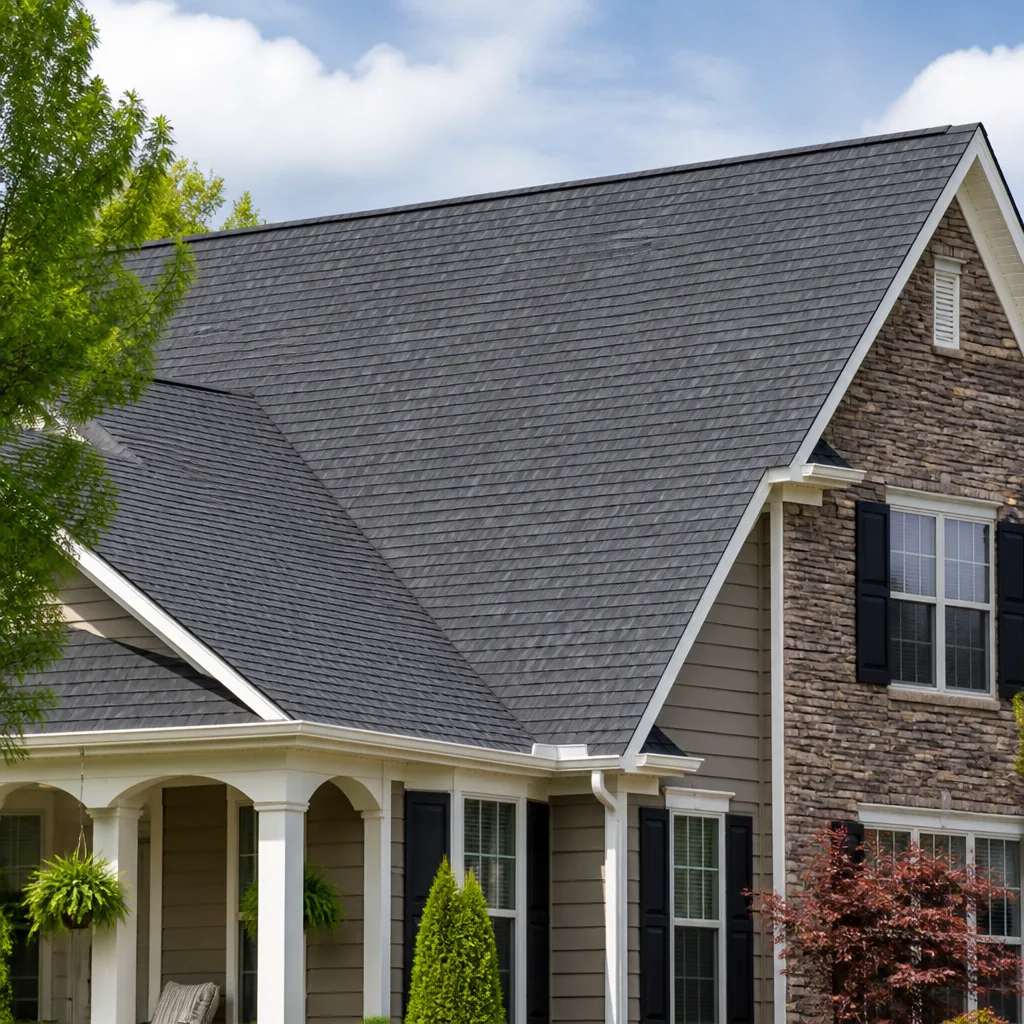 GAF
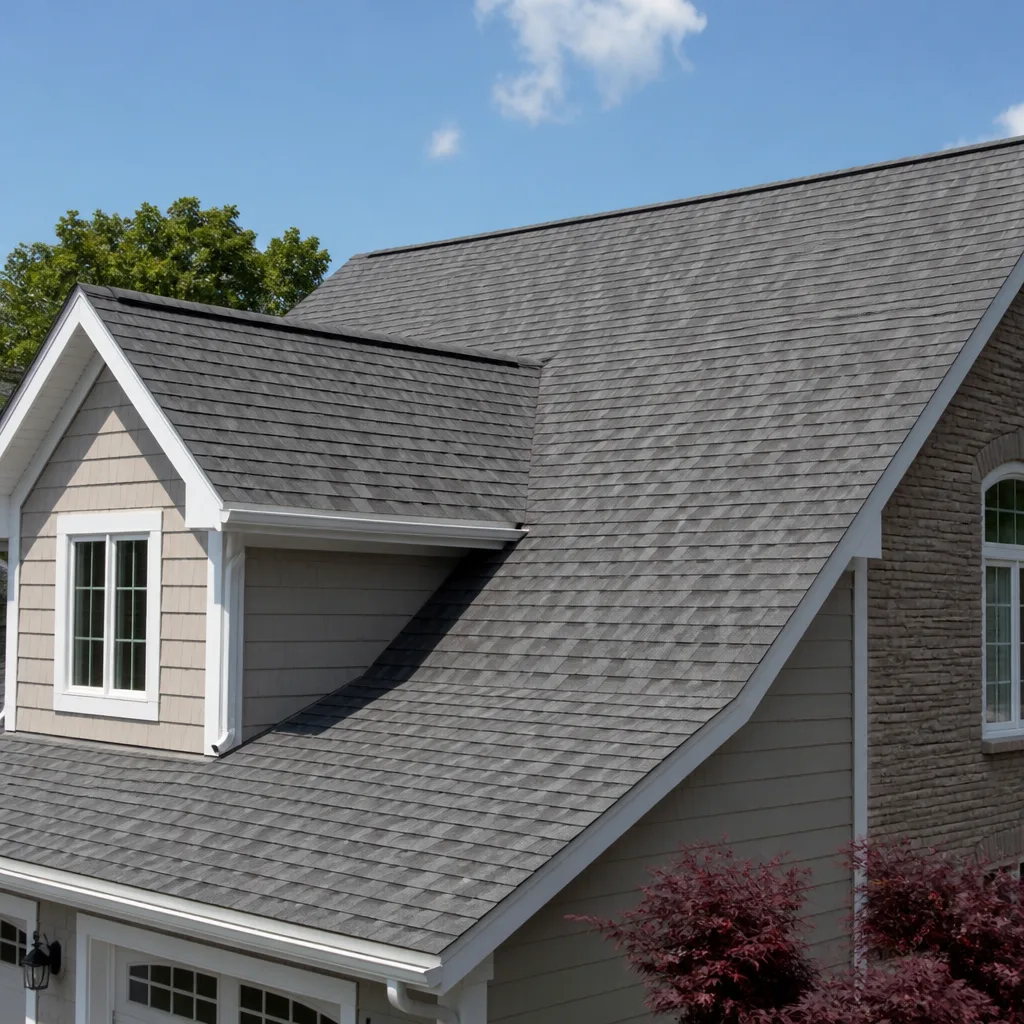 Owens Corning
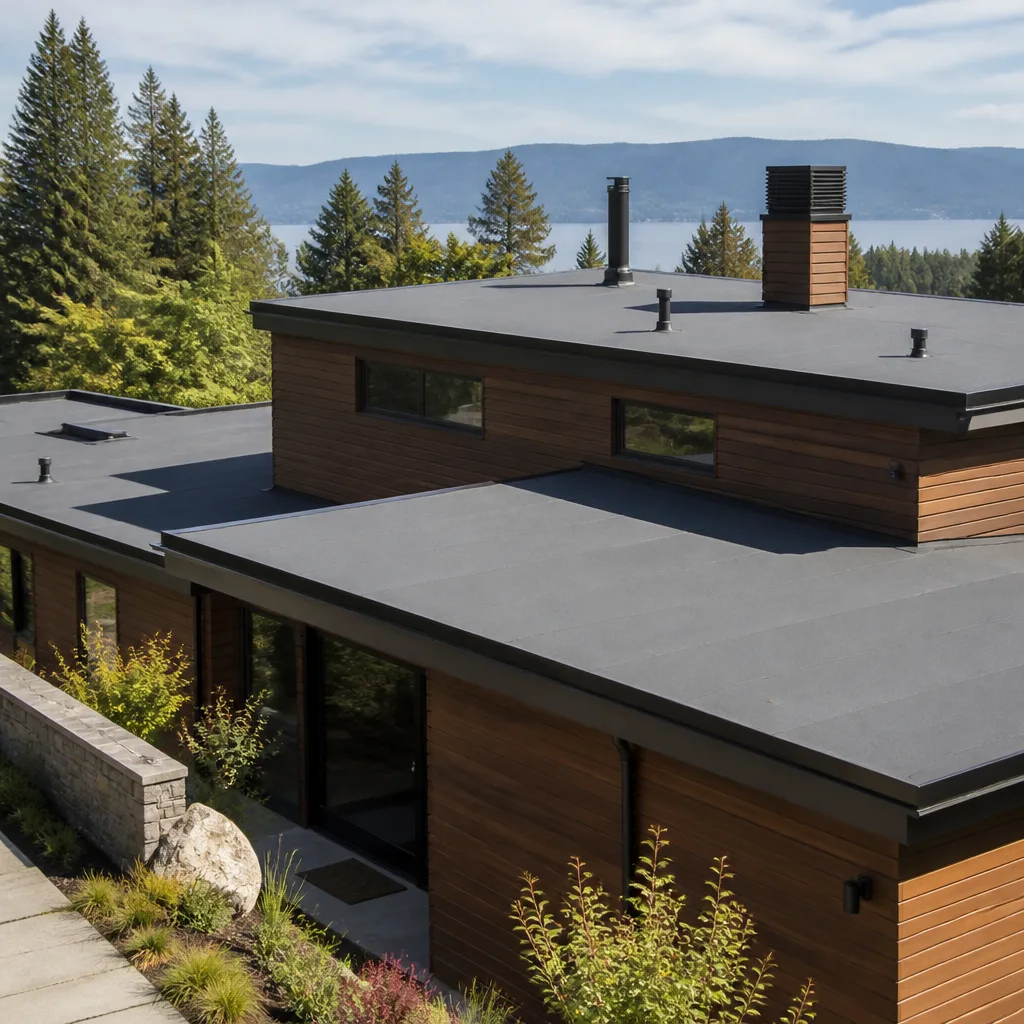 Flat & low-slope
Free roof inspection with deck photos before we talk money - GAF and Owens Corning certified installation
DIY vs Professional Roofing: The Buena Park Homeowner’s Decision Guide
A homeowner in Buena Park who patches their own roof correctly can still void their shingle warranty, create an unpermitted condition that surfaces during a home sale, and hand their insurance company a reason to deny a future storm claim. None of that shows up in any YouTube tutorial. The question isn’t whether you can swing a hammer. It’s whether the financial and legal exposure is worth the few hundred dollars you might save. This guide breaks down what California law actually says, what manufacturers actually require, and which repairs genuinely make sense to do yourself.
Quick Answer
For most Buena Park homeowners, professional roofing is the smarter financial decision because California building codes, manufacturer warranty terms, and insurance policies all contain clauses that penalize owner-performed roof work, even when the installation looks correct. Small tasks like clearing debris, sealing a nail pop, or replacing a single accessible shingle can be reasonable DIY projects. Structural repairs, full replacements, and any work involving roof penetrations should be handled by a licensed C-39 contractor.
Styles & brands we work with
Table of Contents
- What California Law Actually Says About DIY Roofing
- How DIY Work Affects Manufacturer Warranties
- The Insurance Angle Nobody Talks About
- Repairs That Are Genuinely Appropriate for DIY
- Repairs That Require Professional Sequencing
- The Real Cost Comparison: DIY vs Professional
- Permits in Buena Park: What Triggers One
- Common Mistakes to Avoid
- When to Call a Professional
What California Law Actually Says About DIY Roofing
California Business and Professions Code Section 7048 creates a specific exemption for property owners working on their own homes. You may perform roofing work on your own primary residence without holding a contractor’s license, provided you do the work yourself or hire unpaid help. The moment you pay someone who lacks a C-39 roofing license, you’ve crossed into illegal contracting territory in Buena Park and everywhere else in the state.
Here’s what the exemption covers and what it doesn’t:
- Owner-occupied, single-family homes: The owner-builder exemption applies only to your primary residence. Rental properties, flip houses, and commercial buildings do not qualify.
- Work must be your own labor: You can have family members or friends help without pay, but any compensated worker needs a license. No exceptions, even for “cash jobs.”
- Structural limits matter: While the law doesn’t explicitly cap DIY roof scope by square footage, local building codes in Buena Park do. Any project requiring a permit means plans, inspections, and compliance with Title 24 energy standards.
- Sale restriction: If you sell within one year of completing owner-builder work, California law requires you to disclose that fact in writing to the buyer. Unpermitted work must also be disclosed, and it frequently kills deals or forces price reductions.
The C-39 roofing classification exists because roof failures create cascading structural damage. Buena Park sits in a region with occasional heavy winter rain and strong Santa Ana winds, and a roof that fails in a wind event doesn’t just leak. It can peel sections of decking, saturate insulation, and initiate mold growth inside wall cavities. The licensing requirement exists to limit that kind of systemic failure.
In our experience, most Buena Park homeowners who ask about DIY roofing are not trying to avoid paying a contractor. They’re trying to understand whether a small repair is within their capability. The answer, as you’ll see in the sections below, depends less on your skill and more on what’s at stake.
Learn more about what a professional repair actually involves on our Roof Repair in Buena Park page.
How DIY Work Affects Manufacturer Warranties
Every major shingle manufacturer in the United States writes warranty language that distinguishes between contractor-installed and owner-installed work. This distinction affects Buena Park homeowners more than most realize because the region’s heat and UV exposure shorten shingle lifespans compared to coastal climates, making warranty coverage disproportionately valuable here.
Take GAF, for example. Their standard shingle warranty covers manufacturing defects, but the installation workmanship is only covered when the shingles are installed by a GAF-certified contractor using GAF accessory products. An owner-installed GAF roof carries the material warranty, but any installation error, from improper nailing patterns to missed underlayment steps, falls entirely on the homeowner. The material defect coverage also shrinks. If an owner installs shingles incorrectly and they delaminate prematurely, the manufacturer can argue the failure resulted from installation, not manufacturing.
CertainTeed’s warranty structure is similar. Their SureStart labor warranty applies only when a credentialed CertainTeed contractor performs the installation. Owens Corning offers their total protection warranty exclusively through Owens Corning Roofing Platinum and Preferred contractors. The pattern holds across every major brand.
Here’s what that means for a Buena Park homeowner replacing a 30-year architectural shingle:
- Contractor-installed: Material warranty plus workmanship coverage, often 10 to 25 years depending on the contractor and brand.
- Owner-installed: Material warranty only, with installation errors as a built-in exclusion for any claim.
- Partial DIY repair on an existing warranted roof: If you patch a section without using the same brand’s products or without following the manufacturer’s repair protocol, you may void the warranty on the entire roof plane.
That last point catches people off guard. A $40 bundle of mismatched shingles from a home center can invalidate warranty coverage on a $14,000 roof. The manufacturers write their warranty documents to cover system installations, not piecemeal repairs. When we perform roof repairs in Buena Park, matching the existing material is often the most important step precisely because it preserves the remaining warranty on the rest of the roof.
The Insurance Angle Nobody Talks About
California homeowners insurance policies contain language that renders owner-performed repairs a risk factor during claim adjudication. This is the angle most DIY guides skip entirely, and it’s the one that costs Buena Park homeowners the most money.
Most standard HO-3 policies require the homeowner to maintain the property and perform repairs that prevent further damage. That’s the clause that works in your favor. But when a storm damages a roof that was previously repaired by the homeowner, the adjuster’s job is to determine whether the pre-existing condition contributed to the loss. If they find unpermitted DIY work in the area of the damage, they can reduce the payout or deny the claim entirely.
The California Department of Insurance has published bulletins about this exact scenario. Carriers are not obligated to cover damage that resulted from inadequate prior repairs. The burden is on the homeowner to prove the prior repair was not causal. Without licensed contractor documentation, that burden is nearly impossible to meet.
Consider a concrete Buena Park scenario:
- A homeowner patches a small leak near a pipe boot in March.
- The patch looks fine through the summer.
- In January, a heavy rainstorm hits Orange County. The area around the patch leaks badly.
- The adjuster inspects, finds the earlier repair, and asks for the contractor invoice.
- No invoice exists. The adjuster concludes the January damage stemmed from the March repair.
- The claim is denied or reduced by the estimated repair cost. The homeowner is now paying out of pocket.
The irony is that the original repair might have been done perfectly. Without documentation, it doesn’t matter. Professional roofing work comes with a paper trail: the contract, the permit, the invoice, the warranty registration. That paper trail is what protects you when your insurance carrier starts asking questions.
For homeowners who already suspect existing damage, a professional roof inspection in Buena Park creates the documentation your insurance company will respect if a future claim arises.
Repairs That Are Genuinely Appropriate for DIY
We’re not going to tell you that every roof task requires a professional. That would be dishonest.
Some maintenance and minor repair work is well within the capability of a careful Buena Park homeowner, and doing it yourself can genuinely extend the life of your roof between professional services. The key distinction is this: appropriate DIY work is low on the roof, does not require shingle removal, and cannot affect the roof’s water-shedding integrity if done imperfectly.
Tasks that fall into the DIY-appropriate category:
- Gutter and valley debris clearing: Leaves, pine needles, and wind-blown debris accumulate faster in Buena Park than homeowners expect, particularly near the clusters of mature trees in older neighborhoods. Clearing debris prevents water backup, but always work from a ladder with a stabilizer, never from the roof surface itself.
- Visual inspection from ground level: You can spot missing shingles, lifted flashing, and granule loss from the ground with binoculars. Knowing what to look for before calling a professional helps you communicate the problem accurately.
- Sealing exposed nail heads: Nail pops are common with temperature swings. A dab of roofing cement on an exposed nail head is a legitimate DIY fix, provided the nail is accessible from a ladder and the surrounding shingle is intact.
- Trimming overhanging branches: Tree limbs that scrape against shingles during Santa Ana winds cause granule loss. Keeping branches trimmed back is preventative maintenance that doesn’t touch the roof surface at all.
- Clearing debris from roof penetrations: Pipe boot collars and chimney crickets collect leaves. Clearing them with a soft brush from a ladder prevents water pooling.
None of these tasks requires removing shingles, cutting flashing, or working on steep surfaces. If a task fails that test, it moves into professional territory. We should know. The Buena Park Roof Repair home page gets calls every week from homeowners who attempted a “simple” repair and discovered the problem was layered.
Repairs That Require Professional Sequencing
Some roofing tasks look simple on the surface but require specific sequencing to avoid creating new problems. These are the repairs where a homeowner with good intentions can cause thousands of dollars in additional damage without realizing it until the next rain.
Tasks that require professional sequencing:
- Pipe boot replacement: This seems straightforward: remove the old boot, slide on a new one. But the shingle layer above the boot must be lifted without breaking, the old sealant must be completely removed, and the new boot must be seated under the uphill shingles. Done wrong, the repair creates a worse leak than the original. Done right, it’s a 20-minute job.
- Valley repair: Valleys channel more water than any other section of a Buena Park roof. If the valley metal is compromised, repairing it requires lifting shingles on both adjacent planes without cracking them, installing the new metal with proper overlap, and re-setting the shingles with clean nail lines. A visible nail or an improper overlap turns the repair into a leak source.
- Flashing replacement around chimneys and skylights: Step flashing, counter flashing, and apron flashing all interact in a specific order. Getting that order wrong means water finds the gap. Flashing work is also where most unpermitted DIY repairs fail inspection during a home sale.
- Decking replacement: If you see soft spots, the problem is almost always larger than the visible area. Rotted decking must be cut out to solid wood, replaced with matching thickness, and the seams must land on rafters. A DIY decking patch that doesn’t land on a rafter will fail under a person’s weight.
- Anything on a roof steeper than 6:12: Many Buena Park homes have moderate slopes, but older neighborhoods include homes with steeper pitches. Working on steep roofs requires safety harnesses, roof jacks, and experience moving on the surface. Falls from roofs are a leading cause of homeowner injury in Southern California.
The common thread here is that these repairs require understanding how the roof system behaves as a whole, not just how to fasten material to wood. That understanding comes from doing the work daily. When you need roof replacement in Buena Park, every seam, nail, and flashing detail has to work together as a system for two decades or more.
The Real Cost Comparison: DIY vs Professional
Let’s put actual numbers against each other. This is the comparison most DIY guides avoid because the honest math doesn’t favor the DIY narrative.
Scenario: a homeowner in Buena Park needs a small patch repair around a pipe boot that’s leaking. The repair area is roughly 4 square feet and requires one bundle of shingles, a new pipe boot, roofing cement, and nails.
DIY cost breakdown:
- One bundle of architectural shingles: $35 to $55 at a home center (brand-dependent)
- Pipe boot: $20 to $40
- Roofing cement: $15
- Roofing nails: $8
- Ladder rental if not owned: $40
- Basic hand tools (if not owned): $60 to $120
- Total hard cost: $178 to $278
Professional cost breakdown for the same repair:
- Material matched to existing roof: included in quote
- Labor: 1 to 2 hours at the going rate for licensed Buena Park roofers
- Disposal of old materials: included
- Warranty on the repair: typically 1 to 5 years
- Total cost range: $250 to $450, depending on access and pitch
On the surface, the DIY savings are real, roughly $70 to $170 for a one-time repair. That’s not nothing, which is why some homeowners do it.
But now factor the hidden costs:
- Warranty exposure: If the home has a manufacturer warranty on the roof and the DIY repair uses a different brand or incorrect installation method, that warranty may be voided. The remaining warranty value on a 5-year-old roof from a brand like GAF or CertainTeed could be worth thousands.
- Insurance exposure: If the repair fails during the next storm, the insurance claim may be denied. The average Buena Park roof repair claim from water intrusion runs $4,000 to $9,000.
- Permit exposure: If the repair is extensive enough to trigger a permit requirement and one isn’t pulled, the homeowner faces fines, forced removal, and mandatory disclosure at sale. A $70 savings can turn into a $2,000 problem.
- Time: A DIY repair takes a homeowner a full day, including trips to the home center and learning curve. At any reasonable hourly rate, that time has value.
The honest assessment: for repairs under about $500, professional service costs slightly more in cash but carries dramatically less risk. For anything larger, the DIY numbers get worse because material costs at retail prices are higher than contractor wholesale, and mistakes become more expensive.
If you want a professional assessment of what your roof actually needs, our roof inspection service in Buena Park gives you an honest condition report without any obligation to proceed.
Permits in Buena Park: What Triggers One
Buena Park enforces the California Building Code with local amendments. The city’s building department issues roofing permits through the same system used across Orange County, and the trigger for a permit is more sensitive than most homeowners expect.
The general rule in Buena Park: if you’re replacing more than 10% of the roof area or replacing any structural component, including decking and some underlayment, a permit is required. What falls under the 10% threshold is considered repair and typically does not trigger permitting, though the city’s inspectors enforce this based on scope, not just square footage.
A permit-required project includes:
- Full roof replacement (any size)
- Partial replacement exceeding 10% of the roof area
- Replacement of any roof sheathing or decking
- Structural repairs to rafters or trusses
- Changes to roof framing or the addition of new roof penetrations
A typical repair that does not require a permit:
- Replacing a few damaged shingles
- Sealing a pipe boot
- Applying roofing cement to minor flashings
- Replacing a single section of gutter apron (small area)
The permit process in Buena Park requires a plan or scope-of-work description, a building permit fee, and a final inspection. Licensed contractors handle this as part of the job. Owner-builders must navigate it themselves, and the city is stricter with owner-builders because unpermitted roof work has historically caused problems in residential resale transactions throughout Orange County.
The sale disclosure issue deserves attention. California Civil Code requires sellers to disclose all known unpermitted work. If you’re planning to sell your Buena Park home within five years of a roofing project, the permit matters as much as the roof itself. An unpermitted roof becomes a negotiation lever for buyers and a source of anxiety for lenders, who may decline to finance a home with substantial unpermitted construction.
Common Mistakes to Avoid
- Mixing shingle brands on a repair. Different brands have different dimensions, seal strip positions, and granule textures. A mismatched patch is visible from the street, and the color difference intensifies as the granule blend ages. On roofs with brands like Owens Corning or CertainTeed, matching correctly requires knowing the original product line and color code.
- Nailing through the seal strip. The seal strip is the adhesive band that bonds overlapping shingles. Nails driven through it prevent the shingle from sealing and create a direct water path. This is the single most common DIY error we see on Buena Park homes.
- Using too few nails. California wind standards require six nails per shingle in high-wind zones, which includes most of Orange County due to Santa Ana events. A four-nail pattern, common in other states, fails code and manufacturer requirements here.
- Applying roofing cement as a general fix-all. Roofing cement has legitimate uses, but slathered over flashing or shingle edges it traps moisture, accelerates rust, and makes professional repairs harder later. It’s a bandage, not a repair.
- Working on a wet or hot roof surface. Wet shingles are slippery and the granule surface loses adhesion when wet. Hot shingles, common in Buena Park summer afternoons, soften and tear easily under foot traffic. Both conditions turn a simple repair into a damaging one.
- Ignoring the underlayment. Shingles are the visible layer but the underlayment is the waterproofing layer. Replacing shingles without checking the underlying felt or synthetic underlayment leaves the roof vulnerable to the same leak you were trying to fix.
- Not documenting the work. If you do perform DIY repairs, photograph everything: before, during, and after. Keep receipts for materials. This documentation is your only defense if an insurance claim or sale disclosure question arises later.
When to Call a Professional
Any of these conditions should send you to the phone rather than the ladder. If the leak is active and water is entering the living space, that’s a structural emergency, not a patch project. If you see sagging in the roof plane, that indicates decking or framing damage that requires professional evaluation before anyone walks on the surface. If the roof is older than 15 years and multiple areas show problems, the repair-versus-replace decision is best made by someone who does both. And if you’re considering selling within a few years, the permit and documentation question makes professional work the financially safer choice regardless of your skill level.
Buena Park Roof Repair offers free estimates in Buena Park, call (866) 282-5070 and we’ll tell you what the roof actually needs, not what we want to sell you.
See the difference
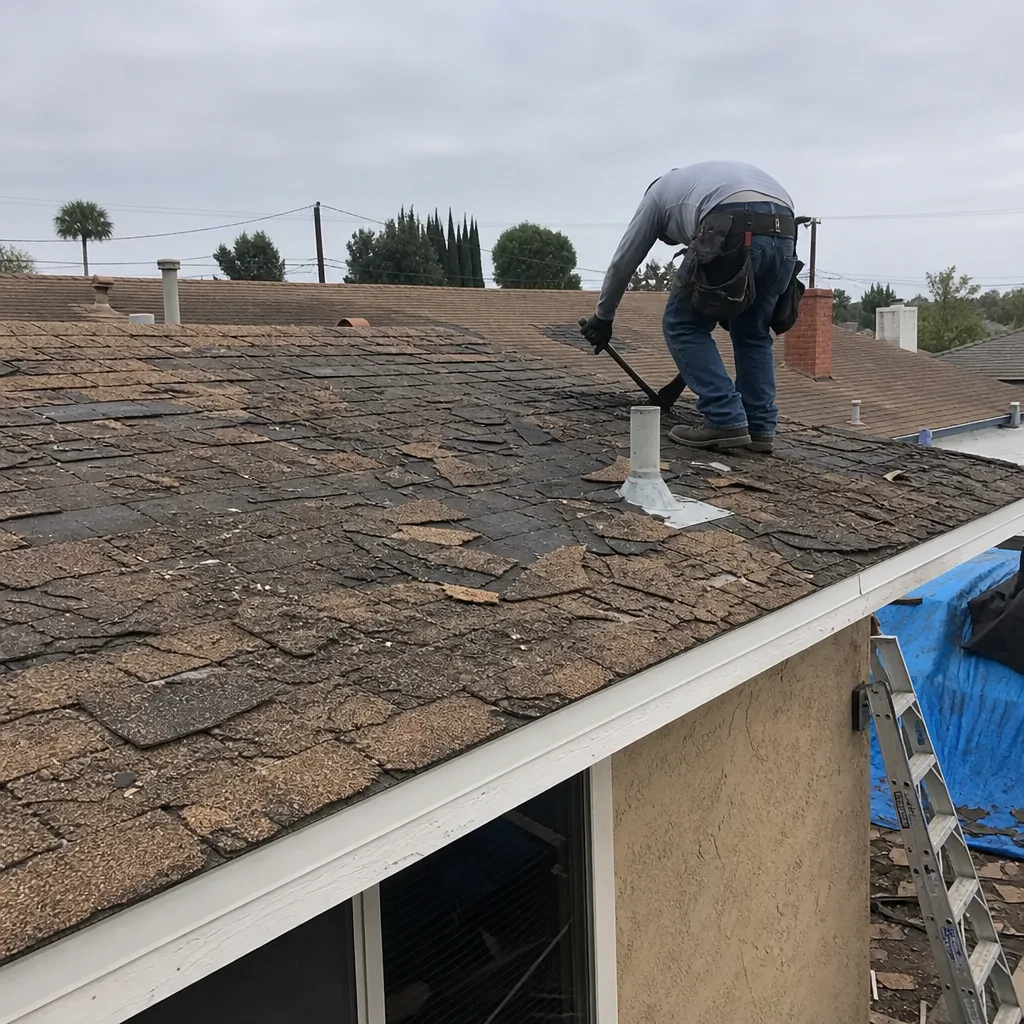 Before
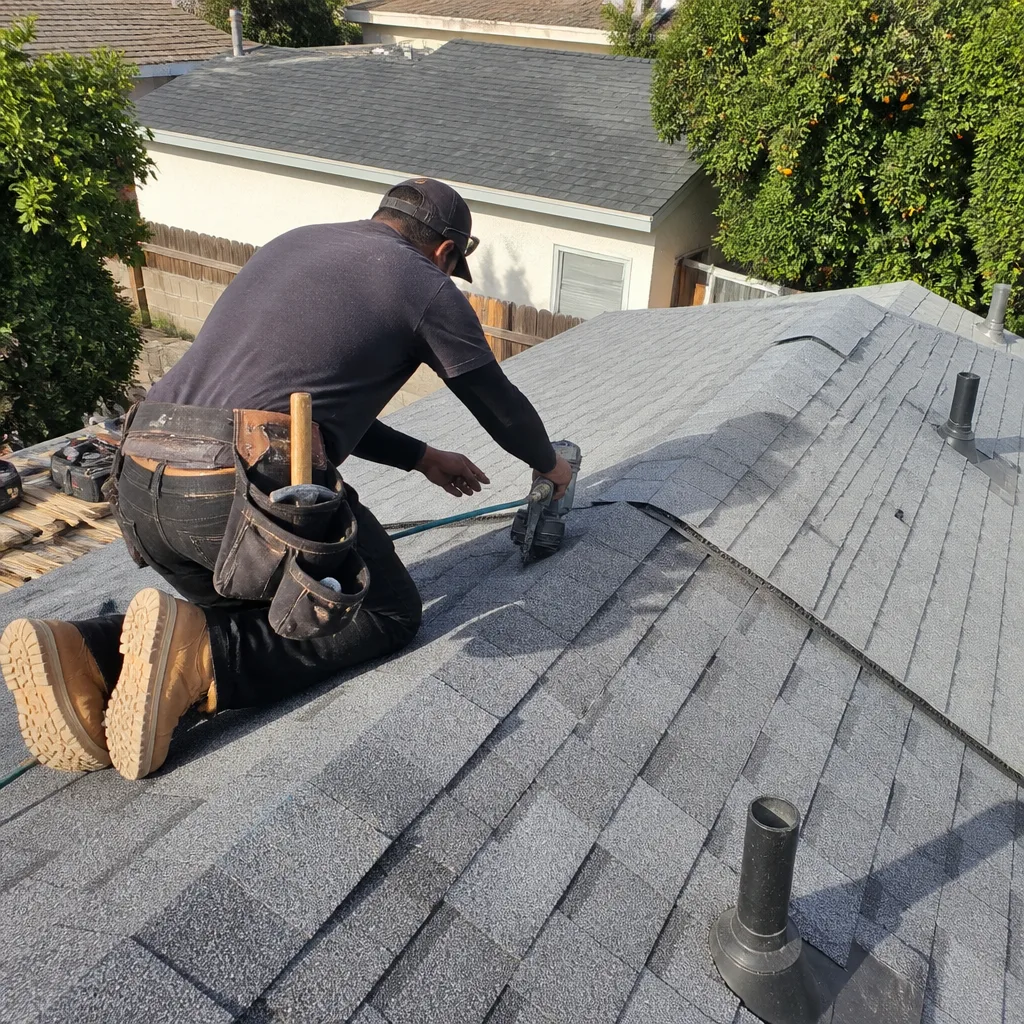 After
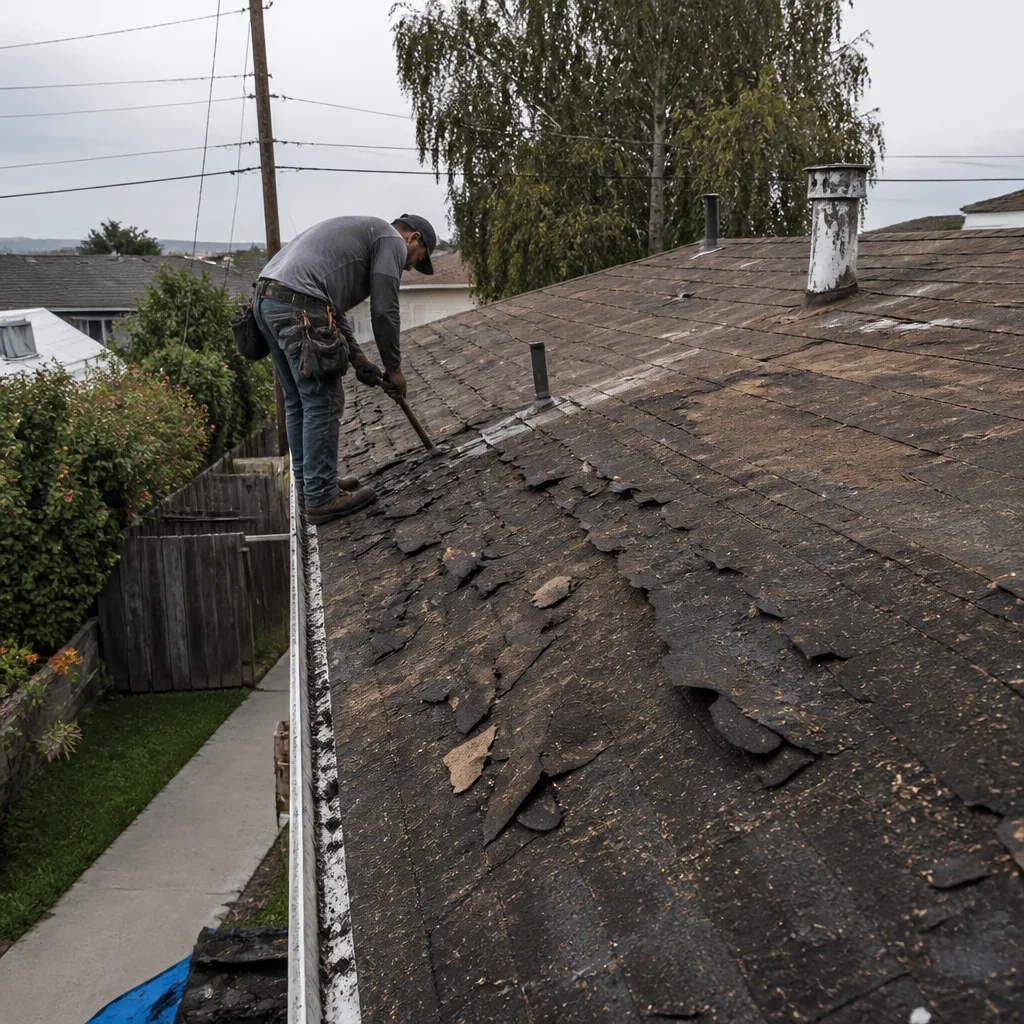 Before
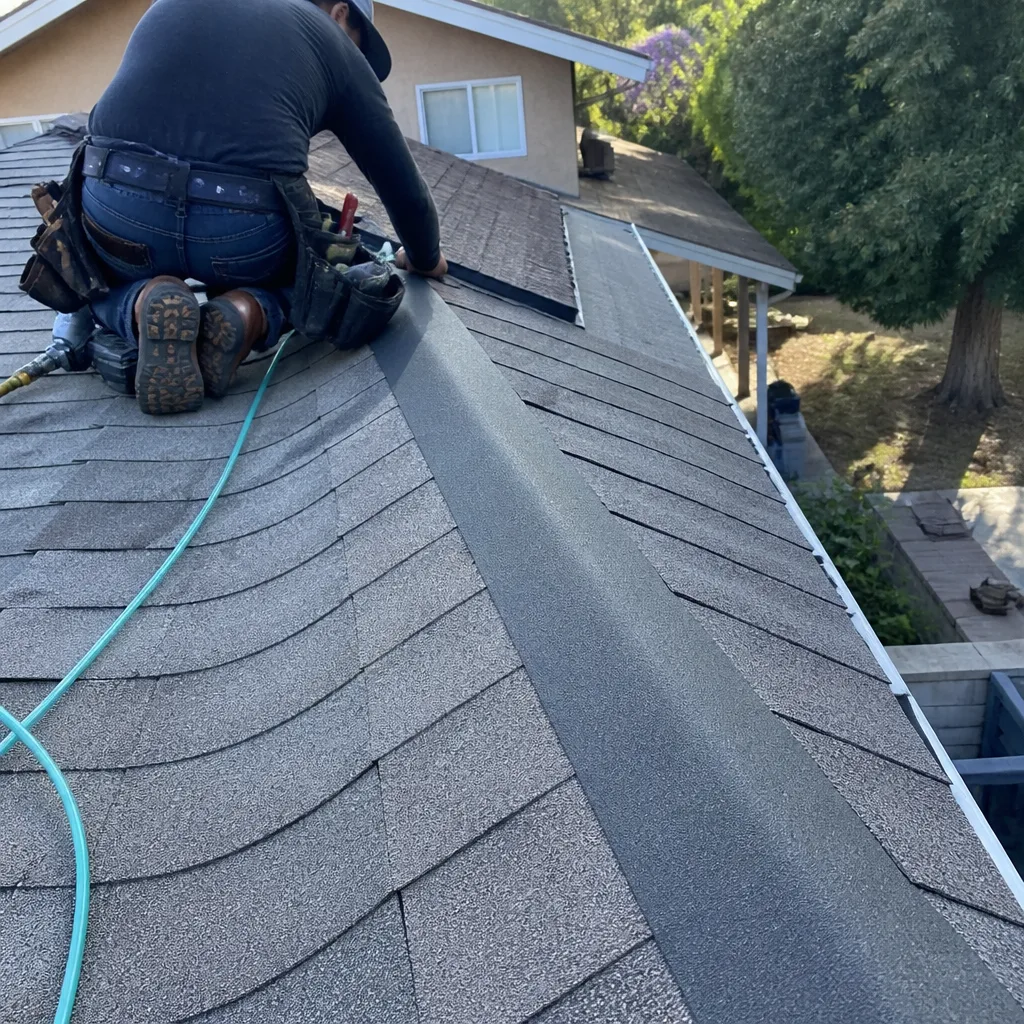 After
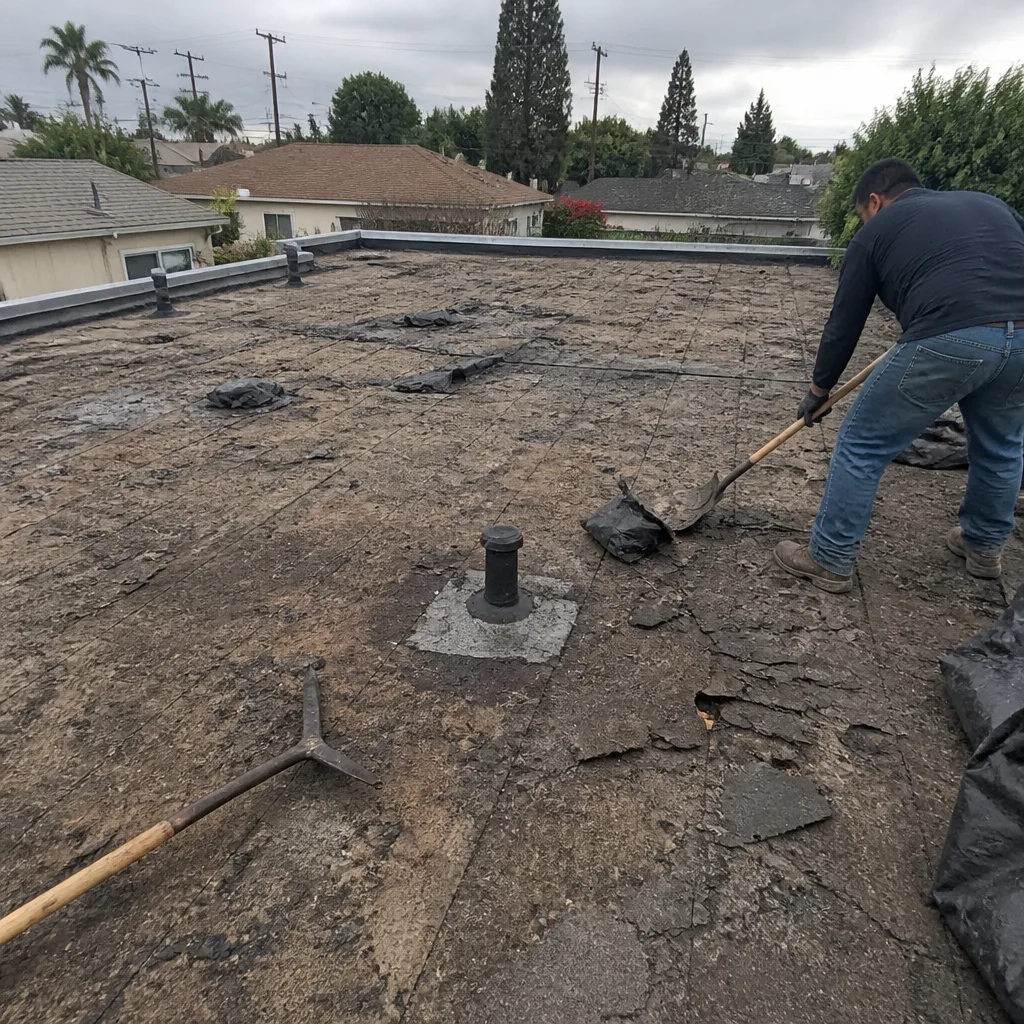 Before
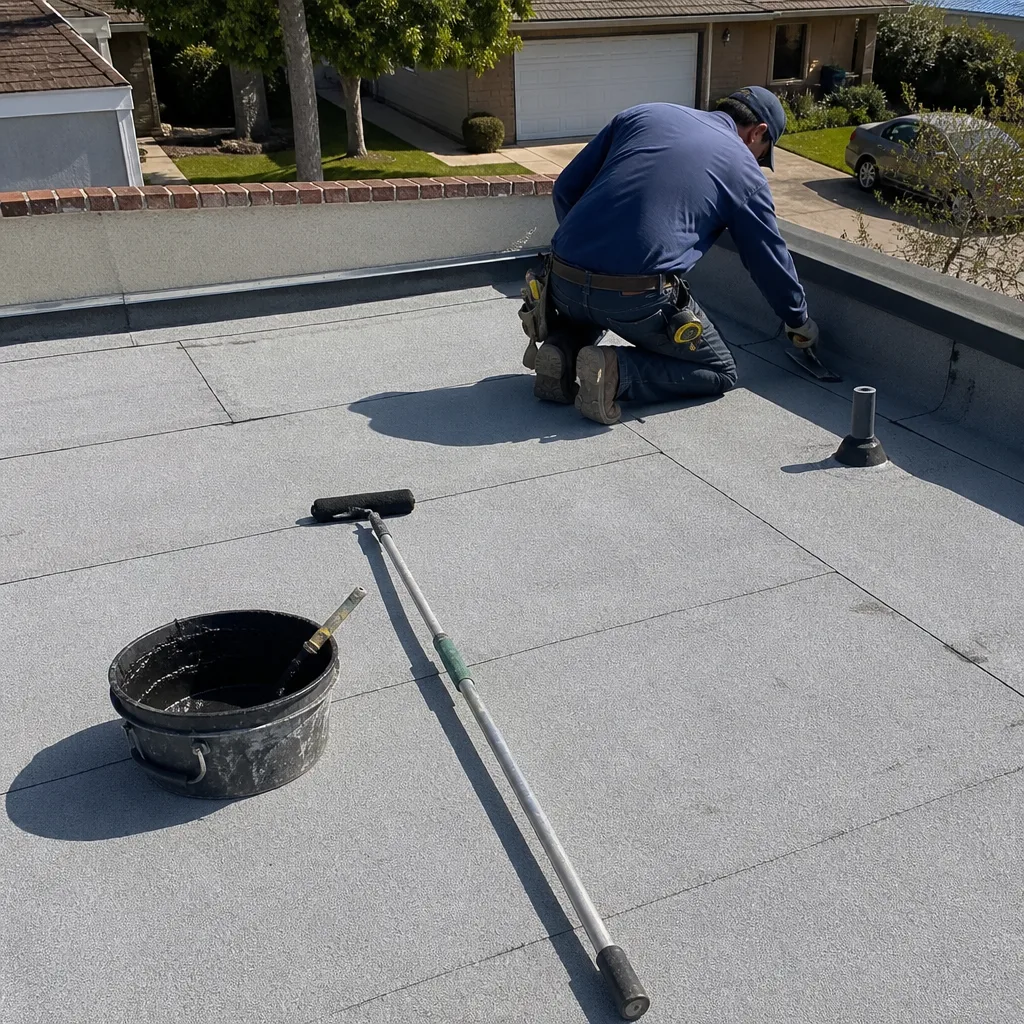 After
Frequently Asked Questions
Yes, California’s owner-builder exemption allows homeowners to roof their own primary residence without a contractor’s license, but the work must still comply with Buena Park building codes, and a permit is required for any replacement exceeding 10% of the roof area. If you complete unpermitted work and later sell the home, the unpermitted roof must be disclosed and can complicate the transaction.
Roof inspection costs in Buena Park vary by roof size, pitch, and access, but most residential inspections range from $150 to $400. At Buena Park Roof Repair, the inspection price is credited toward repair or replacement work if you hire us for the recommended scope. Call (866) 282-5070 for current inspection pricing.
A DIY repair doesn’t void your insurance policy, but it can provide grounds for claim denial if the repair fails and the carrier determines the owner-performed work contributed to the loss. Professional repairs with documentation protect you because the carrier can verify the work met code and industry standards. Without that documentation, the burden of proof falls entirely on you.
Buena Park Roof Repair is authorized to install and warranty products from seven manufacturers: GAF, CertainTeed, Owens Corning, IKO, Atlas, Tamko, and Boral. This matters if your existing roof uses one of these brands and you need a repair that matches the original material exactly. The multi-brand access means you choose the material that’s right for your home, not the material one contractor happens to stock.
Most minor repairs, including shingle replacement, pipe boot replacement, and flashing repair, are completed in a single visit of two to four hours. Larger repairs involving decking replacement or valley reconstruction may take a full day. The timeline depends on access, pitch, and whether new materials need to be matched to the existing roof.
Yes. A dedicated roof inspection before a home purchase in Buena Park reveals issues that a general home inspection often misses, including granule loss, nail pattern problems, flashing failures, and remaining life estimate on the shingles. Discovering these before close gives you negotiating leverage. Discovering them after means the repair cost is entirely yours.
The Bottom Line
Your decision isn’t about whether you can do the work, it’s about what the work can do to you. California law permits DIY roofing on your own home, but manufacturer warranties, insurance policies, and Buena Park permit requirements all contain provisions that make owner-performed work financially risky even when executed correctly. The truly appropriate DIY tasks are maintenance-level: clearing debris, trimming branches, sealing an exposed nail. The moment a repair requires shingle removal, flashing work, or decking access, the professional path is both safer and, surprisingly, often cheaper when you account for warranty exposure, insurance risk, and resale complications. Before you spend anything, get an honest condition report. You’ll know exactly what the roof needs and what you’re actually deciding between.
Written by the team at Buena Park Roof Repair, serving Buena Park since 2018.