Last updated October 31, 2026
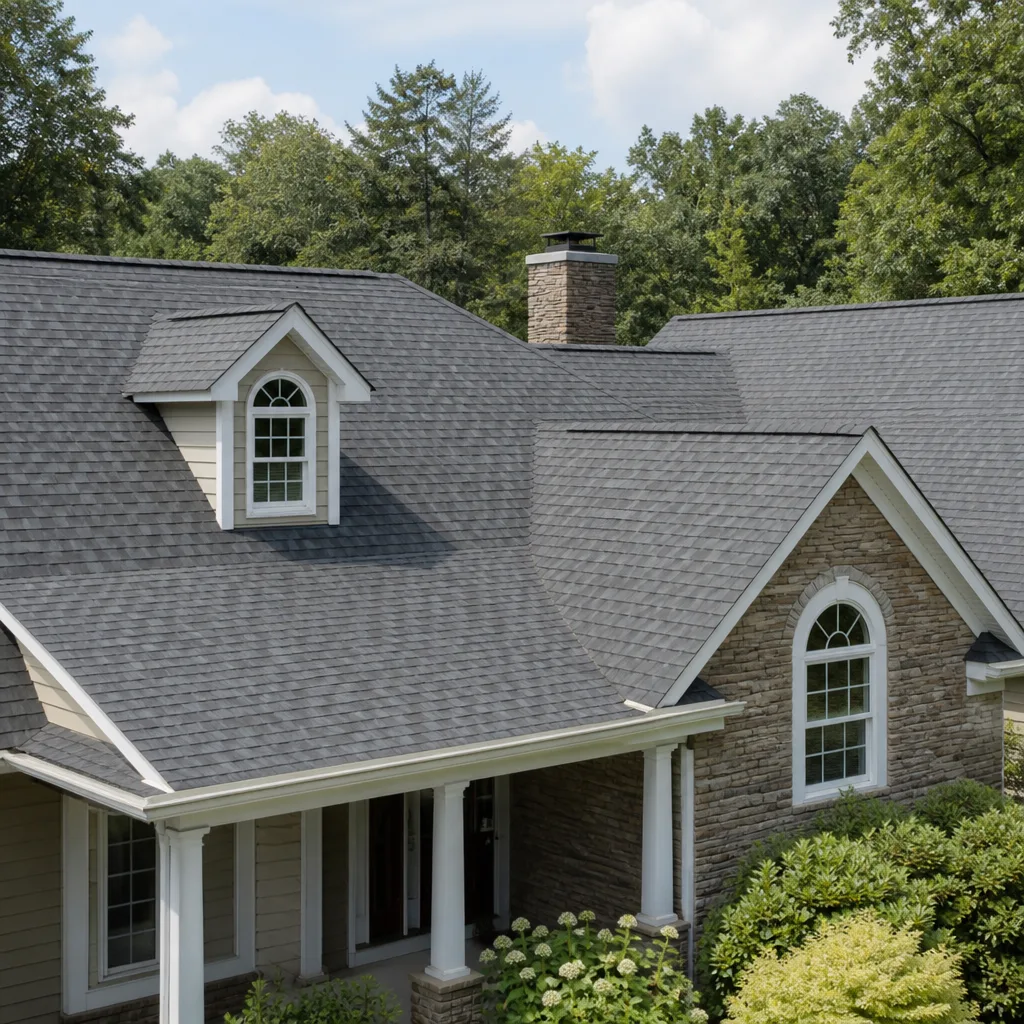 Architectural shingles
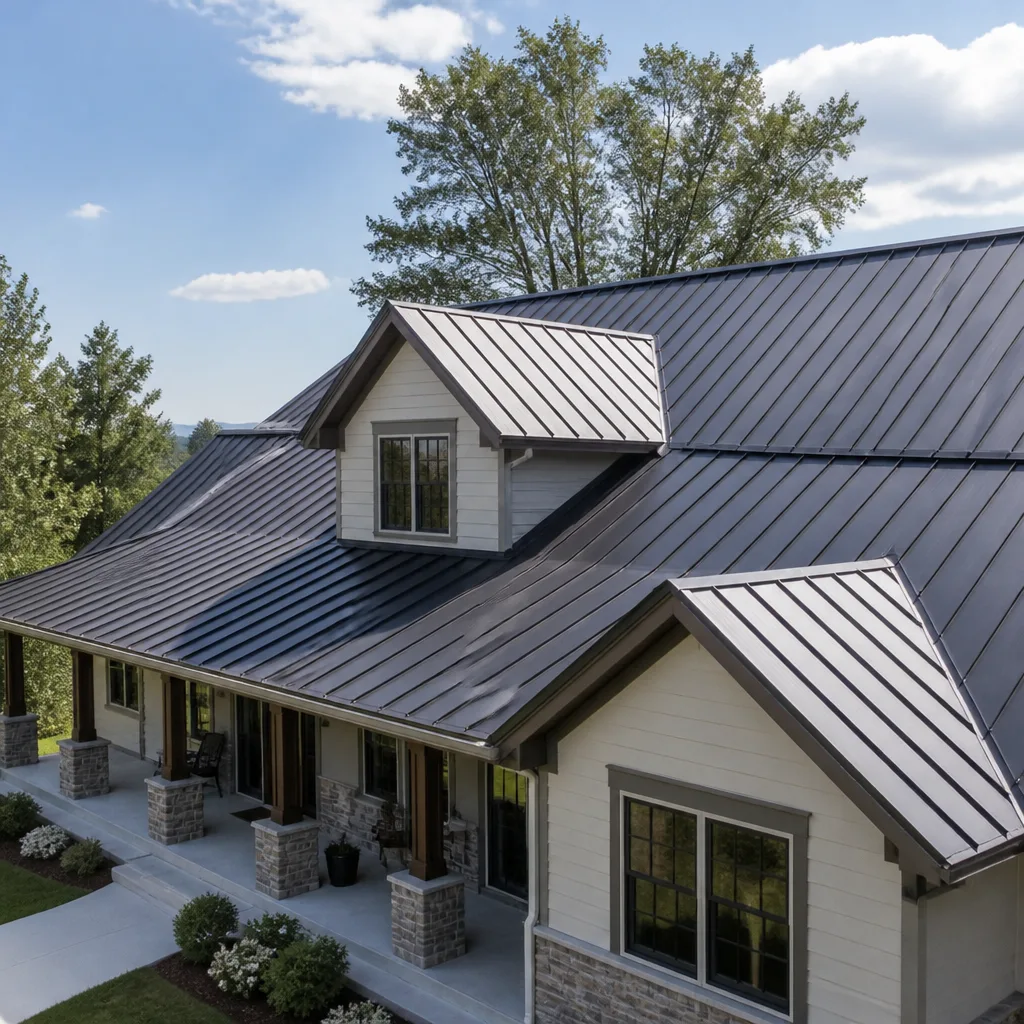 Metal roofing
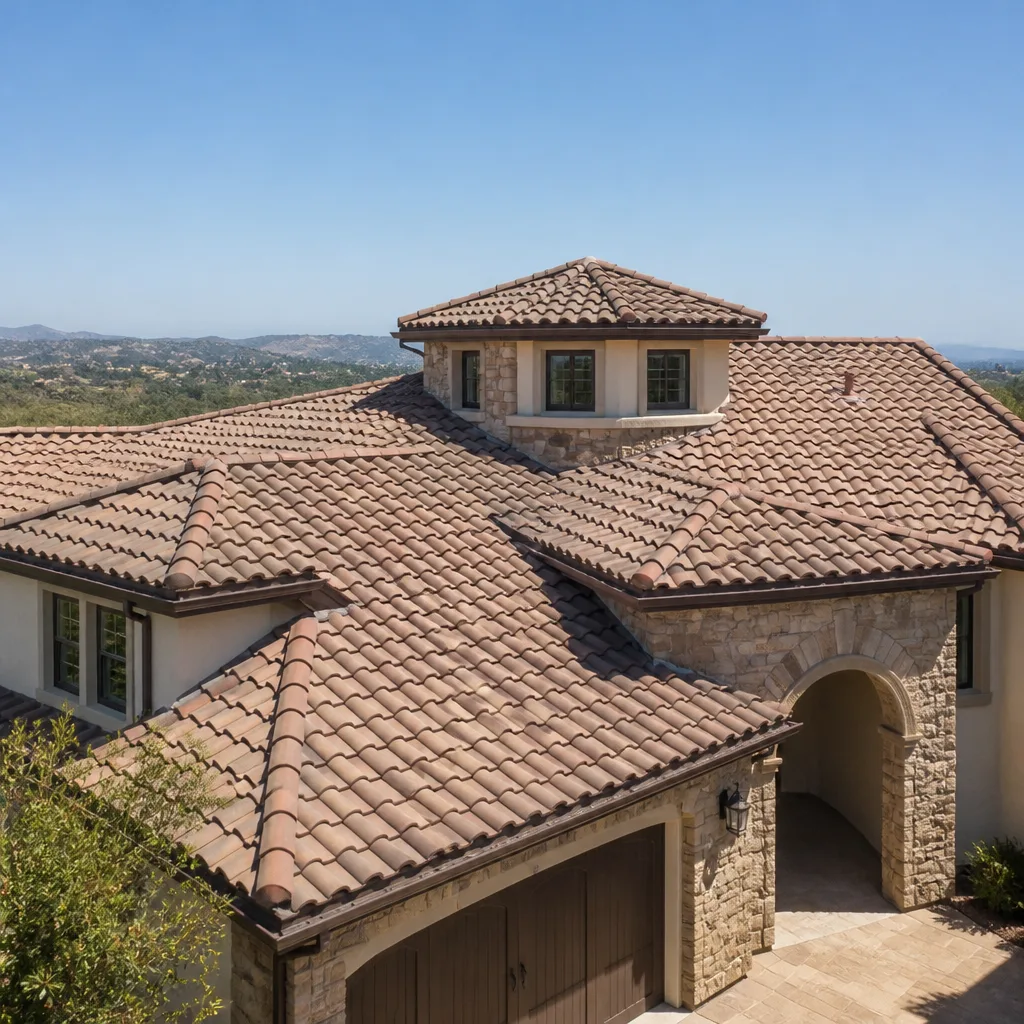 Tile roofing
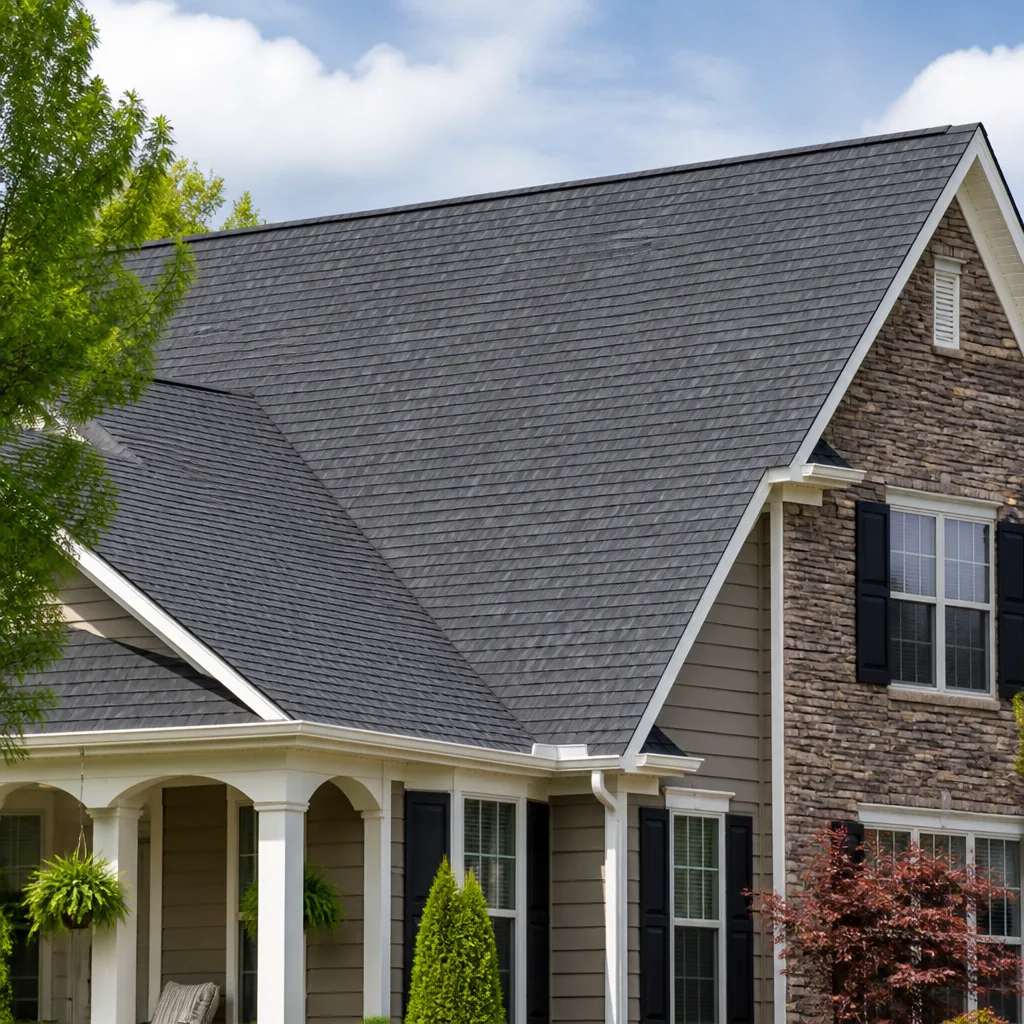 GAF
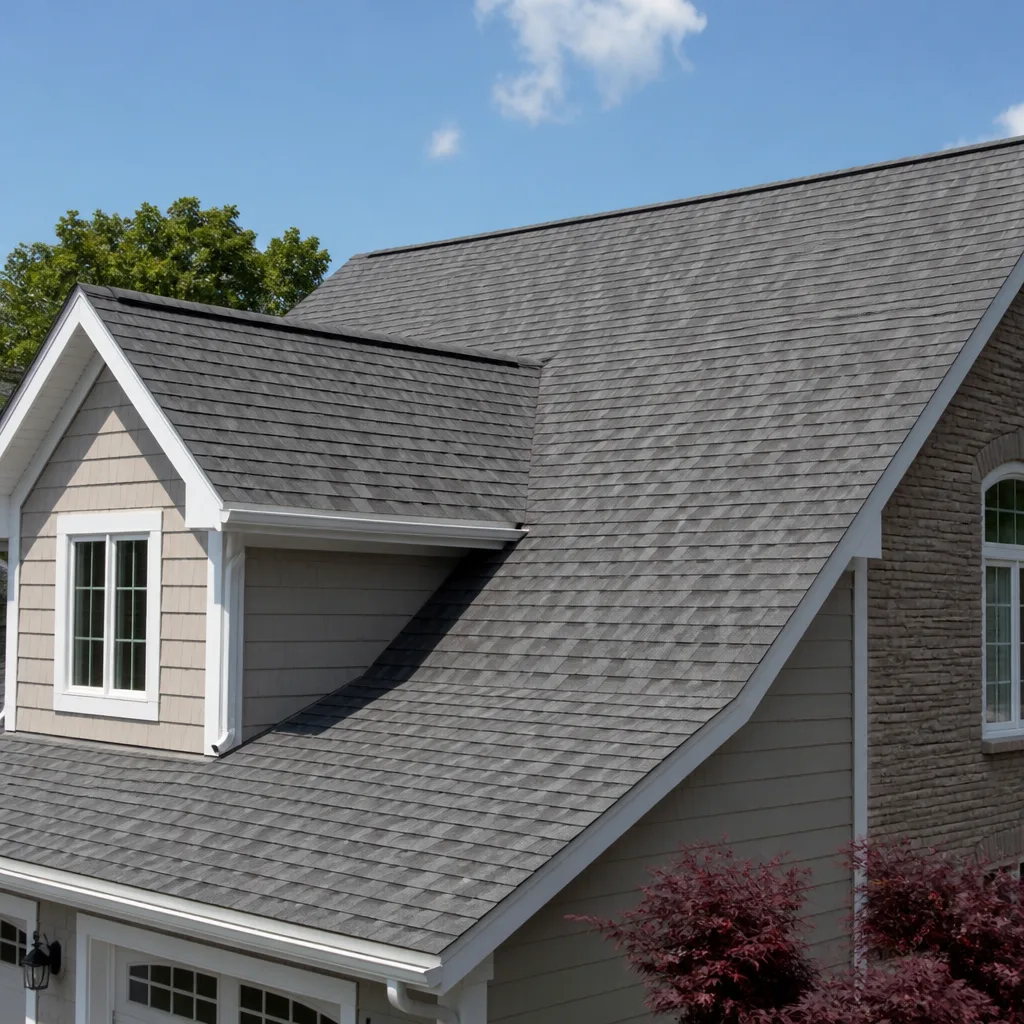 Owens Corning
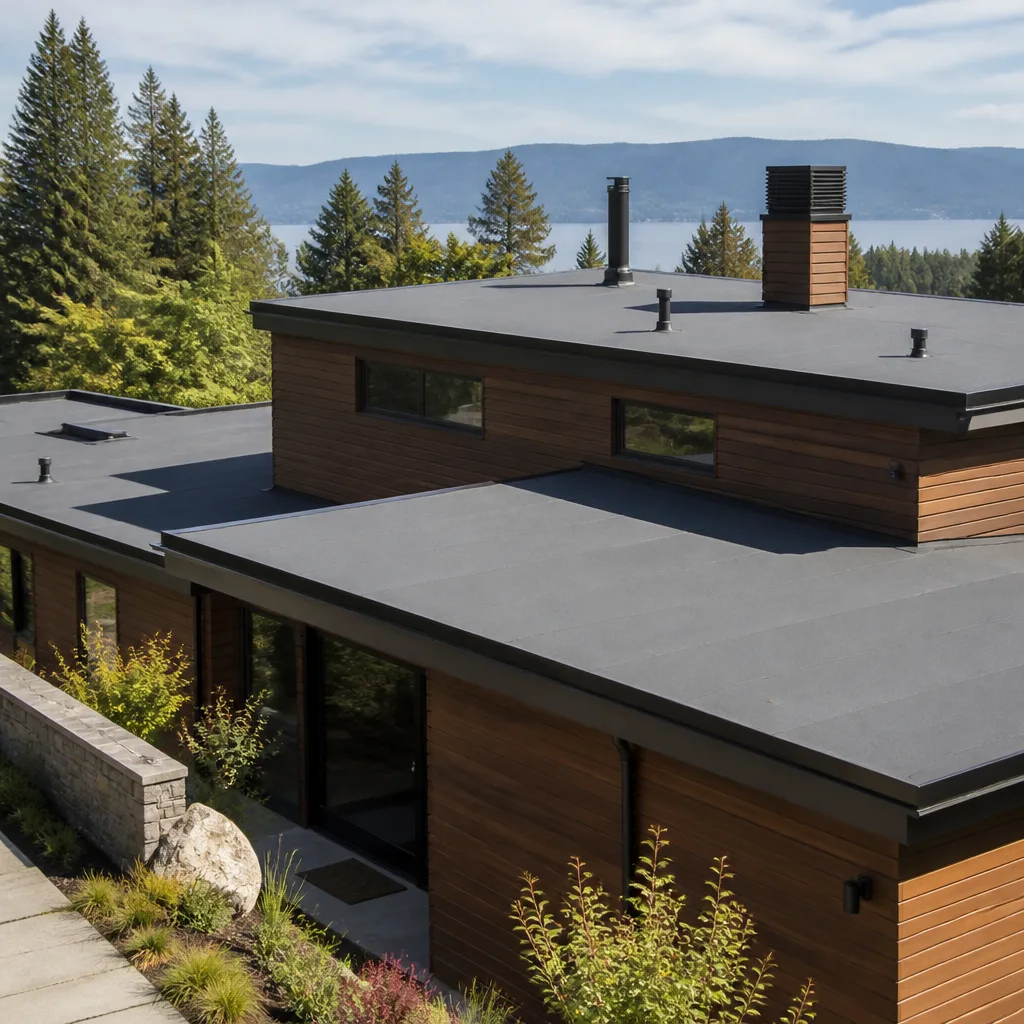 Flat & low-slope
Free roof inspection with deck photos before we talk money - GAF and Owens Corning certified installation
The Complete Roof Repair Guide for Buena Park Homeowners
Buena Park sits in a microclimate corridor where marine humidity from the coast collides with dry Santa Ana winds multiple times a year. That thermal and moisture cycling is why shingles here crack and lift at the edges faster than identical roofs just 15 miles inland. This guide explains the failure patterns specific to Buena Park, which repairs actually extend roof life, and how to assess damage without getting talked into a replacement you don’t need. You’ll learn what our inspectors look for after every Santa Ana event and what the city requires when repairs cross into replacement territory.
Quick Answer
Roof repair in Buena Park is driven by three local stressors: Santa Ana wind events that lift edge shingles and ridge caps, marine layer moisture that degrades flashing seals, and UV intensity that accelerates granule loss. Most repairs fall between $350 and $1,800 depending on location and scope, with ridge cap and flashing work at the lower end and edge shingle replacement at the higher end. You can do a basic self-assessment after any wind event using the steps below, but anything involving exposed underlayment, lifted flashing, or water stains on ceiling drywall warrants a professional inspection before it becomes a structural problem.
Styles & brands we work with
Table of Contents
- Why Buena Park’s Climate Creates a Different Roof Failure Pattern
- The Three Failure Points Buena Park Homeowners See First
- How to Self-Assess Your Roof After a Santa Ana Wind Event
- Material Compatibility: Why Big-Box Shingles Fail Early in Buena Park
- Repair vs. Replacement: How to Tell the Difference Before Spending Money
- Permit Rules in Buena Park for Repairs and Replacements
- What Roof Repairs Cost in Buena Park
- The Value of an Unbiased Roof Inspection Before Any Commitment
Why Buena Park’s Climate Creates a Different Roof Failure Pattern
Most roof repair guides treat every climate as if the same rules apply. They don’t. Buena Park sits roughly 10 miles from the Pacific, close enough to catch morning marine layer fog but far enough inland to bake under afternoon sun. That daily cycle of moisture absorption and rapid drying puts stress on asphalt shingles in ways that neither fully coastal nor fully inland roofs experience.
Then there are the Santa Ana winds. Between September and February, dry air pushes through the Santa Ana Canyon and across the Buena Park corridor at sustained speeds that regularly hit 30 to 40 mph with higher gusts. These winds don’t just blow debris onto roofs. They create pressure differentials that pull at the leading edges of shingles, particularly on west-facing and north-facing slopes that catch the wind directly.
What we see in Buena Park specifically is a combination failure: the marine layer weakens adhesive seals through repeated wet-dry cycles, and the Santa Anas then exploit that weakened seal to lift shingles. A roof that would last 25 years in Anaheim or Fullerton may show edge lifting and ridge cap displacement in 18 to 20 years here, not because the materials are worse but because the stress pattern is different.
Understanding this matters because it changes what repairs make sense. A homeowner who patches a lifted shingle without addressing the underlying seal failure along the entire edge will be back up there after the next wind event. The repair needs to match the failure pattern, not just the visible damage.
For a deeper look at how we approach these local repairs, see Roof Repair in Buena Park.
The Three Failure Points Buena Park Homeowners See First
When you know the local failure pattern, you know where to look. In Buena Park, three specific roof components fail before anything else, and they fail for reasons tied directly to the climate corridor.
1. Ridge Caps
Ridge caps are the shingles that run along the peak of your roof, covering the seam where two slopes meet. They take the full brunt of Santa Ana wind because they sit at the highest point with no adjacent shingles to break the airflow. Over time, the adhesive strips that hold ridge caps down dry out from UV exposure and marine layer moisture cycling. When a Santa Ana hits, those caps lift, and once they lift, the wind gets under them and peels them back like a lid.
A missing ridge cap is not just an aesthetic problem. Water enters directly through the exposed nail holes and follows the rafter line into the attic. In Buena Park, ridge cap replacement is the single most common repair we perform after fall wind events.
2. Flashing Seals
Flashing is the metal material that seals transitions: chimneys, vent pipes, skylights, wall intersections. The metal itself rarely fails. What fails is the sealant and the surrounding shingles. Buena Park’s marine layer deposits moisture on these seals almost every morning for months at a time. Then the afternoon sun bakes them dry. That repeated expansion and contraction cracks the sealant, and once water finds a crack, it works its way in through capillary action.
Flashing leaks are sneaky. The water often travels horizontally along a rafter or truss before dripping down, meaning the stain on your ceiling may be several feet away from the actual breach. A professional will trace the water path, not just patch the visible stain area.
3. Edge Shingles
The shingles along your roof’s perimeter, particularly on the windward sides, are the most likely to lift during Santa Ana events. They’re exposed on three sides and rely almost entirely on their adhesive strip to stay down. Once that adhesive dries out, which happens faster in Buena Park than in cooler coastal communities, the shingle becomes a flap that catches wind.
Edge shingle replacement requires care. The replacement shingle needs to match the existing roof in profile and color, or you end up with a patchwork look that also signals shoddy work to future buyers. This is where material compatibility becomes critical, which we cover below.
How to Self-Assess Your Roof After a Santa Ana Wind Event
You don’t need to climb a ladder to know when your roof needs attention. Here’s a systematic self-assessment you can do from the ground after any significant wind event in Buena Park.
- Walk the perimeter slowly. Look at the roofline from the yard, the driveway, and the street. You’re looking for shingles that appear raised, misaligned, or missing against the consistent line of the roof edge. Morning light at a low angle makes this easier.
- Photograph anything suspicious. Use your phone’s zoom. Take photos from multiple angles. These photos are useful whether you end up filing an insurance claim, getting a repair quote, or just documenting the condition for your own records.
- Check the ground for debris. After a Santa Ana, walk the yard and the curb line. Found shingle pieces, granules, or flashing fragments? That tells you something came off. Granules in your gutters or at downspout exits are the earliest sign of shingle wear.
- Look at the ridge line. From across the street, you can often see if ridge caps are sitting flat or if any are sticking up. A lifted ridge cap is visible as a dark line or gap along the peak.
- Check interior ceilings. Go into the attic with a flashlight. Look for water stains on the underside of the roof deck, damp insulation, or any light coming through where it shouldn’t be. These are definitive signs of an active breach.
- Document with dates. Note when the wind event occurred and when you first noticed each issue. That timeline matters for insurance claims and for your own decision-making about repair priority.
What Warrants an Immediate Professional Call
- Missing shingles or exposed underlayment anywhere on the roof
- Lifted or missing ridge caps
- Visible gaps around flashing at chimneys, vents, or wall intersections
- Water stains on interior ceilings or walls
- Daylight visible through the roof deck from inside the attic
- Shingle debris in the yard after a wind event
What You Can Monitor
- Granule loss in gutters without visible shingle damage
- Slight shingle curling at corners that hasn’t progressed in months
- Small areas of moss or algae on shaded roof sections
- Cosmetic staining that hasn’t changed
Use the monitor list carefully. The line between “monitor” and “call” is thin, and it’s better to err toward a professional look when you’re uncertain. A standalone Roof Inspection in Buena Park gives you a documented condition report without any commitment to move forward on repairs.
Material Compatibility: Why Big-Box Shingles Fail Early in Buena Park
Here’s something most guides don’t tell you: not every shingle sold in Orange County is rated for what Buena Park’s UV index does to it. The repair shingles you find at big-box home improvement stores are often manufactured to the lowest common denominator for nationwide distribution. They meet minimum standards, but minimum standards don’t account for a specific combination of factors: intense afternoon UV exposure, morning marine layer saturation, and periodic wind stress from canyon-driven Santa Ana events.
Compounding the problem is that partially-repaired roofs fail faster than original installations. The replacement shingle seals to a surface that’s already weathered, which means the adhesive bond is weaker from day one. A shingle that would last 25 years on a new roof may last 10 as a repair patch. If that patch shingle is also a lower-grade product picked up at a hardware store, you’re looking at failure in a handful of years.
We stock and install repair materials from the manufacturers we’re authorized to warranty: GAF, CertainTeed, Tamko, and Boral, among others. That matters because the specific product line, granule color, and profile need to match your existing roof. With seven major manufacturer relationships, we match the replacement section to what’s already on your roof, not to whatever happens to be on the truck.
This is the “choose your material, not ours” philosophy. If your roof is a CertainTeed line, we install a CertainTeed-compatible repair. If it’s Tamko, we use Tamko. We don’t force a different brand because we have a better margin on it. The roof performs better, the warranty stays coherent, and the repair doesn’t look like a patch.
You can read more about how we evaluate repair scope on our Roof Repair in Buena Park page.
Repair vs. Replacement: How to Tell the Difference Before Spending Money
The most expensive mistake a Buena Park homeowner can make is paying for repairs that only buy one season when the roof actually needed replacement. The second most expensive mistake is replacing a roof that had five good years left. Here’s how to tell the difference before you write a check.
Signs a Repair Will Extend Roof Life by Years
- Damage is localized to one area with no signs of systemic failure elsewhere
- The shingles are still flexible when pressed, indicating they haven’t baked brittle
- Granule loss is moderate, not bare asphalt showing through
- The roof deck is dry and solid from inside the attic
- Flashing issues are sealant failures, not structural movement
- The roof is under 15 years old and was originally installed correctly
Signs a Repair Is a Band-Aid on a Replacement Problem
- Shingles are brittle and crack when lifted or stepped on
- Granule loss has exposed bare fiberglass or asphalt across wide areas
- Multiple prior repairs have created a patchwork of mismatched materials
- The roof deck shows signs of sagging, delamination, or water damage from inside
- You’re patching the same area twice within 18 months
- The roof is over 20 years old and showing failure across multiple slopes
The honest assessment process is what we call repair-first. We inspect first. We document what we find. Then we tell you what the roof actually needs, not what maximizes the invoice. Sometimes that’s a $500 flashing repair that buys five more years. Sometimes it’s a replacement conversation. But you’ll never hear us recommend replacement without showing you why the repair math doesn’t work.
When replacement is genuinely the right call, the conversation shifts to materials. That’s where our Roof Replacement in Buena Park process starts with selecting the right product from seven manufacturer options, not one.
Permit Rules in Buena Park for Repairs and Replacements
Buena Park follows Orange County and California building code standards for roofing work, but there are specific triggers that determine whether your project needs a city permit.
When a Permit Is Typically Not Required
- Replacing individual damaged shingles on an existing roof
- Re-sealing or replacing flashing seals at vents, pipes, and chimney intersections
- Replacing ridge caps on an existing roof without structural changes
- Minor repairs covering less than a specified percentage of the total roof area (typically 10% or less, but verify current City of Buena Park code)
When a Permit Is Typically Required
- Full roof replacement where the old roofing is torn off to the deck
- Any repair that involves structural work to the roof deck, rafters, or trusses
- Re-roofing over existing shingles when the total layers exceed code limits
- Any work involving changes to roof ventilation, skylight openings, or structural supports
The exact thresholds change as the City of Buena Park updates its municipal code. A responsible roofing company will verify current requirements for your specific scope of work before starting. That includes pulling permits when required, scheduling city inspections, and keeping the paperwork in order.
One caution: a contractor who offers to skip permits on a replacement to save you money is setting you up for problems at resale. Unpermitted roof work is a disclosure liability in California and can complicate your property sale. The permit is cheap insurance on a major component of your home.
If you’re uncertain whether your repair or replacement scope triggers a permit, a professional Roof Inspection in Buena Park is a practical starting point. You’ll get a documented condition assessment and clear guidance on scope before you start any work.
What Roof Repairs Cost in Buena Park
Pricing in Buena Park reflects local labor rates, material costs from regional suppliers, and the specific failure patterns common to this climate corridor. Here’s a realistic breakdown of typical repair ranges.
- Individual shingle replacement: $250 – $500 depending on location, accessibility, and material matching. Lower if the shingle is easily accessed; higher for steep pitches or multi-story homes.
- Ridge cap repair (sectional): $350 – $800. Covers replacement of a section of lifted or missing ridge caps, including matching materials and sealing.
- Flashing seal and repair: $400 – $900. Depends on whether it’s a simple re-seal or requires replacing flashing sections at a chimney, vent, or wall intersection.
- Edge shingle replacement (multiple shingles): $500 – $1,200. Includes addressing the underlying seal failure along the affected edge, not just replacing visible lift.
- Leak investigation and localized repair: $450 – $950. Includes tracing the water path, repairing the breach, and documenting the work.
- Full ridge cap replacement: $800 – $1,800 depending on roof size and linear footage.
These ranges are guides, not quotes. Your specific roof’s pitch, height, accessibility, material type, and the scope of the failure all move the final number. What we won’t do is give you a low introductory number and then hit you with change orders. We provide written line-item quotes before work starts, and the price we quote is the price you pay unless you approve changes in advance.
For an exact number on your specific repair, Buena Park Roof Repair home details how to schedule a free estimate.
The Value of an Unbiased Roof Inspection Before Any Commitment
The most underused service in roofing is the standalone inspection. Most homeowners only call a roofer when water is already coming through the ceiling, which means the problem has been developing for months. By the time you see a stain, the breach has likely existed through several rain cycles or wind events.
A dedicated roof inspection changes the decision-making equation. Instead of starting with “do I need a new roof?” you start with “what condition is my roof actually in?” Those are different questions with different answers, and the second one costs less to answer.
Our inspection service is designed to answer the second question honestly. We document the age and condition of materials, look at the specific failure points common to Buena Park (ridge caps, flashing, edge shingles), assess the attic for signs of water intrusion, and give you a written report. That report is yours to keep whether or not you hire us for any repair work.
Think of it this way: you wouldn’t buy a used car without a mechanic’s inspection. Your roof is a $15,000 to $35,000 component of your home. The inspection fee, which is a small fraction of any repair or replacement cost, tells you whether you have years of life left or a problem that needs addressing now.
If repair is needed, we scope it honestly. If replacement is genuinely required, we show you why. If everything is fine, you pay for the inspection and sleep better. That’s the repair-first philosophy in practice.
Common Mistakes to Avoid
- Ignoring lifted edge shingles because it hasn’t rained yet. In Buena Park, lifted shingles are a wind problem as much as a rain problem. The next Santa Ana catches that lifted edge and tears a larger section clean off. A $300 edge repair today prevents a $1,500 section replacement next fall.
- Buying big-box repair shingles that don’t match the existing roof’s UV rating. The cheap shingle degrades faster under Buena Park sun than the original roof around it, creating a visible patch and a weak point for future wind events.
- Assuming a ceiling stain means the leak is directly above the stain. Water travels horizontally along rafters and trusses. The stain is the exit point, not the entry point. Tracing the actual breach requires looking at the roof system, not just the drywall.
- Patching the same flashing seal every year instead of replacing the flashing section. Repeated seal failures usually mean the flashing has moved or degraded, not that the sealant was bad. Re-sealing is a temporary fix. Replacing the flashing is the actual repair.
- Skipping permits on a roof replacement to save money. Unpermitted work becomes a disclosure problem at resale and can trigger insurance claim denials. The permit protects you, not just the city’s tax base.
- Waiting until the roof fails completely to get an inspection. Rooftop deterioration is progressive. The earlier you catch granule loss, seal failure, or deck moisture, the cheaper the intervention. An inspection costs a fraction of an emergency repair.
- Choosing a contractor based only on price. The low bid often means lower-grade materials, skipped permitting, and rushed work. In roofing, the expensive repair is the one you pay for twice.
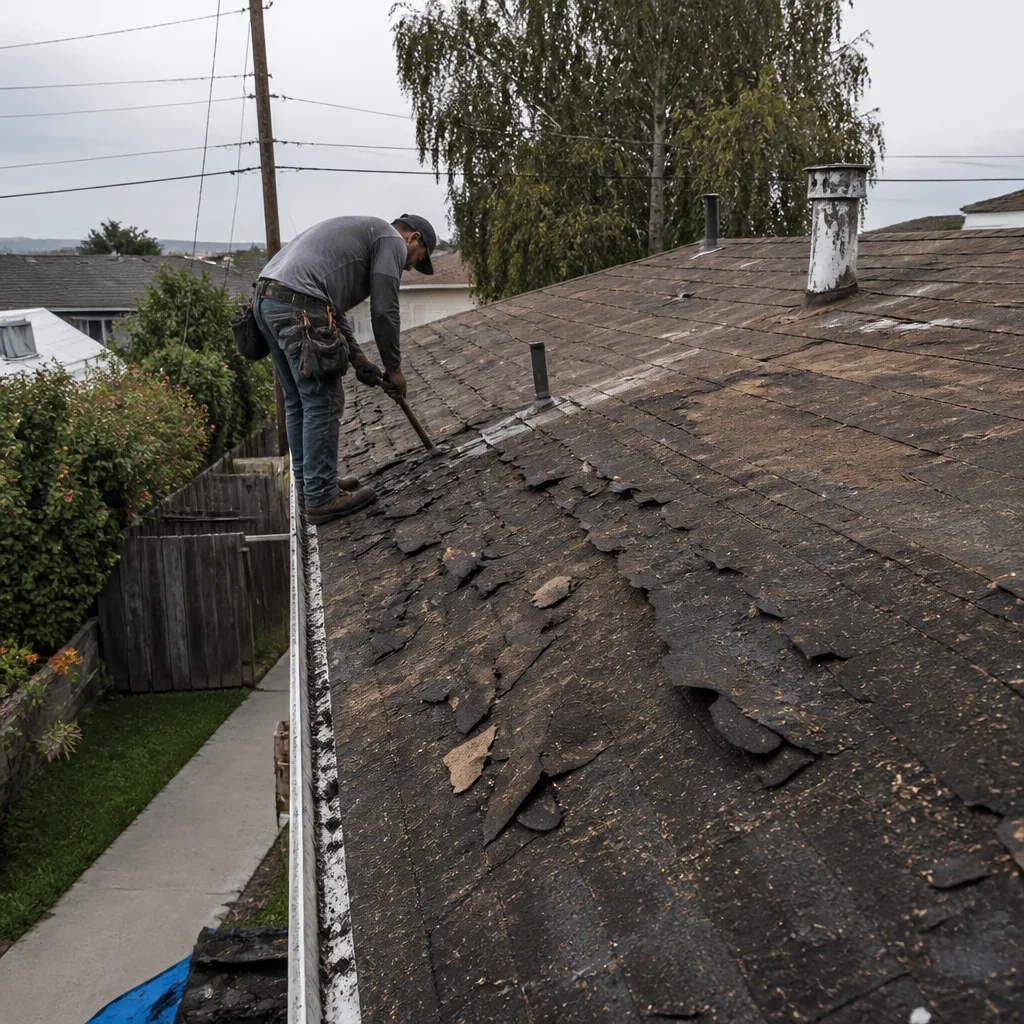
See the difference
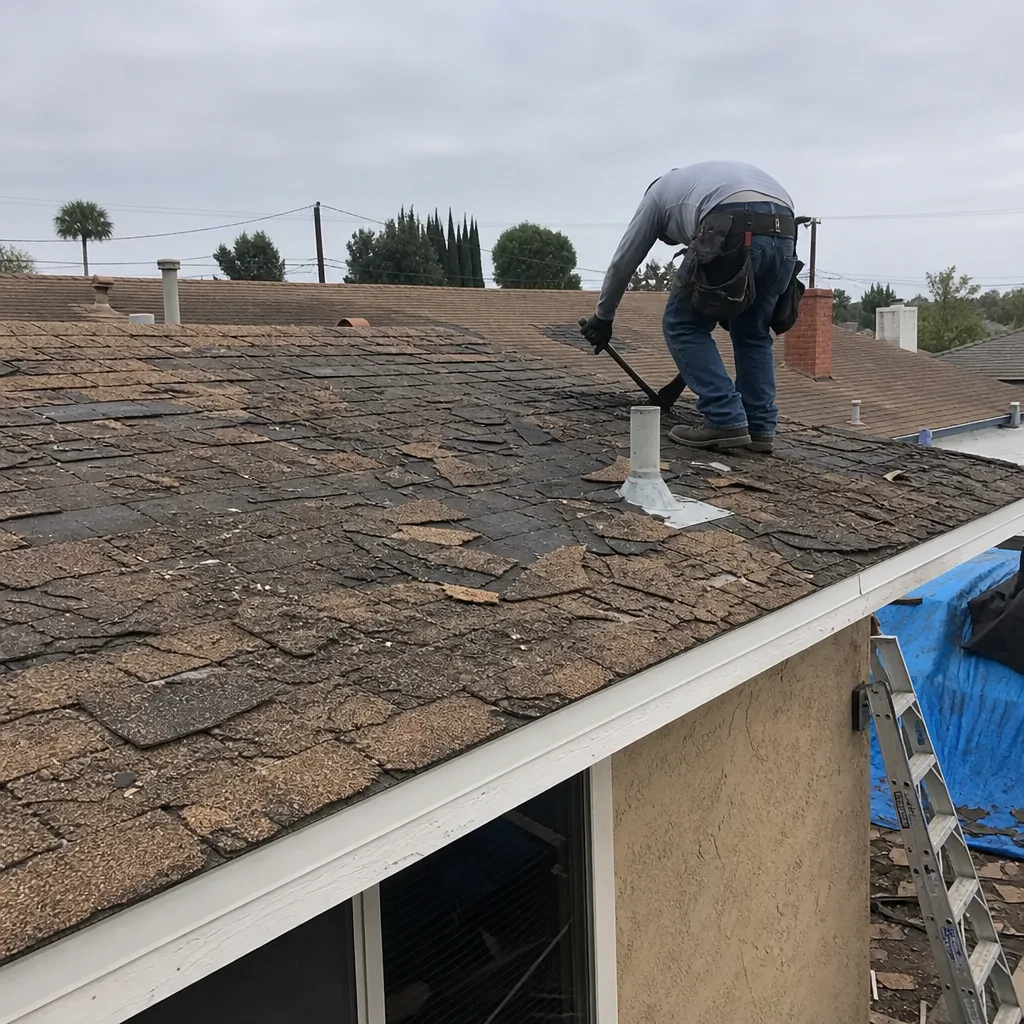 Before
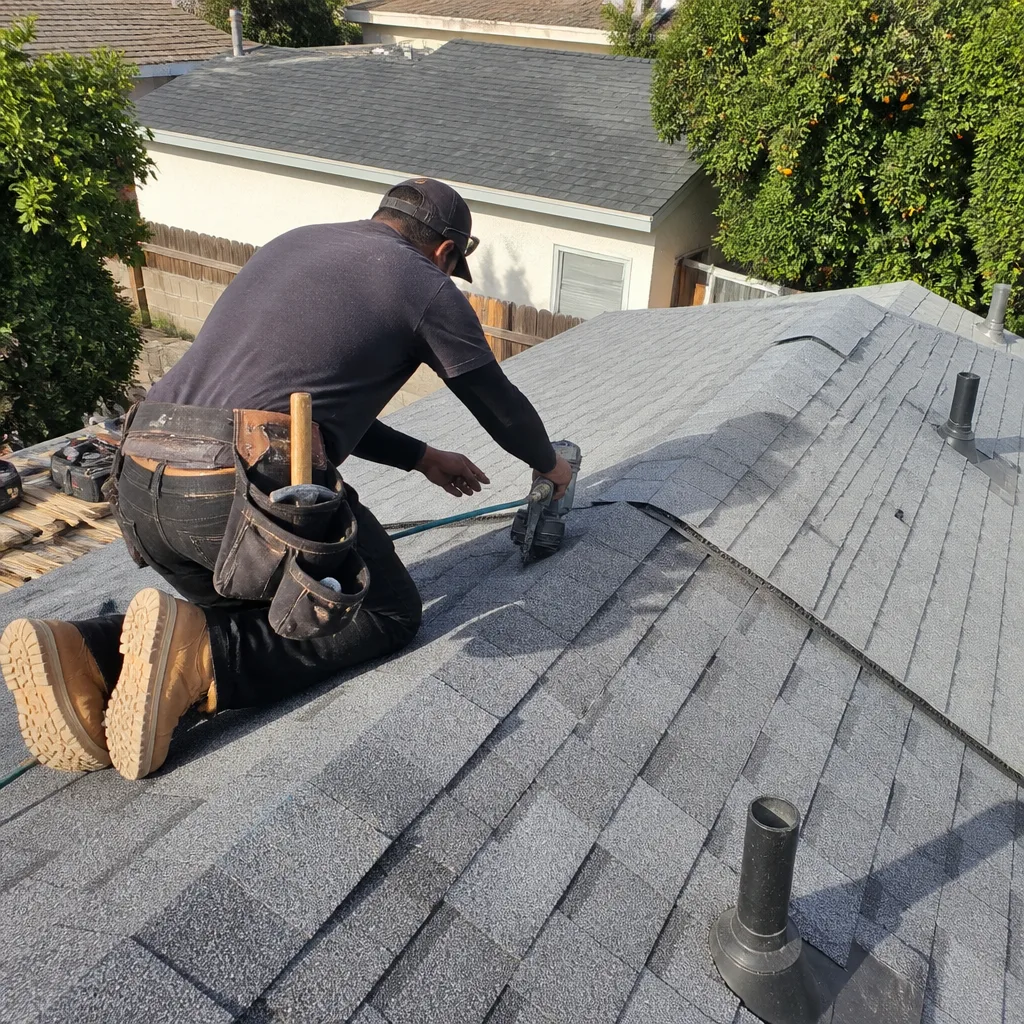 After
 Before
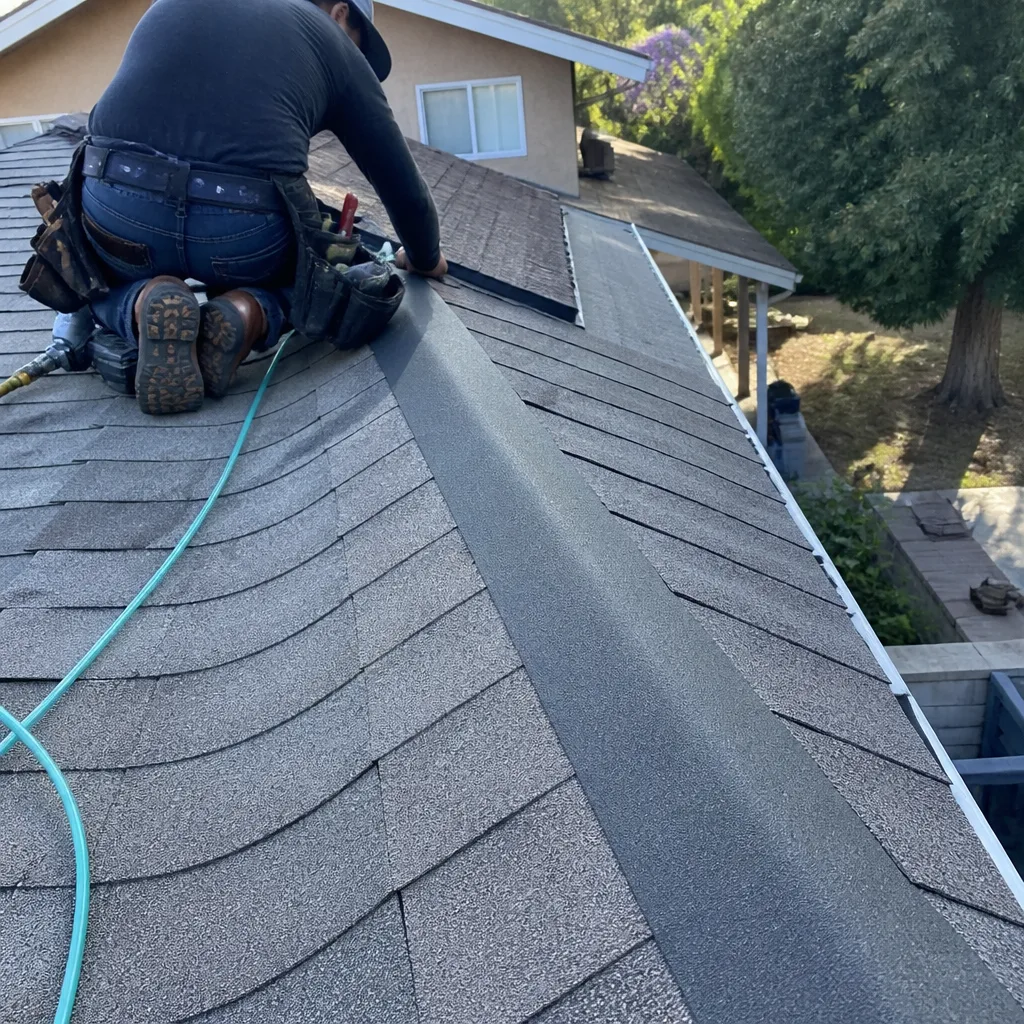 After
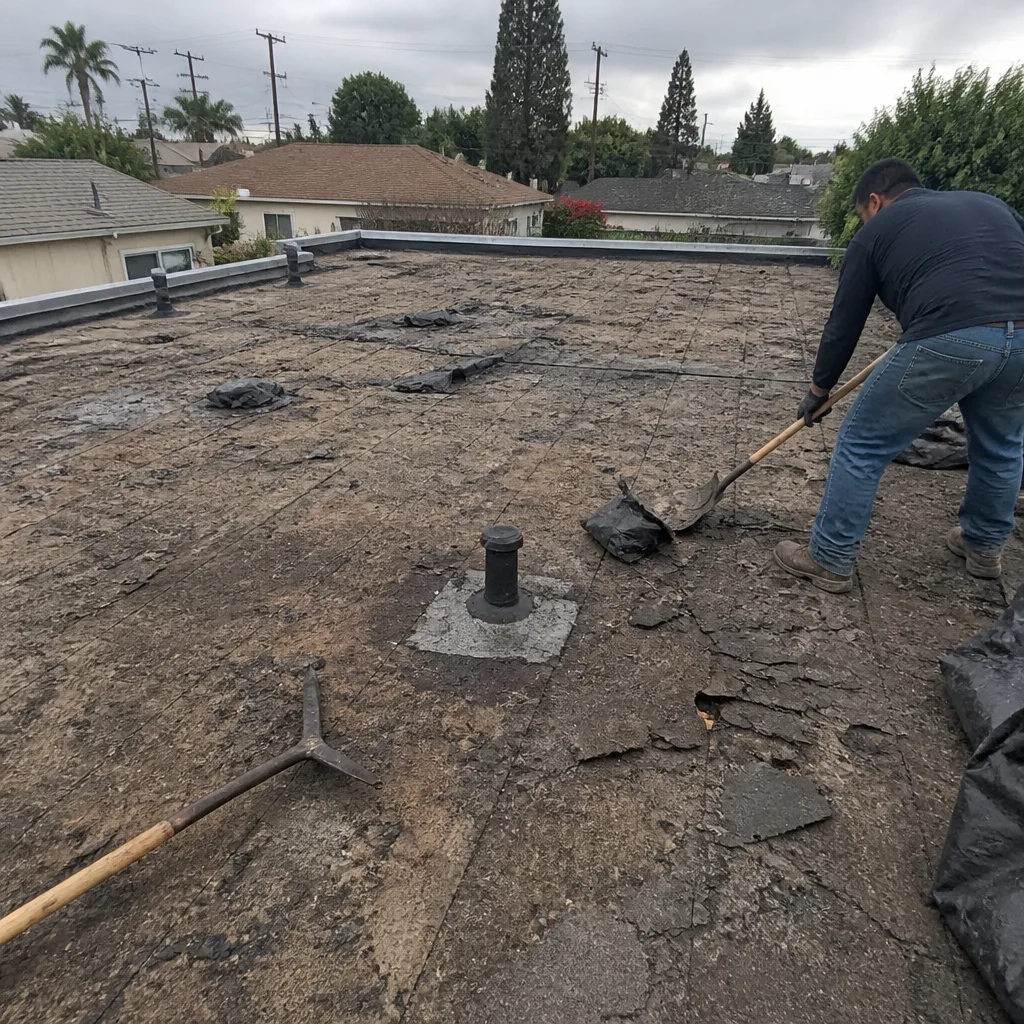 Before
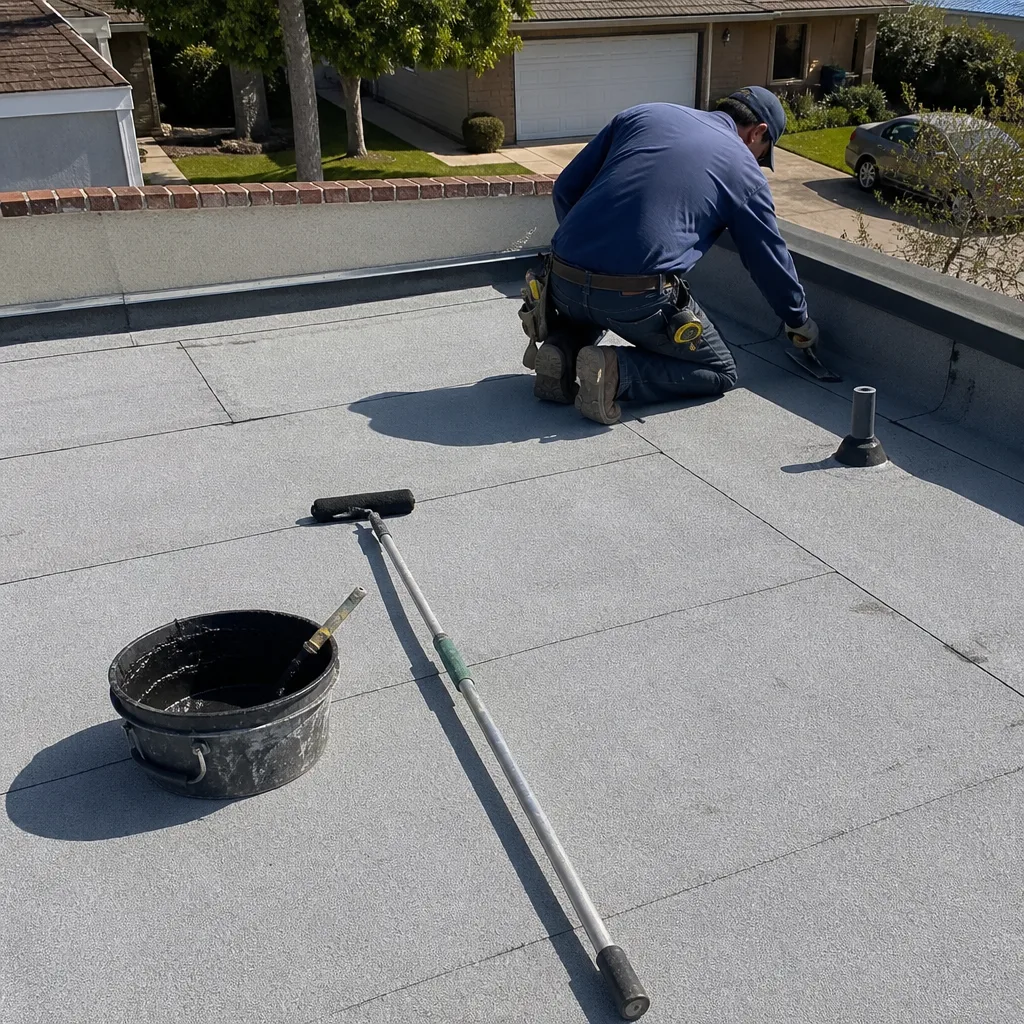 After
When to Call a Professional
Call a roofer when you see missing shingles, lifted ridge caps, visible gaps around flashing, or water stains on interior ceilings. Call after a Santa Ana wind event if you find shingle debris in your yard, even if the roof looks intact from the ground. Call when you’ve patched the same area before and it’s failed again. Call when you’re buying or selling a home and need a documented roof condition report. And call when you simply don’t know what you’re looking at and want an honest assessment without a sales agenda. Buena Park Roof Repair offers free estimates throughout Buena Park. Call (866) 282-5070 to schedule yours.
Frequently Asked Questions
Most roof repairs in Buena Park range from $350 to $1,800 depending on the scope, with individual shingle replacement starting around $250 and full ridge cap replacement reaching $1,500 to $1,800. The specific number depends on your roof’s pitch, accessibility, material type, and the extent of the failure. Call (866) 282-5070 for an exact quote on your specific repair needs.
Minor repairs like individual shingle replacement, flashing re-seals, and ridge cap sections typically don’t require a permit, but full replacements and structural work do. Current Buena Park municipal code determines the exact thresholds, and a responsible contractor verifies current requirements before starting work. The permit is worth the cost when replacement is involved, since unpermitted work becomes a resale liability.
Yes, and this is the advantage of working with a company that installs products from multiple manufacturers. Because we work with seven major brands including CertainTeed, GAF, Tamko, and Boral, we match the replacement section to your existing roof’s profile, color, and material line rather than forcing whatever product we happen to stock. This protects the roof’s aesthetic continuity and keeps the existing warranty coherent.
Repair makes sense when damage is localized and the underlying materials are still sound. Replacement is the right call when shingles are brittle, granule loss is widespread, the deck shows moisture damage, or you’ve patched the same area repeatedly. The only way to know for sure is a documented inspection that assesses the full system, not just the visible damage. Call (866) 282-5070 to schedule a free estimate.
Once a year is a reasonable rhythm for Buena Park roofs, ideally in late spring after the Santa Ana season ends and before the marine layer settles in for summer. Annual inspections catch seal failures, lifted edges, and flashing cracks before they become leaks. The cost of the inspection is a small fraction of the repairs it prevents.
Buena Park’s specific climate pattern, daily marine layer moisture followed by intense afternoon sun, combined with periodic Santa Ana wind stress, causes asphalt shingles to dry out and lose adhesive bond faster than in inland or coastal areas. This isn’t a material defect. It’s a local environmental condition that changes the maintenance timeline. Roofs here often need edge and ridge attention earlier than the manufacturer’s nominal lifespan suggests.
The Bottom Line
Buena Park roofs don’t fail the way roofs fail elsewhere. The marine layer and Santa Ana winds create a specific stress pattern that hits ridge caps, flashing seals, and edge shingles before anything else. Knowing where to look and what to look for changes how you maintain your roof, and it changes what repairs make sense. When the time comes to fix something, the right move is an honest assessment first, a repair-first approach second, and a replacement conversation only when the evidence supports it. If you’re uncertain about any of it, start with an inspection. Start with someone who will tell you what the roof actually needs. That’s what we do at Buena Park Roof Repair home. Call (866) 282-5070 to schedule your free estimate.
Written by the team at Buena Park Roof Repair, serving Buena Park since 2018.