

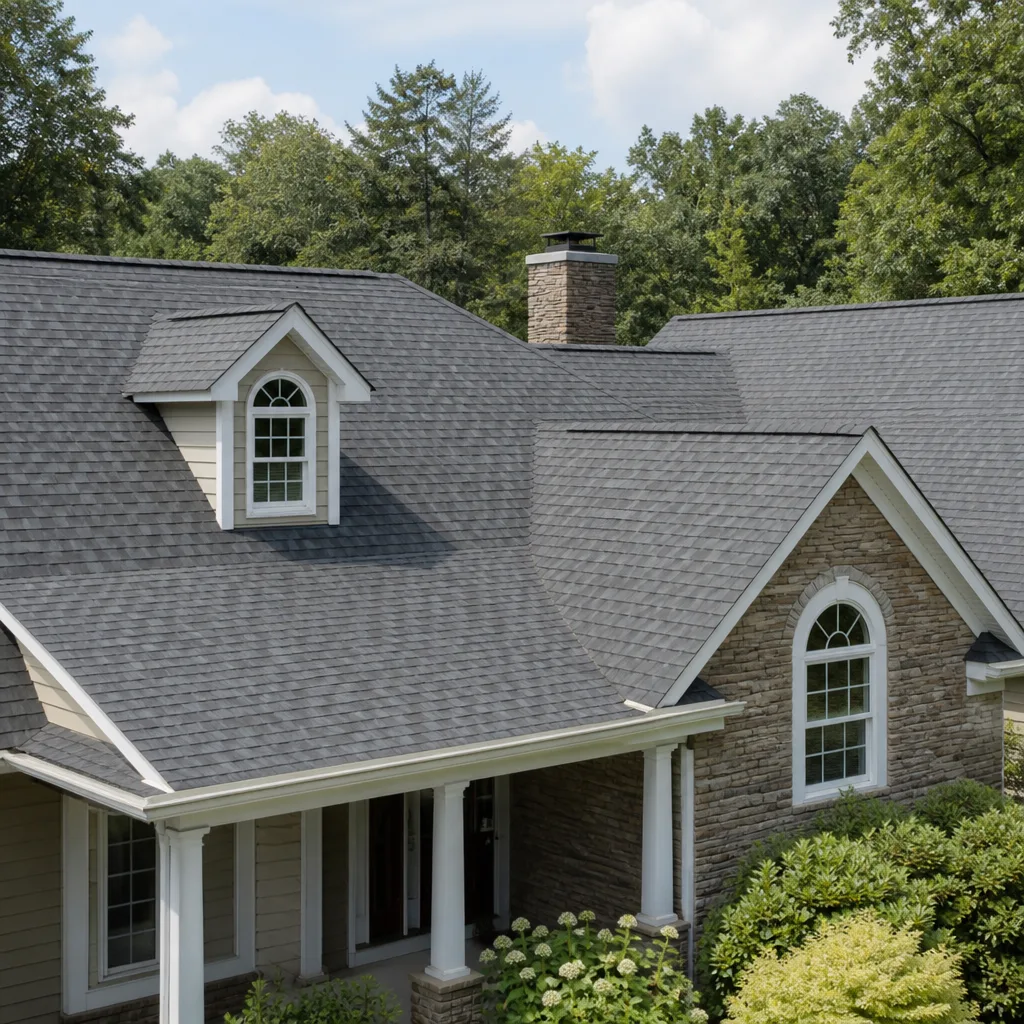
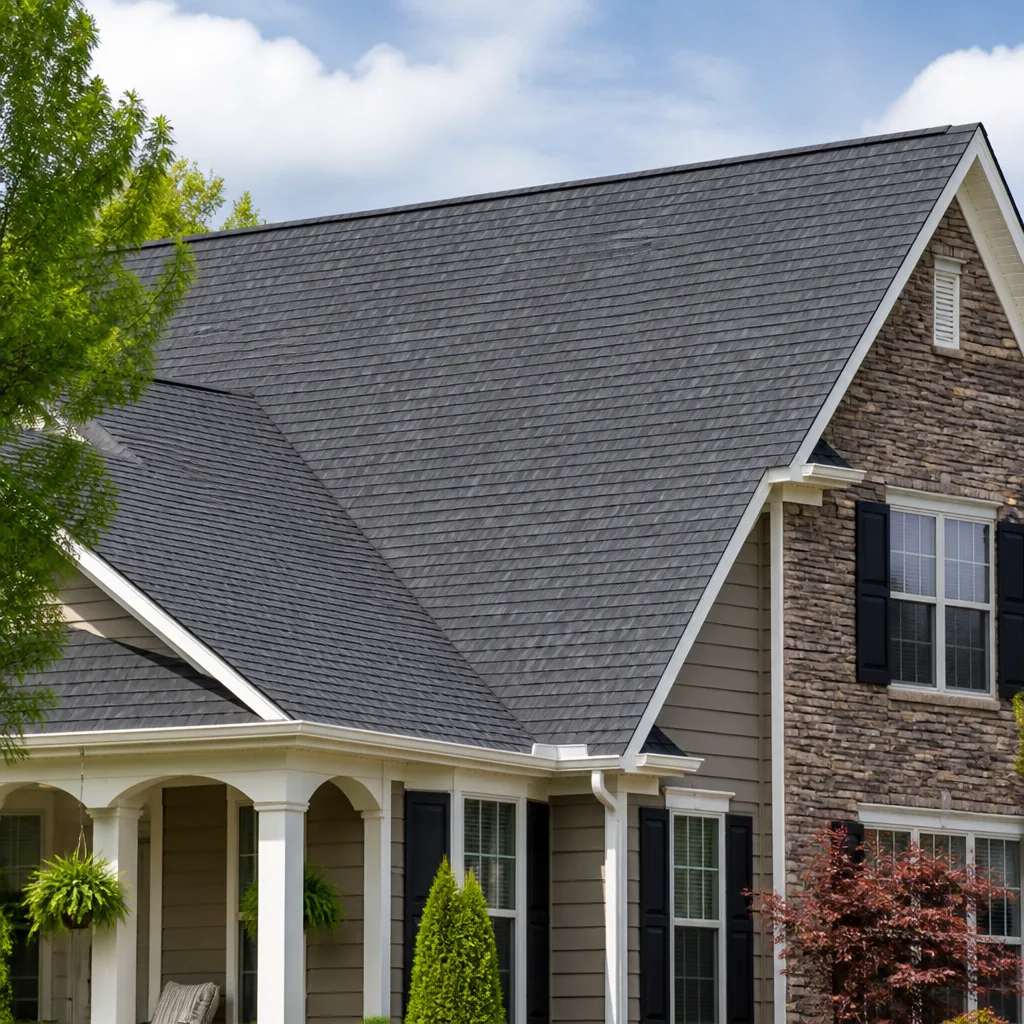
 Architectural shingles
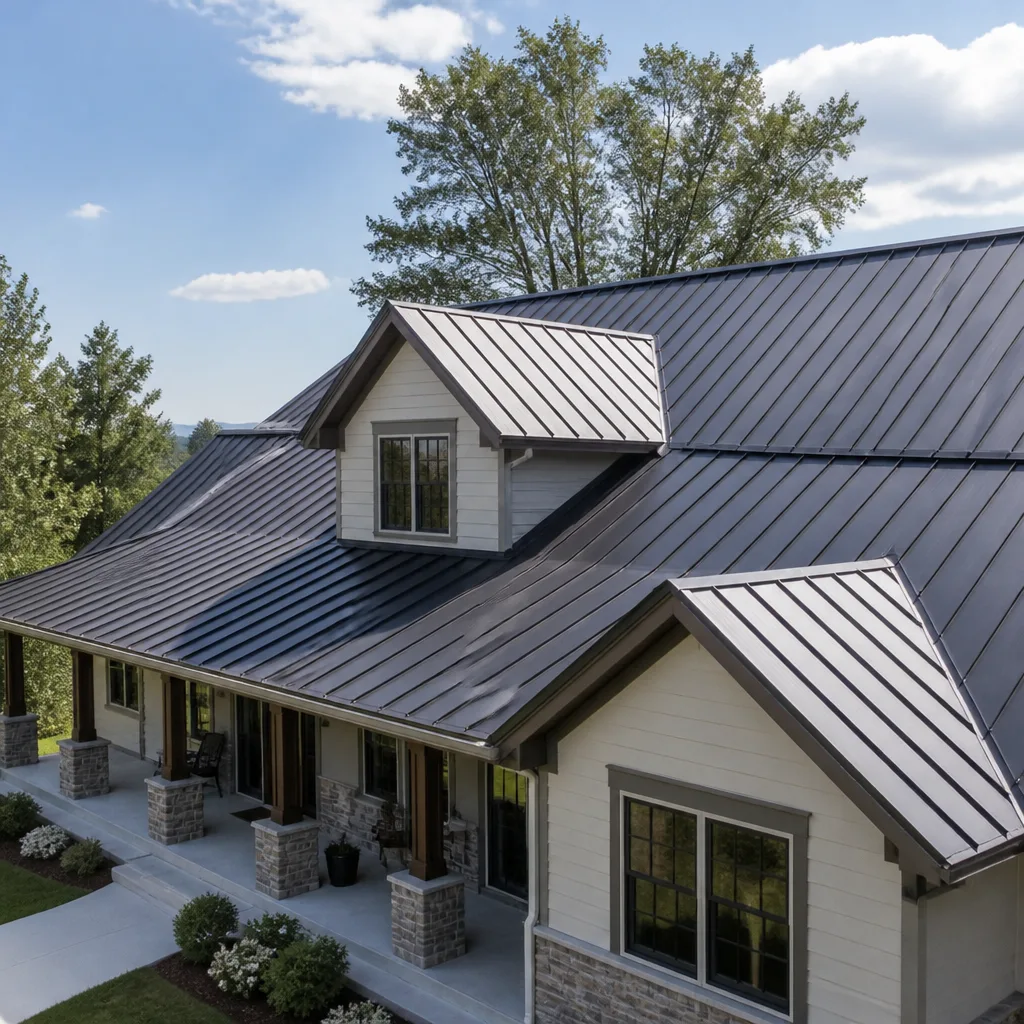 Metal roofing
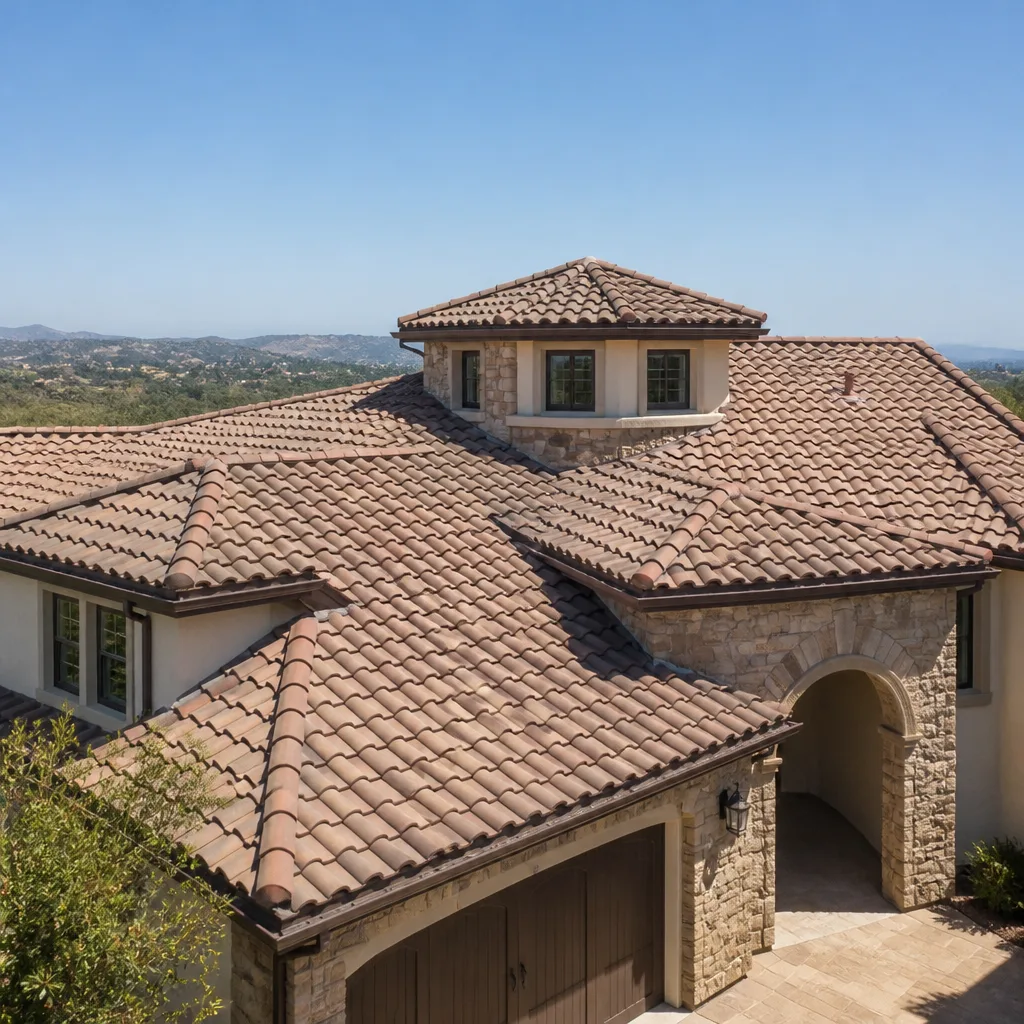 Tile roofing
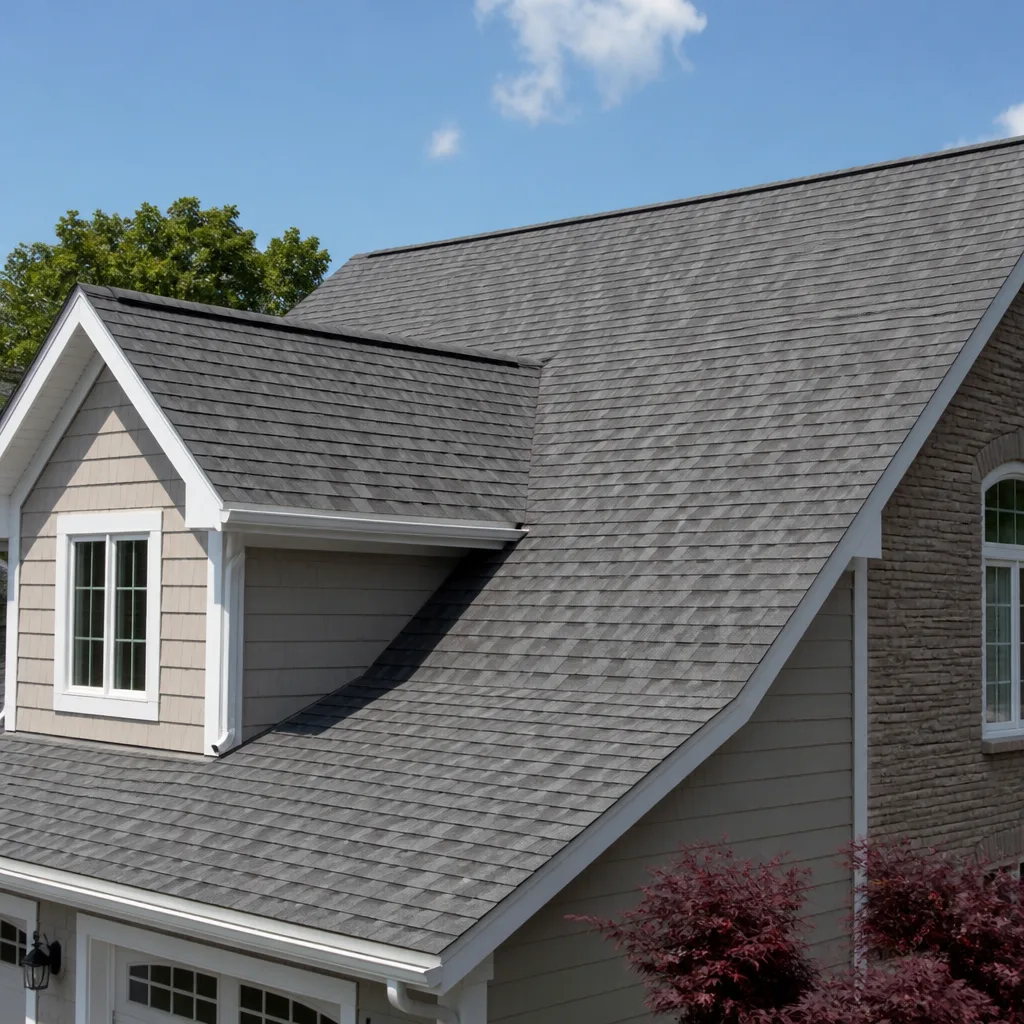
 GAF
 Owens Corning
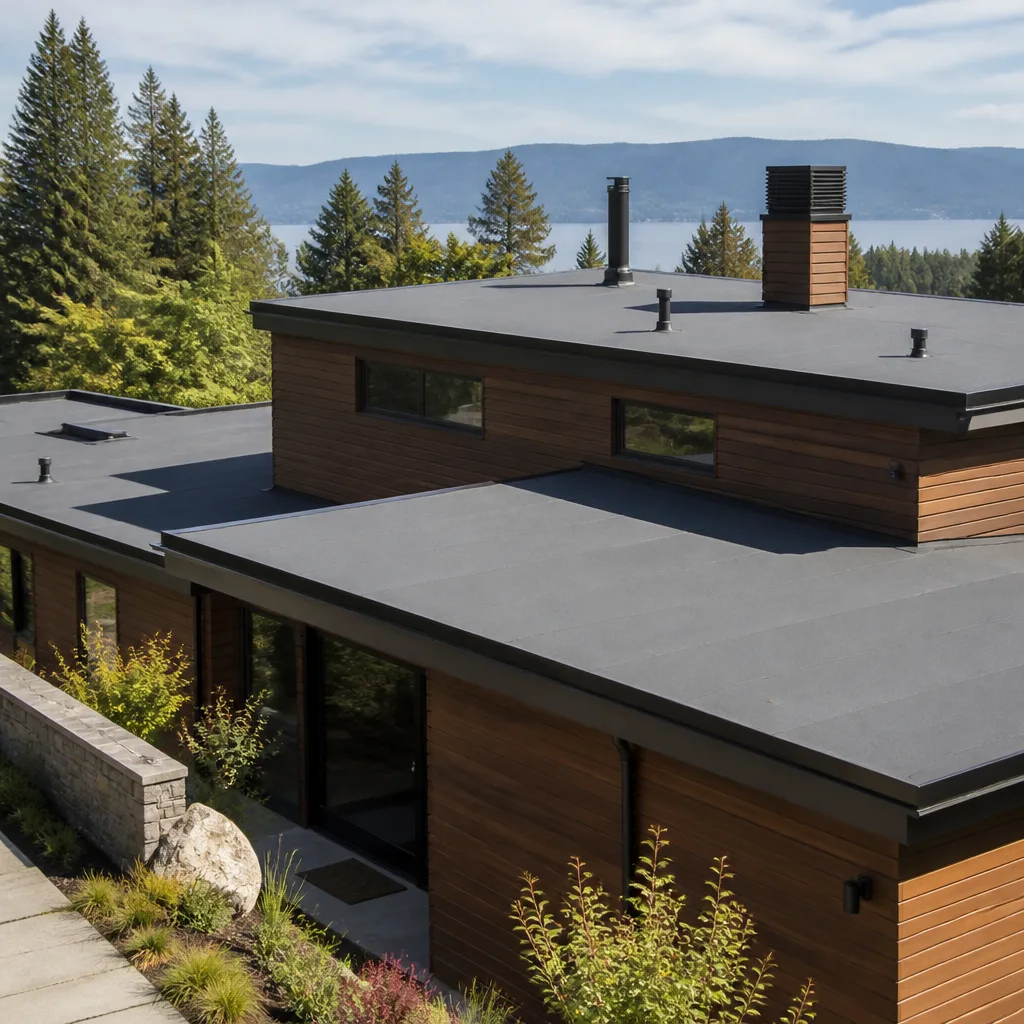 Flat & low-slope
Free roof inspection with deck photos before we talk money - GAF and Owens Corning certified installation
Fast, Reliable Roof Replacement Across Koreatown
Roof replacement in Koreatown usually means tearing off a flat or low-slope assembly on a 1960s to 1980s wood-frame building, and the honest answer on price is $9,000 to $22,000 for a typical apartment building roof, with smaller bungalows and single-family homes running $14,000 to $28,000 for a full tear-off and new system. We serve the entire 90005 zip code from Western Avenue to Vermont and Wilshire down to Olympic, and we know exactly what opening up one of these older roofs turns up. If you’re seeing water stains on a top-floor ceiling or standing water on the roof after rain, call us at (866) 282-5070 and we’ll send someone out to look before you spend a dime on a scope you may not need.
Why Buena Park Roof Repair Is Koreatown’s Preferred Roof Replacement Company
We’re a roofing-only shop. That’s the whole business: repair, replacement, and inspection. No gutters, no siding, no general contracting. When a Koreatown property owner calls us about a roof, the person who shows up has spent years working on the exact building type that dominates this neighborhood: mid-century wood-frame apartments with flat roofs, parapet walls, and rooftop equipment that was added decades after the original membrane went down. Rick Dunnigan leads our operation, and he’s built our process around one rule: tell the owner what the roof actually needs, not what’s easiest for us to sell. In Koreatown, that matters more than almost anywhere else we work, because the gap between a “simple re-roof” and a full tear-off is often the difference between $9,000 and $22,000, and you deserve to know which one you’re actually facing before you sign anything.
We’ve worked with owners and property managers throughout Koreatown, including buildings near Chapman Plaza, along 6th Street between Western and Normandie, and up around the Wilshire corridor. Many of those jobs start with our Roof Replacement in Koreatown inspection service, which gives you a written condition report with photos and a clear scope recommendation. You don’t have to commit to a replacement to get the report. That’s the whole point. We’d rather you know the truth about your roof and decide what comes next with actual information in hand.
Styles & brands we work with
Roof Replacement Contractor in Koreatown
When you hire a Roof Replacement Contractor in Koreatown, you’re hiring someone to remove the existing roof system down to the decking, assess what’s underneath, and install a new assembly that’s built for this neighborhood’s specific conditions. That means flat or low-slope systems with proper drainage, flashing details that actually work around rooftop HVAC curbs and vent stacks, and decking that can carry the load of whatever equipment the original builder never planned for. A full roof replacement on a typical Koreatown apartment building runs $9,000 to $22,000 depending on square footage, the number of penetrations, and what we find when the old layers come off.
Full Tear-Off and Decking Work
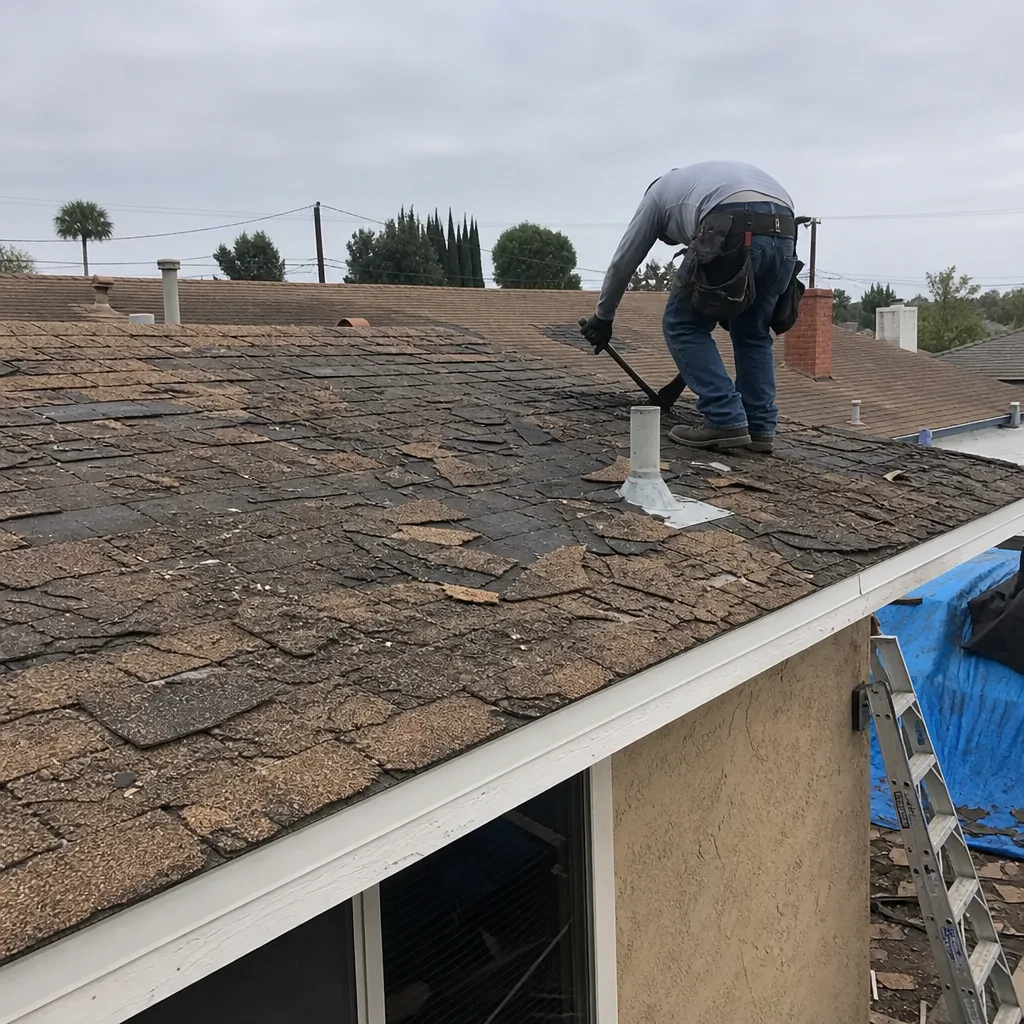
Most older Koreatown roofs have multiple layers of patching: original tar and gravel, then a cap sheet, then another membrane, then coatings. We remove all of it, because you can’t flash a new system against a failed one. We also inspect the decking itself. On buildings from the 1960s and 1970s, we regularly find sections of plywood or plank decking that rotted around old penetrations and were never caught because nobody had been down to the deck in decades. New decking gets priced per sheet, and we show you the damage in photos before we replace anything.
New Construction and Re-Decking
For owners who are adding square footage or rebuilding after fire or structural work, we handle new construction roofing as well. This is a different job than a re-roof: the decking is new, the framing is exposed, and we coordinate with your general contractor on the schedule. If you’re building new in Koreatown, the roof system should be designed for the added equipment load from day one, not patched around later.
Asphalt Shingle Roof Replacement in Koreatown
An Asphalt Shingle Roof Replacement in Koreatown is the right call for the neighborhood’s older Spanish-tile bungalows and the smaller single-family homes that sit between the apartment buildings. These homes typically run $14,000 to $28,000 depending on the pitch, the number of existing layers we remove, and whether the decking under the old shingles is sound. Architectural shingles are the most common choice here: they hold up to the intense summer heat, they carry a longer manufacturer warranty than three-tab, and they look right on the older homes along streets like Serrano and Manhattan Place.
Architectural Shingle Upgrades
When we replace a shingle roof in Koreatown, we usually recommend architectural shingles even if the original roof had three-tab. The cost difference is modest – typically $1,500 to $3,000 on a standard bungalow – and you get a thicker, more wind-resistant product that stands up to the thermal cycling this neighborhood gets every summer. We install Atlas, Tamko, and IKO architectural lines among others, and we’ll show you physical samples so you can choose the color and profile that matches the block.
Decking and Underlayment
The shingles are only the top layer. Underneath, we replace any decking that shows water damage, and we install new synthetic underlayment across the entire roof plane. On Koreatown bungalows with original 1960s sheathing, it’s not uncommon to replace 20 to 40 percent of the decking once the old shingles are off. That cost gets quoted per sheet in writing before we start, so you’re not surprised by a supplement at the end of the job.
Trusted Brands We Service in Koreatown
We’re authorized to install and warranty products from seven major manufacturers, including IKO, Atlas, and Tamko, which means we can match the right material to your building instead of pushing whatever we have in stock. That matters in Koreatown, where a flat apartment roof over Wilshire needs a different system than a pitched bungalow near Saint Basil’s, and a building with rooftop solar rail needs flashing details that work with the racking, not against it. We keep common accessories on hand for faster turnaround, and if your existing roof was built with a specific brand and you want to match it, we’ll pull from the manufacturer we know will perform, not the one we happened to buy from last quarter. Choose your material, not ours.

Common Roof Replacement Problems We See in Koreatown Homes
- Buried membranes over rotted decking. The original tar-and-gravel roof was patched, then re-patched, then coated. By the time we open it up, there are often three or four layers hiding decking that’s been quietly failing for years. That’s why a flat-roof replacement here sometimes doubles once we strip the assembly down.
- Standing water after winter rains. Koreatown sits in an urban heat-island basin, and flat roofs here get baked by summer sun and then hit with short, heavy winter rain events. If the drainage wasn’t sized for the added rooftop HVAC units and solar arrays, water ponds in the low spots and eats through the membrane.
- Failed flashing at rooftop equipment curbs. The penetrations were never flashed correctly when the equipment went in, or the old pitch pans cracked and separated. Water follows those penetrations straight into the decking and the top-floor ceiling below.
- Undersized framing under the original deck. Some of these 1960s and 1970s buildings were framed for a tar-and-gravel roof and not much else. When a permit triggers a structural review, we sometimes find rafters or joists that need reinforcement before new decking goes down. We flag that before it becomes your problem on the permit inspection.
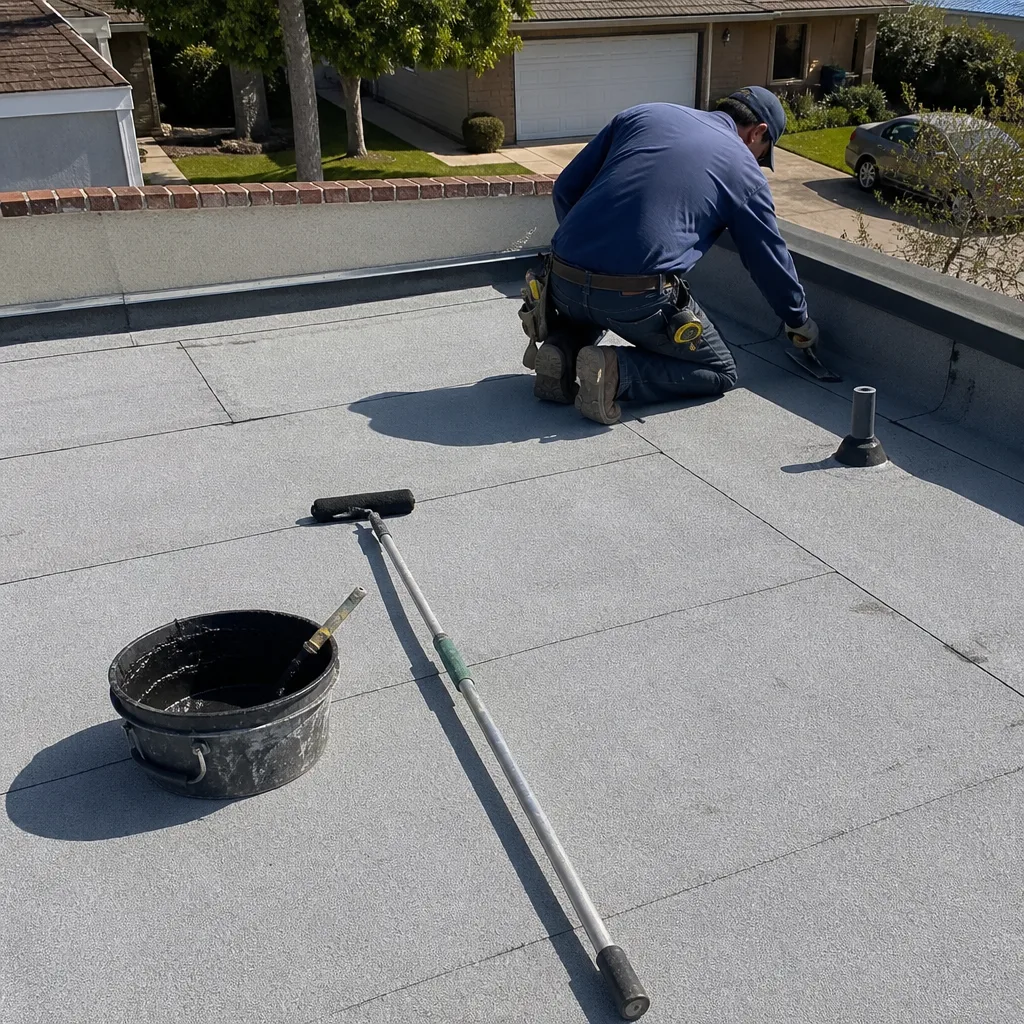
In Koreatown’s mid-century wood-frame apartment stock, a “simple” re-roof routinely becomes a full tear-off: original tar-and-gravel surfaces are buried under decades of patch layers, and rooftop HVAC units, solar arrays, and storage sheds mean you often find the fourth membrane – and the decking beneath it – before a single square goes down. On a two-story 1960s walk-up near Western and 6th in 90005, our crew opened a low-slope roof to find four buried membranes over rotted decking and undersized framing, plus rooftop HVAC penetrations with failed flashing. We pulled the layers, replaced the decking, set new underlayment and ice and water shield at the penetrations, and priced each code-triggered upgrade in writing before we touched it. The owner approved it all before the first square went down. That’s how we work every job in this neighborhood.
See the difference
 Before
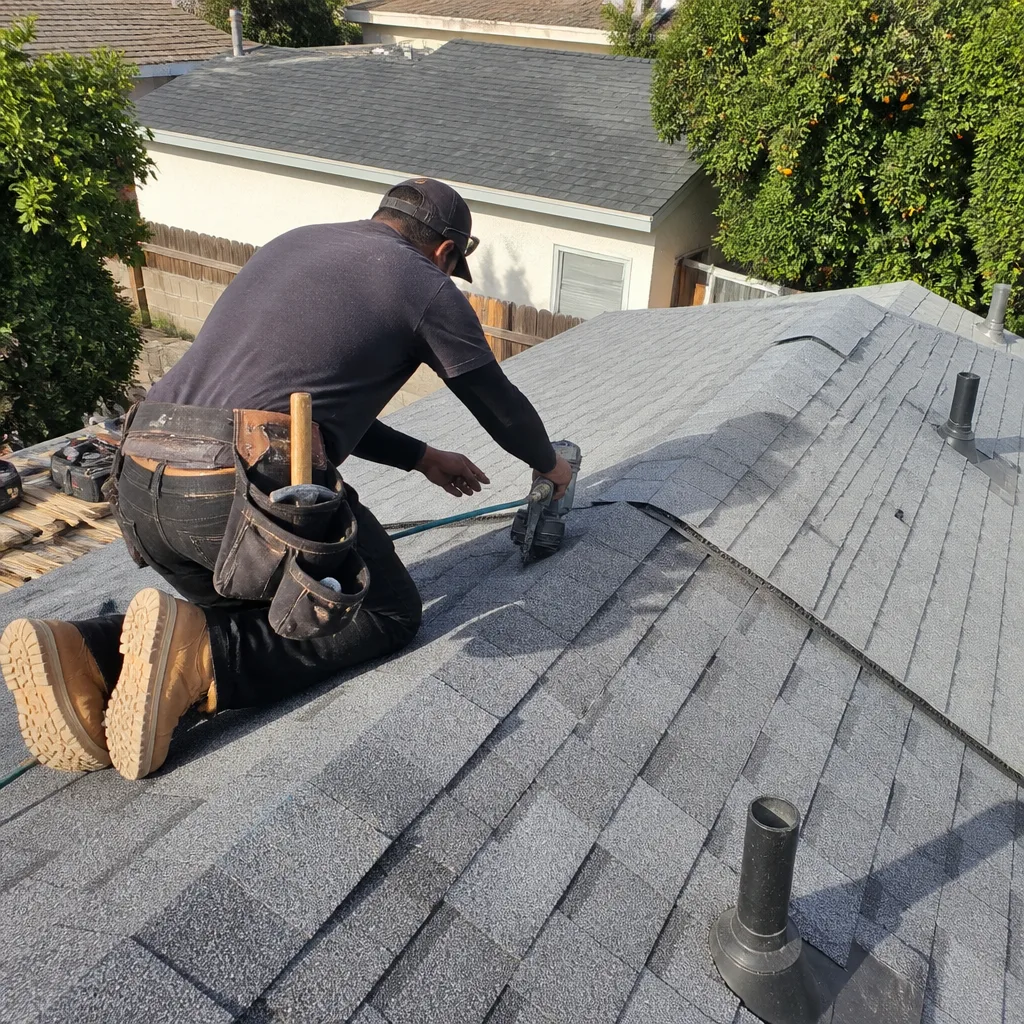 After
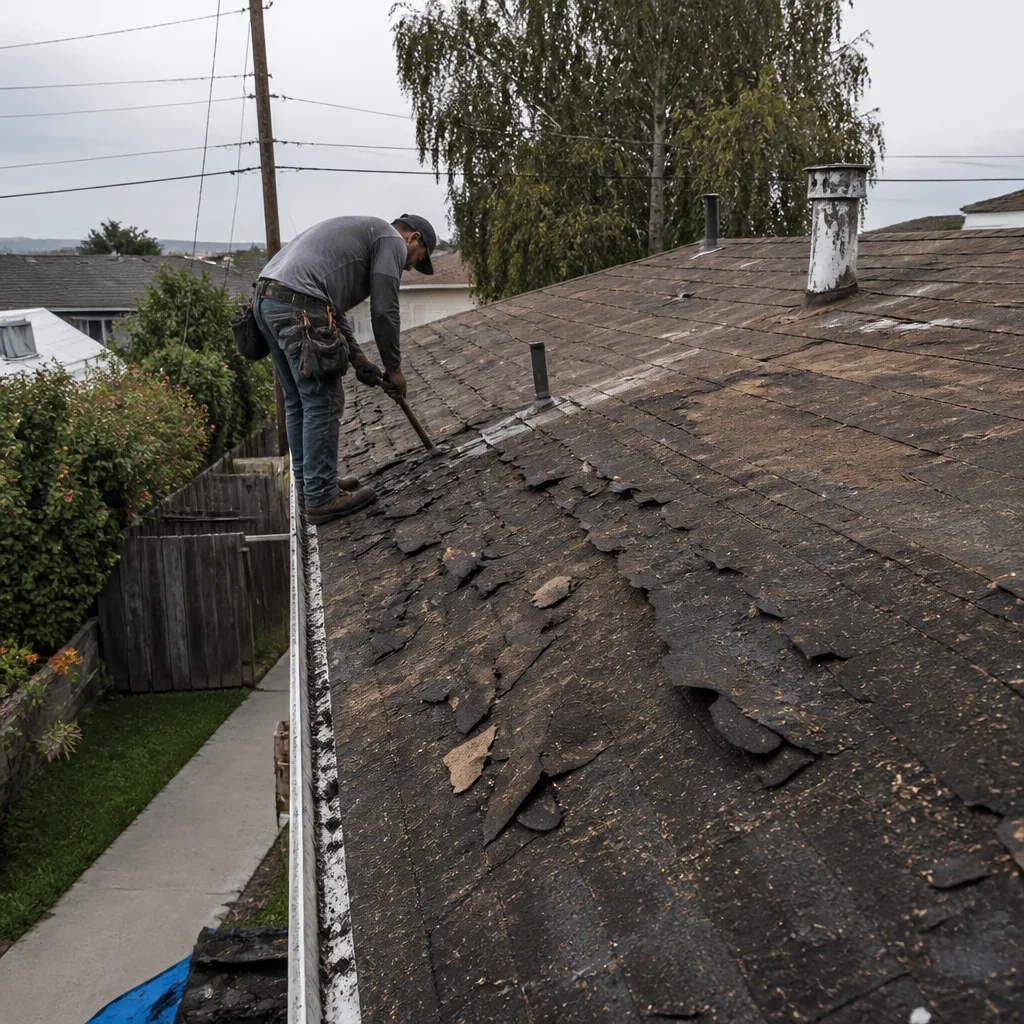 Before
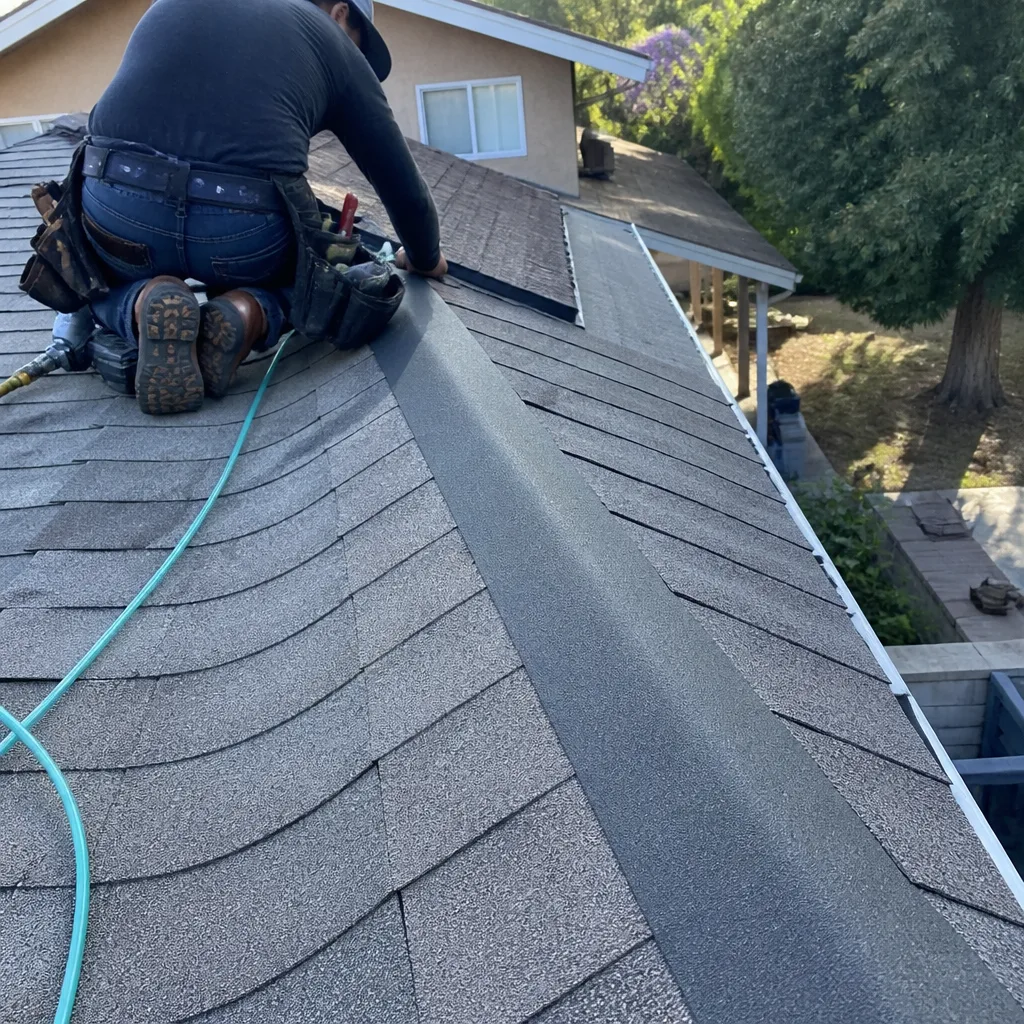 After
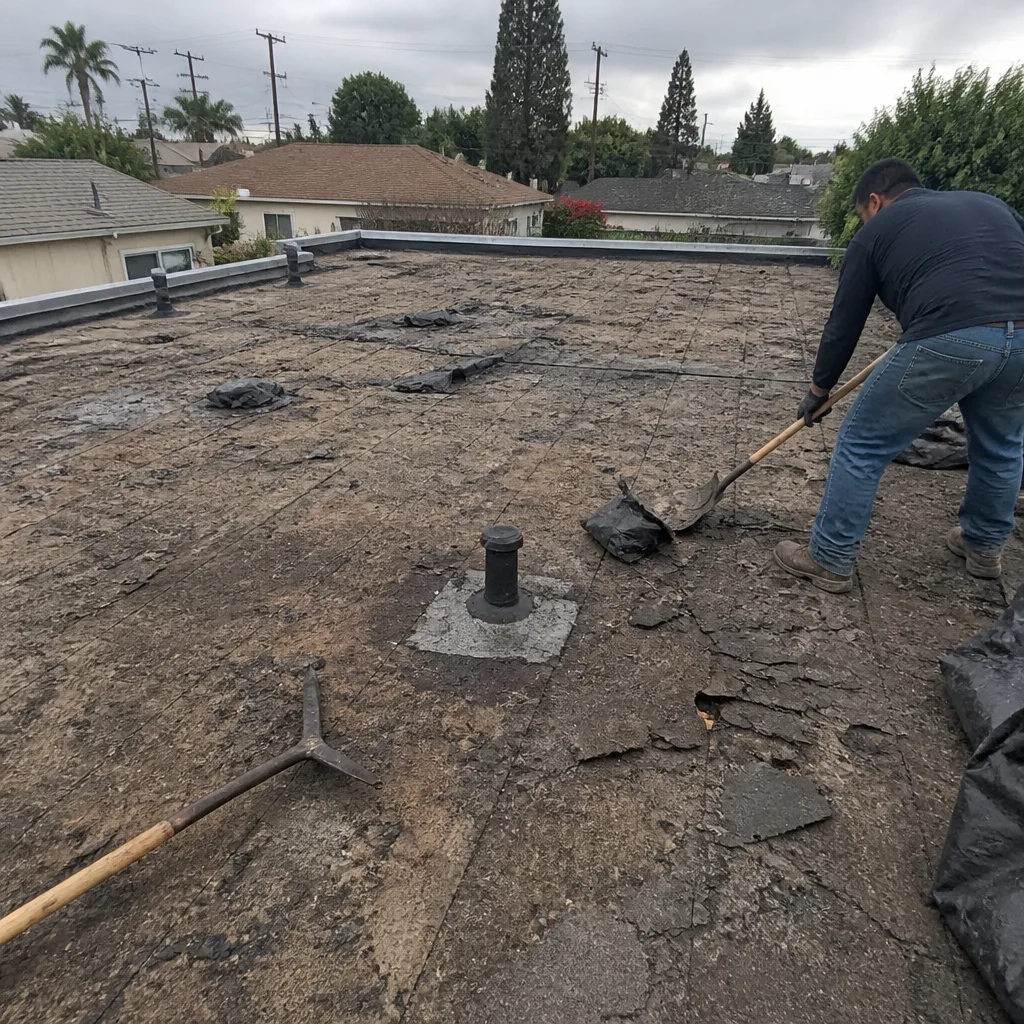 Before
 After
Pricing for Roof Replacement in Koreatown, CA
Here are honest numbers for the Koreatown market. A full tear-off and replacement on a flat or low-slope apartment roof typically runs $9,000 to $22,000 depending on square footage, penetration count, and decking condition. A single-family bungalow with a shingle roof runs $14,000 to $28,000 for a full Roof Replacement with architectural shingles. Decking replacement is priced per 4-by-8 sheet, usually $75 to $120 installed, and code-triggered framing upgrades get quoted in writing before we start. What moves the number here? The age of the building, what’s under the current roof, and whether you have rooftop equipment that needs re-flashing. We write allowances into the contract for exactly these discoveries, so you’re never surprised by a change order you didn’t approve. Call (866) 282-5070 for a free estimate based on your specific building.
We Also Serve Cities Near Koreatown
Our roofing crews work throughout central Los Angeles, including Koreatown and the surrounding neighborhoods. We regularly take jobs in Los Angeles proper, Echo Park, Silver Lake, and View Park-Windsor Hills. If your building sits just outside the 90005 boundary, call us and we’ll tell you whether we cover your block. The same repair-first, material-choice-driven approach applies anywhere we work.
Serving Koreatown, CA — Our Local Coverage Area
We’re based in the Koreatown area and know this community well. Use the map below to see our service coverage — if you’re nearby, we can almost certainly help.
FAQs About Roof Replacement in Koreatown
The number moves because what’s under the visible surface is usually worse than what the surface suggests. Original tar-and-gravel assemblies from the Sixties and Seventies have been patched and re-patched for forty or fifty years, and when we strip them down, we often find rotted decking, failed flashing at rooftop penetrations, and undersized framing. We handle this by writing allowances into the contract up front and pricing every discovered repair in writing before we touch it, so the final number is something you approved at every step, not something that appeared at the end. Call (866) 282-5070 and we’ll walk you through how we scope a flat-roof job in Koreatown.
We work in sections, not the whole roof at once. A typical two- or three-story building in Koreatown gets split into roof zones so we can demo and re-roof one area while the rest of the building keeps functioning. We coordinate roof access with your property manager, we keep noise to working hours, and we stage materials in a way that doesn’t block the parking area that most of these buildings don’t have enough of anyway. If you’re managing a building with Korean-speaking tenants or owners, we’ll work with whoever you designate as the point of contact and keep communication in writing so nothing gets lost in translation.
Yes, and this is one of the biggest reasons Koreatown flat roofs fail. The original roof was designed before the equipment went in, and the penetrations were flashed with whatever the installer had on hand. When we re-roof, we flash every curb, rail foot, and pitch pan as part of the new assembly, using the correct base and cap flashing for the equipment that’s actually there now. We also verify the drainage around each penetration, because added equipment changes where water ponds. If the roof was originally drained for one low point and now the water sits against a solar rack, we’ll address the slope before the new membrane goes down.
A square is 100 square feet of roof surface – roofing is always priced this way, and it’s the unit your shingle or membrane quantity will be quoted in. On a typical Koreatown bungalow, you might have 15 to 25 squares of roof area. On a mid-century apartment building, that number jumps to 40, 60, or more depending on the footprint. We price material per square and labor per square, and we show you the building measurement on the quote so you can verify the math. If you’re not sure whether a quote is using squares correctly, call (866) 282-5070 and we’ll explain yours line by line.
Architectural shingles are not rated for low-slope or flat roofs. They need a minimum slope, typically 2:12 or 3:12 depending on the manufacturer, and most Koreatown apartment building roofs are below that threshold, which is why they use built-up or modified bitumen systems instead. If your building has a pitched roof section – some of the older Koreatown bungalows and a few mixed-use buildings do – architectural shingles from Atlas, Tamko, or IKO work well. The right product depends on your actual slope, and we’ll tell you straight what your roof needs. Repair when possible, replace when necessary.
Get an Honest Assessment Before You Commit
If you own or manage a building in Koreatown and you’re wondering whether you need a full roof replacement or a repair, start with an inspection. Our team will walk the roof, photograph what’s there, and give you a written report that separates what’s actually failing from what’s still serviceable. No commitment to replace anything. No pressure to sign. Just straight answers about the roof over your head. Call (866) 282-5070 to schedule your free estimate, or ask for Rick Dunnigan and he’ll explain exactly what we found and what it actually needs.
Written by Rick Dunnigan, Owner at Buena Park Roof Repair, serving Koreatown and surrounding Los Angeles neighborhoods.