Last updated October 31, 2026
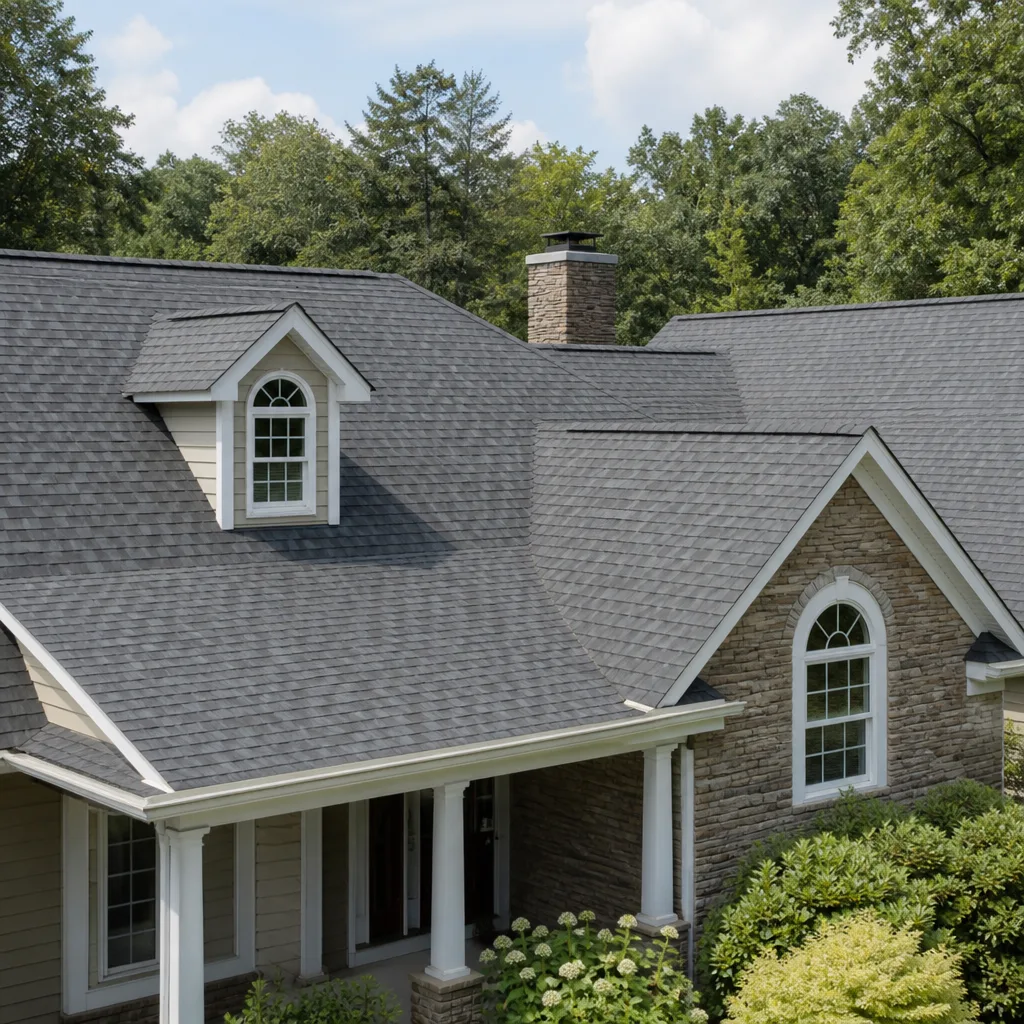 Architectural shingles
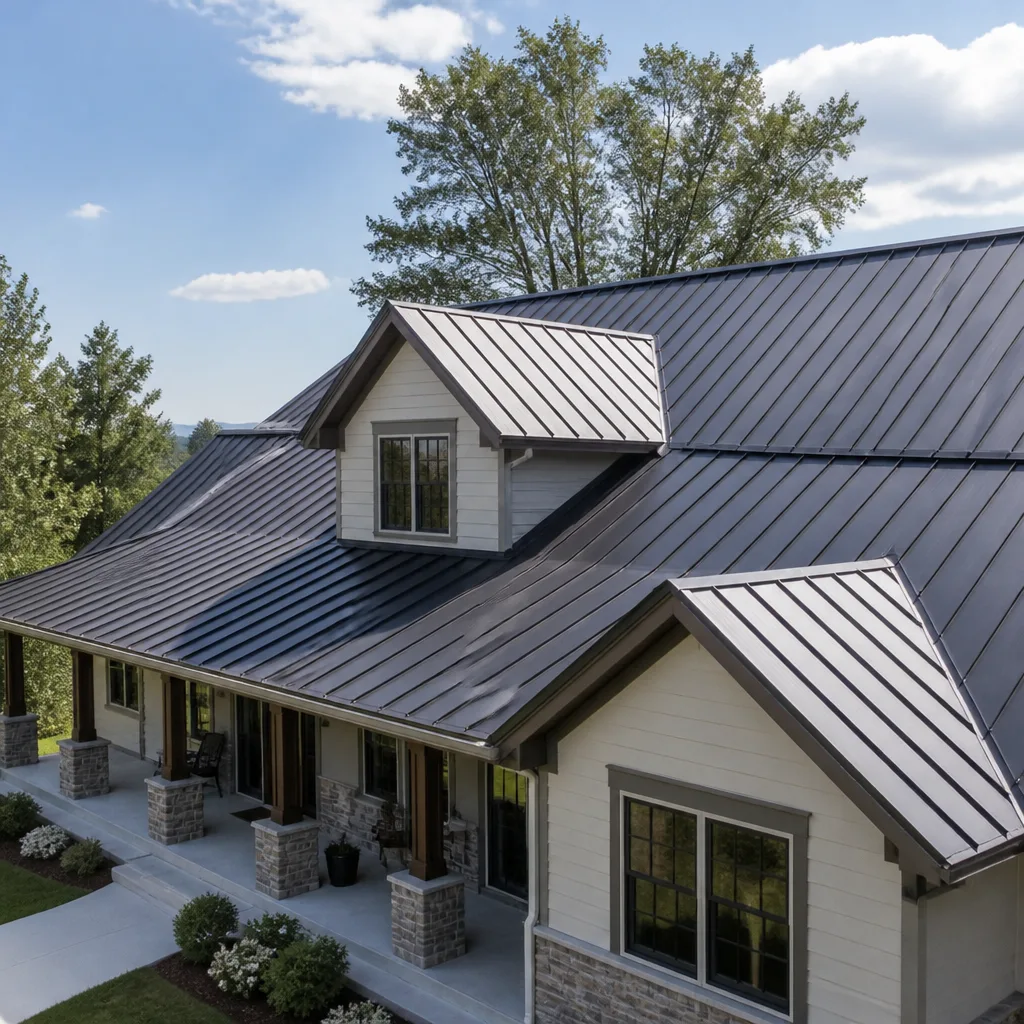 Metal roofing
 Tile roofing
 GAF
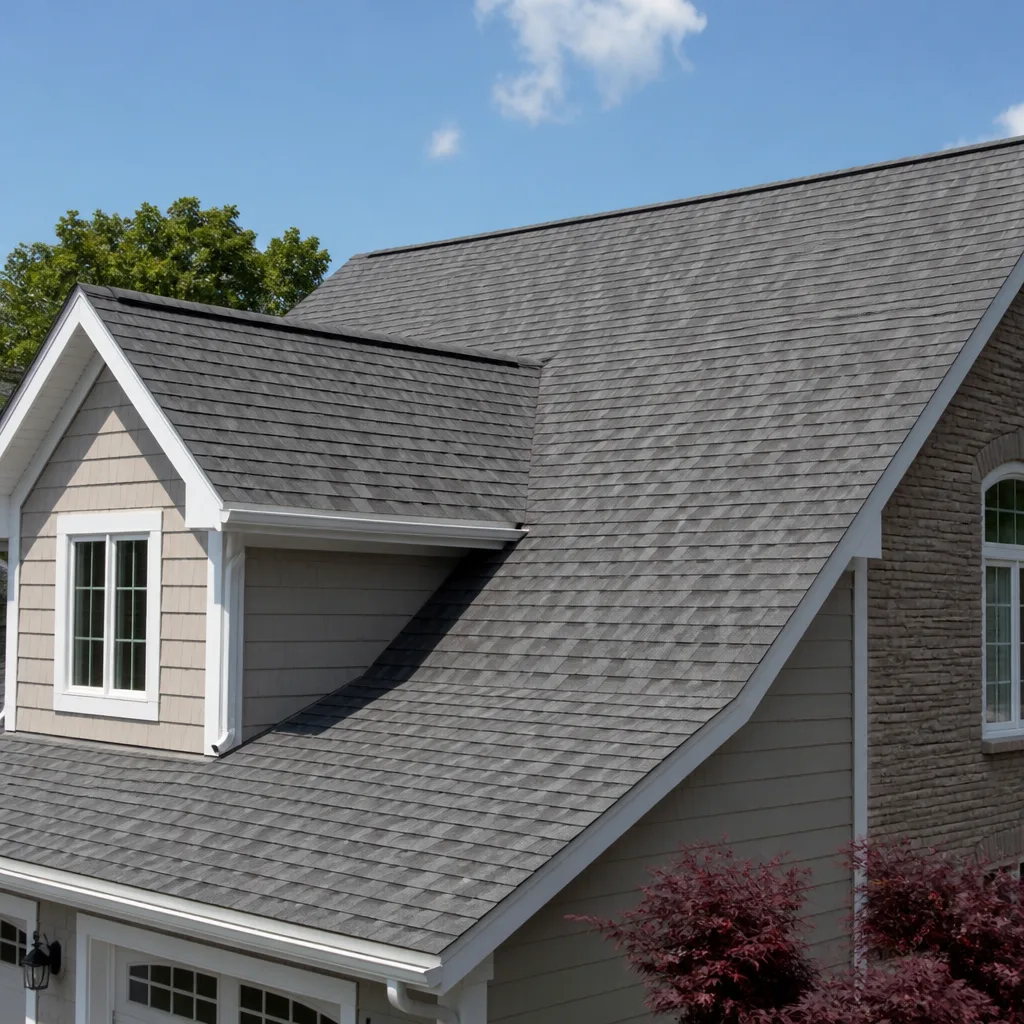 Owens Corning
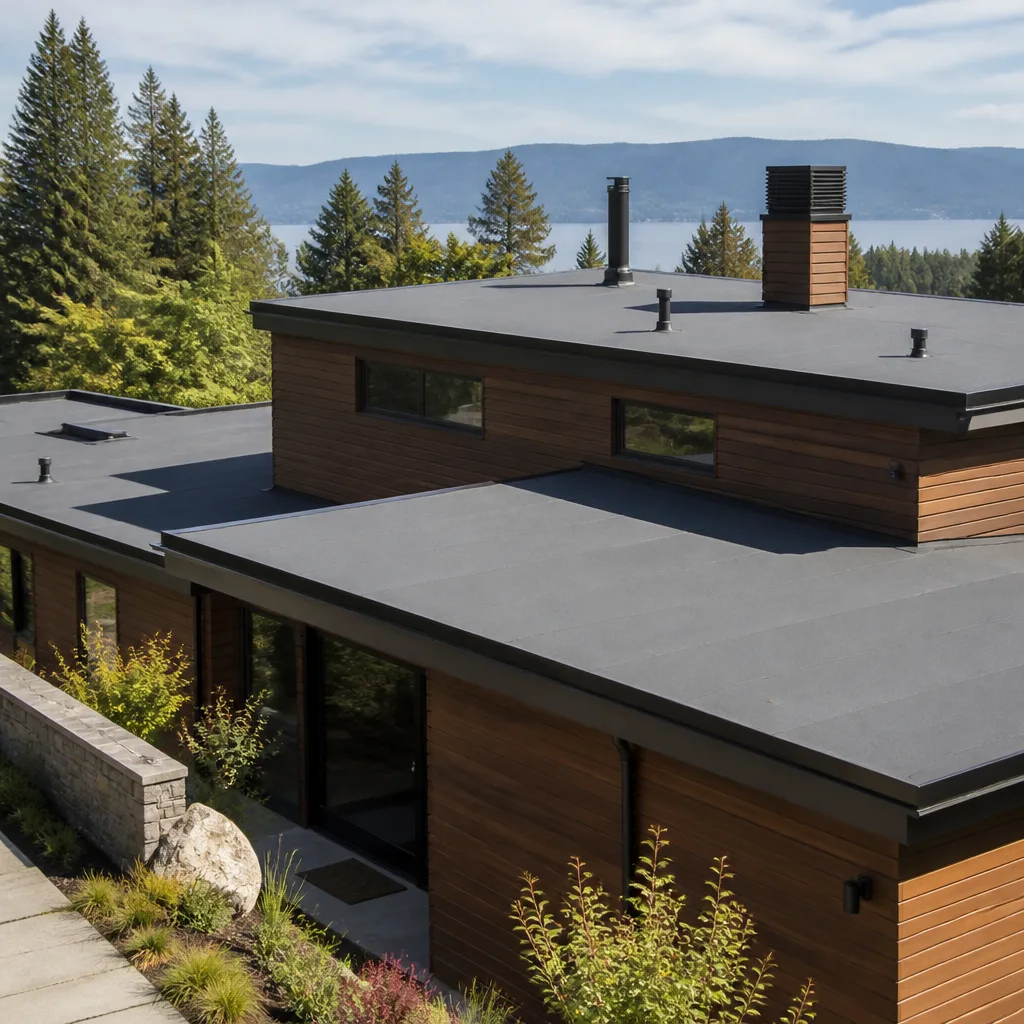 Flat & low-slope
Free roof inspection with deck photos before we talk money - GAF and Owens Corning certified installation
Roof Repair Maintenance Checklist for Buena Park Homeowners
Here’s what surprises most Buena Park homeowners: the roof failures we see most often aren’t caused by storms. They’re caused by years of quiet, cumulative damage from UV exposure, dried-out sealant, and small problems that never got caught because nobody was looking. Southern California roofs don’t fail spectacularly overnight. They fade, crack, shrink, and leak slowly until one day water is running down an interior wall. This checklist is built around those specific failure points. You’ll learn what to inspect, when to inspect it, what’s normal and what’s not, and when a repair makes more sense than a replacement. Whether you’re in a 1950s ranch near the Buena Park Mall or a newer development off Beach Boulevard, this guide covers the maintenance points that actually matter for our climate.
Quick Answer
The most important roof maintenance steps for Buena Park homeowners are inspecting pipe boot collars, ridge caps, flashing sealant, and flat sections twice a year, plus checking for wind damage within 48 hours after Santa Ana wind events. Most roofs here need Roof Repair every 5 to 8 years and replacement around year 20 to 25, depending on material and sun exposure. The single best cost-saving habit is catching sealant failure and small cracks early before water reaches the decking.
Styles & brands we work with
Table of Contents
- The Real Failure Points of a Southern California Roof
- The Twice-Yearly Inspection Routine
- How to Read Granule Loss in Your Gutters
- The Post-Santa Ana Wind Check
- Flat and Low-Slope Sections on Buena Park Ranch Homes
- Documentation Habits That Protect Your Insurance Claim
- When to Repair vs. When to Replace
- Material Matching: Why It Matters for Partial Repairs
The Real Failure Points of a Southern California Roof
Most online roof maintenance guides are written for places with snow, ice dams, and freeze-thaw cycles, unlike our more guides & resources tailored for Southern California. Buena Park doesn’t have those problems, but it has others that are just as destructive over time. Our damage comes from three primary sources: intense UV radiation, prolonged dry heat that bakes sealants brittle, and periodic high winds that stress fasteners and lift shingle edges.
Here’s what we see on roofs throughout Buena Park, year after year:
- Cracked pipe boot collars: The rubber collar around plumbing vent pipes bakes in direct sun and develops cracks, usually within 8 to 12 years. Once cracked, water follows the pipe straight into your attic or wall cavity. This is one of the most common leak sources we repair.
- Dried mastic around HVAC curbs: Air conditioner units mounted on rooftops sit on raised curbs sealed with mastic or sealant. That sealant hardens and separates from the metal over time. Hairline gaps form, and during heavy rain water wicks under the curb.
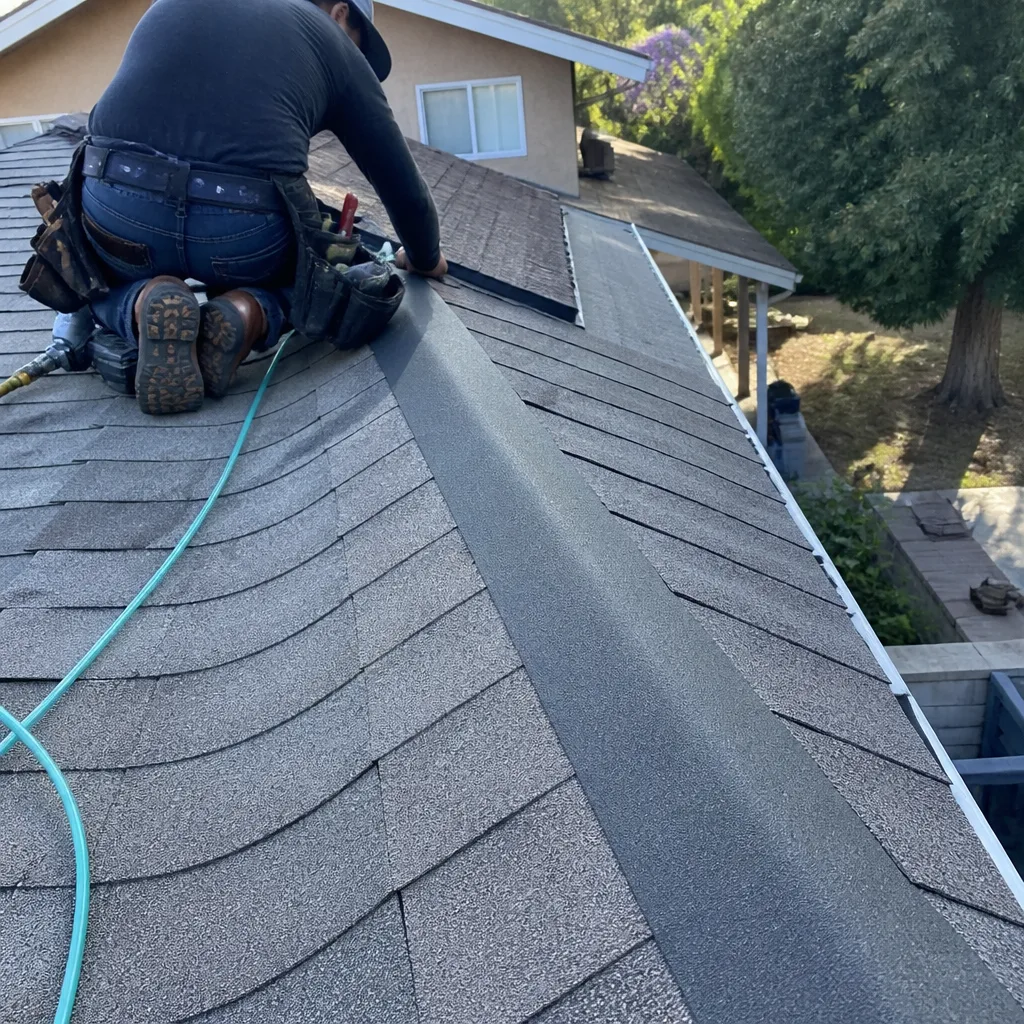
- Ridge cap shrinkage: Ridge caps take direct sun at the roof’s highest point. On composition shingle roofs, they lose flexibility as the asphalt oxidizes. The shingles shrink, pull back from the ridge line, and expose the nails beneath. We frequently find ridge caps in Buena Park that look fine from the street but have exposed fasteners when viewed up close.
- Dried flashing sealant at roof-to-wall transitions: Where the roof meets a stucco or siding wall, metal flashing is sealed with butyl or polyurethane sealant. That bead of sealant has a finite lifespan in direct sun. When it fails, water runs behind the flashing and down the wall framing.
These are all repairable issues when caught early. The problem is that most homeowners never see them because they don’t get on a ladder or call for a professional Roof Inspection in Buena Park until water is already inside the house.
The Twice-Yearly Inspection Routine
A roof in Buena Park should be visually inspected two times per year. The best windows are late March to early April, after winter rains, and late October, before the wettest months arrive. If you’re not comfortable on a ladder, binoculars from the ground or hiring a professional are both reasonable options.
Here are the eight inspection points that matter most in our climate:
- Pipe boot collars: Look for visible cracks, brittleness, or separation where the collar meets the pipe. If the rubber looks chalky and fissured, water is getting through or will be soon.
- Ridge caps: Scan the entire ridge line for shingles that appear pulled back, curled upward, or misaligned. Gaps expose nails. Exposed nails rust and leak.
- Roof-to-wall flashing: Check the sealant bead along any wall intersections. Look for gaps, cracks, or separation from either surface. Press lightly with a tool if accessible; dried sealant crumbles instead of flexing.
- Valleys: The V-shaped channels where two roof planes meet concentrate water flow. Look for granule loss, exposed matting, or debris buildup. Valleys wear out before the rest of the roof.
- Debris-clogged flat sections: Leaves, dirt, and grit accumulate on low-slope areas, holding moisture against the surface and accelerating deterioration. Clear flat sections every time you inspect.
- Staining on ceilings indoors: Walk through each room and check ceilings, especially near exterior walls and around plumbing vents. Brown or yellow water rings indicate slow leaks that may not show up as dripping.
- Attic check from underneath: On a sunny day, go into the attic and look for pinpoints of light showing through the roof deck. You should see zero light coming through the sheathing in a properly sealed roof.
- Skylight and vent curbs: These rooftop penetrations have the same sealant vulnerability as HVAC curbs. Check the mastic around each one for cracks or separation.
If you find issues during a self-inspection, a dedicated roof inspection from a professional can confirm whether what you’re seeing is cosmetic or structural. Our inspection process is designed specifically to distinguish what genuinely needs full replacement from what can be fixed at a fraction of the cost. We’ll tell you what it actually needs, not what makes our numbers look good.
How to Read Granule Loss in Your Gutters
Finding granules in your gutters is normal. Composition shingles shed ceramic granules throughout their lifespan as part of normal weathering. The question isn’t whether you’re seeing granules. The question is how many, and what the shingles themselves look like where the granules came from.
Here’s how to tell the difference between normal and accelerated granule loss:
- Normal: A thin, consistent layer of granules along the bottom of the gutter. When you look at the roof, shingles still have uniform color and the surface texture is still rough. You should see this through most of the roof’s life.
- Moderate: Granules pile up more heavily in specific gutter sections, usually below where water concentrates: valleys, roof intersections, and lower eaves. The shingles above may show slightly lighter or bald patches. This signals the roof is entering the second half of its service life.
- Accelerated: Thick drifts of granules at downspouts, shingles that are visibly bald in patches, and exposed black asphalt matting. When you can see the glass fiber matting showing through, the shingles are failing. This is not a maintenance issue; it’s a replacement signal.
In Buena Park, where UV intensity is high year-round, granule loss typically accelerates around year 12 to 15 on economy-grade shingles and year 18 to 22 on premium architectural shingles. If your roof is in that window and you’re seeing bald spots, schedule an inspection rather than waiting for a leak. A leak means water has already penetrated the decking, and the repair bill just got bigger.
The Post-Santa Ana Wind Check
Santa Ana winds are Buena Park’s version of a hurricane season. They’re not wet, but they’re violent, sustained, and they test every fastener, seal, and shingle bond on your roof. Wind-driven grit and debris can also scour protective granule layers off shingles in a matter of hours, mimicking years of normal weathering.
Within 48 hours after any major Santa Ana event, do the following:
- Walk the perimeter: Look for shingles on the ground or in your yard. Fallen shingles mean the seal strip failed or fasteners pulled loose. One missing shingle exposes the one below it, and wind will peel back more with each subsequent event.
- Check ridge caps specifically: The ridge takes the brunt of wind uplift. Look for lifted, shifted, or missing cap shingles along the entire ridge line. A shifted ridge cap exposes the nail holes beneath it.
- Inspect pipe boots and other penetrations: Wind-driven grit can abrade rubber collars and stress the connection between boot and pipe. If the boot shifted, the seal is broken.
- Look at electrical mast and HVAC curbs: Anything mounted through the roof surface experienced vibration during the wind event. Sealant that was already brittle may have separated completely.
- Clear debris immediately: Leaves, palm fronds, and blown debris trap moisture against the roof surface and accelerate deterioration, especially in valleys and on flat sections. The longer debris sits, the more damage it does.
If you find lifted shingles, don’t nail them down yourself. Improper nailing can create new leak points and void manufacturer warranties. A professional can reseal lifted shingles, replace damaged ones, and confirm the surrounding shingles are still bonded correctly.
Flat and Low-Slope Sections on Buena Park Ranch Homes
Many homes in Buena Park, particularly the ranch-style properties built between the 1950s and 1970s, have flat or low-slope sections. These areas are often invisible from the street and get skipped by homeowners who only check the steep slopes they can see. That’s a problem, because flat sections fail more often and more dramatically than pitched roofs.
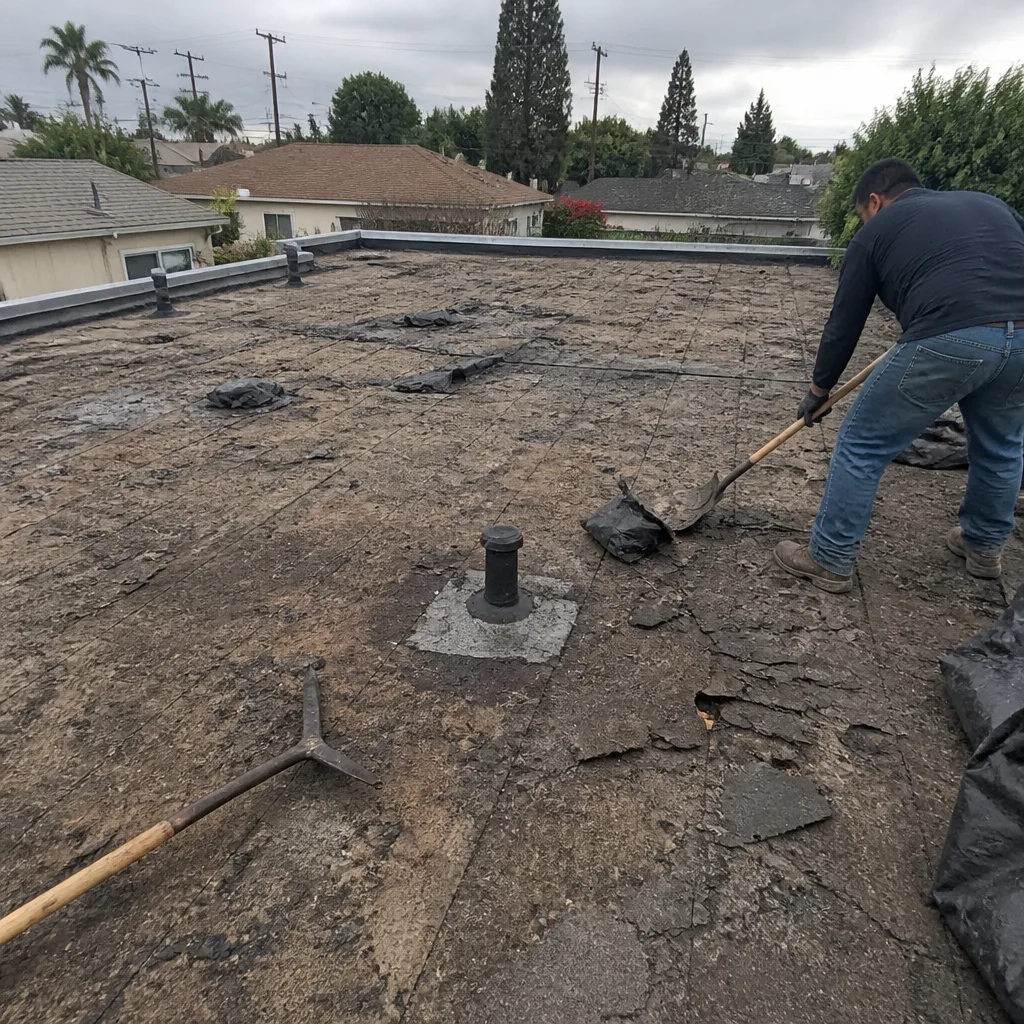
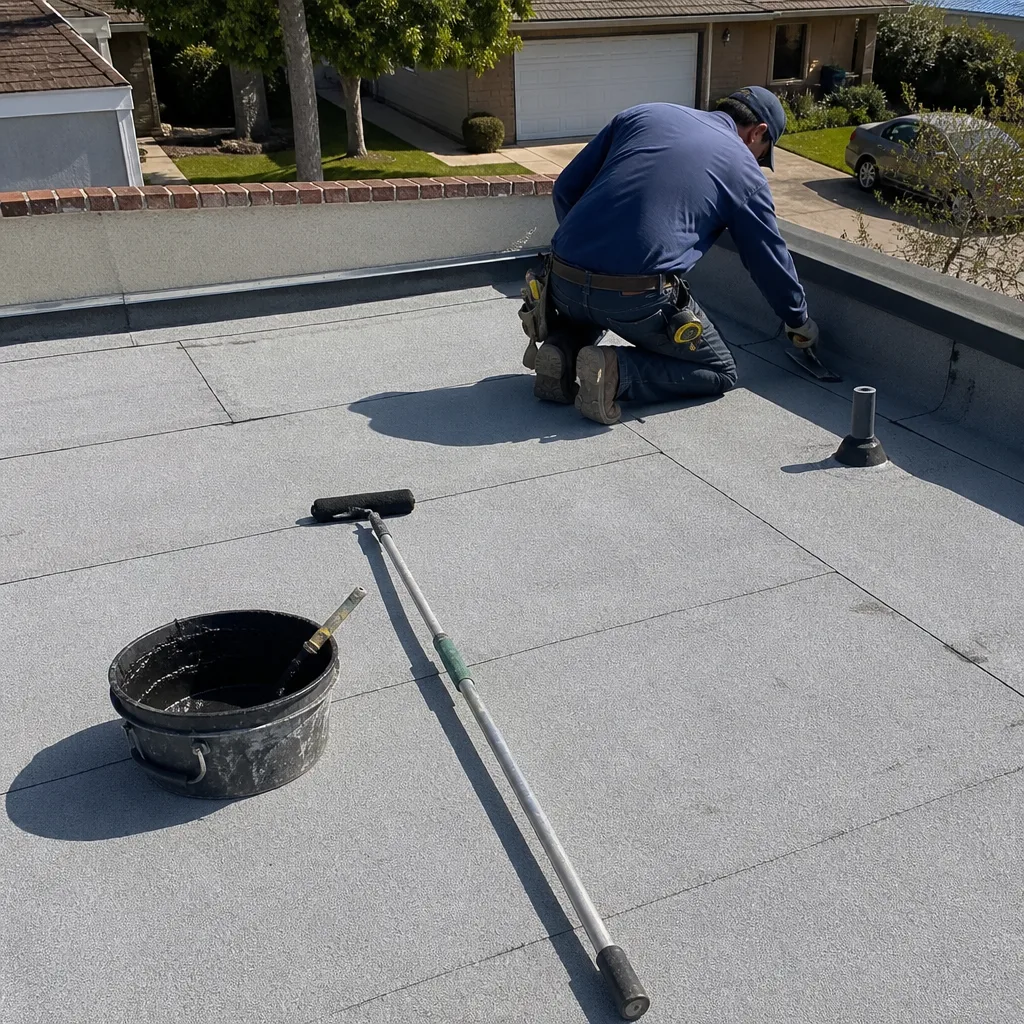
Low-slope roofs in Southern California are typically covered with modified bitumen, built-up roofing, or single-ply membrane. All of these systems have specific vulnerabilities:
- Seam separation: Single-ply and modified bitumen sheets are installed in overlapping courses. Heat and UV exposure cause the material to expand and contract. Over years, seams slowly separate. The separation starts as a gap you can slip a fingernail into and grows wider over time.
- Ponding water: Flat sections should drain completely after rain. If water stands for more than 48 hours, something’s wrong: the slope has settled, a drain is clogged, or the surface has developed a depression. Ponding water is the leading cause of premature flat-roof failure in Buena Park.
- Surface alligatoring: Built-up and modified bitumen surfaces develop a cracked, scaly appearance as the top layer oxidizes. Small surface cracks are cosmetic. Cracks that extend through the cap sheet are structural and need sealing.
- Debris accumulation: Palm fronds, leaves, and wind-blown dirt collect on flat sections and hold moisture against the surface. In shaded areas, debris can support moss or algae growth that roots into the roof surface.
We recommend checking flat sections every three months, not twice a year. The time between visible surface cracking and active leaking is much shorter on flat roofs than on steep ones. If your flat section is older than 15 years, an annual professional inspection is the minimum.
Documentation Habits That Protect Your Insurance Claim
Insurance claims for roof damage in Buena Park succeed or fail based on documentation. Adjusters aren’t climbing on your roof after every wind event. They’re reviewing photos, dates, and the condition report. What you document matters more than what you say.
Build these habits now, before a major storm creates an urgent claim:
- Baseline photos after installation or repair: Photograph every plane of your roof, plus the ridge, valleys, flashing points, and any flat sections. These photos establish what your roof looked like before the damage event. Without baseline photos, the insurance carrier may attribute damage to pre-existing wear.
- Post-event photos within 24 hours: Every major wind or rain event should be followed by ground-level and drone or ladder photos of any changed areas. Date-stamp your photos. The claim process penalizes delayed documentation because weather continues acting on the roof.
- Close-ups of specific damage: A cracked pipe boot, lifted shingle, or separated seam needs a zoomed-in photo showing the failure, plus a wide shot showing how to locate it on the roof. Adjusters use both.
- Keep all repair receipts: Even minor repairs create a record of maintenance that strengthens future claims. “Maintained roof with documented repairs” is a different negotiation position than “no maintenance records.”
- Document any interior water intrusion immediately: Photograph ceiling stains, wall dampness, and any damaged contents. Note the date you first noticed it and the date of the last rain event before it appeared.
- Repair makes sense when: The failure is isolated to specific penetrations (pipe boots, flashings, curbs), the surrounding shingles still have granule cover and flexibility, the roof is under 15 years old, and the decking beneath the problem area is sound. These are localized issues that don’t indicate systemic failure.
- Replacement makes sense when: The shingles are bald or brittle across the entire roof, granule loss is heavy from all sections, the roof is over 20 years old, you can see multiple missing or slipped shingles after any wind event, or the decking has already been wet and is delaminating. These indicate the roof as a system has reached the end of its service life.
- The gray zone: Roofs between roughly 15 and 20 years old with moderate granule loss and a few failed fasteners require a real diagnostic inspection. The question isn’t “does it need work?” The question is “will a repair buy three more years or one more year?” A good inspection differentiates between those answers.
When repairs are needed, document everything before any work begins. Once the shingles come off, the evidence of how the failure happened goes with them. A roofing professional who understands claim documentation can help you capture what the adjuster needs to see. At Buena Park Roof Repair home, we walk through the inspection findings with you, and if a claim is the right path, we’ll help you make sure the roof damage is documented before anything is touched.
When to Repair vs. When to Replace
The most expensive roofing decision is made too early, and the second most expensive is made too late. Replacing a roof that had five years of useful life left costs thousands more than needed. Patching a roof that was already finished costs you the repair bill plus the replacement you deferred, plus the interior damage from the leak you didn’t prevent.
Here’s how to think about the repair-versus-replace decision in Buena Park:
Our repair-first philosophy is built around this diagnostic process. The inspection determines what genuinely needs full replacement versus what can be fixed at a fraction of the cost. Repair when possible, replace when necessary. It’s a simple statement, but it’s the standard we hold ourselves to on every job in Buena Park.
If you’re in the gray zone, a professional roof inspection gives you an honest condition report before you commit to any scope of work. A dedicated roof inspection before any commitment means you’re not guessing, and you’re not being sold either. You’re being informed.
Material Matching: Why It Matters for Partial Repairs
When a section of roofing fails and the rest of the roof is still serviceable, the repair needs to blend visually and perform structurally like the surrounding material. That’s harder than it sounds, and it’s why many contractors push full replacement for damage that could have been repaired.
Matching shingles requires knowing exactly what’s on your roof: manufacturer, product line, color, and ideally the production lot. A shingle from the wrong brand, or even the right brand in the wrong color batch, will create a visible patch that stands out from the street. In Buena Park’s housing market, a mismatched patch can become a negotiation point when you sell, and it signals that the roof wasn’t maintained to a high standard.
Our team works with seven major roofing manufacturers: GAF, CertainTeed, Owens Corning, IKO, Atlas, Tamko, and Boral. That breadth isn’t about inventory size. It’s about being able to identify what’s on your roof and source a compatible or identical match. If your roof has an IKO shingle in a specific color, we can order that IKO product rather than persuading you to accept whatever brand we happen to stock. If you have Atlas shingles, we source Atlas. It’s a simple idea, but it’s surprisingly rare in the industry.
Working relationships with multiple manufacturers also mean we can explain what’s available across the full range, compare realistic warranties and lifespans, and help you choose your material, not ours. That matters for both repairs and full replacements. A roof is a long-term purchase, and the material decision should be made with you, not for you.
For a full look at what’s involved when a repair isn’t enough, see our Roof Replacement in Buena Park page. For more detail on how we approach smaller fixes, visit Roof Repair in Buena Park.
Common Mistakes to Avoid
- Ignoring the flat sections because you never see them. Flat and low-slope sections on Buena Park ranch homes fail faster than steep slopes and leak sooner. Out of sight should mean more frequent checks, not fewer.
- Caulking over cracked pipe boot collars. Caulk is a temporary fix that fails within a season because the rubber keeps expanding and contracting with heat. The correct repair is a new boot, installed around the pipe and under the surrounding shingles.
- Nailing down lifted shingles after a wind event. Improper nailing creates new holes that leak. Professional resealing or replacement is the correct fix, and it protects the manufacturer’s warranty on the surrounding shingles.
- Assuming no leak means no problem. Sealant failures, cracked boots, and ridge cap gaps often don’t show symptoms until a heavy rain, by which point water has already been moving through the roof system undetected.
- Cleaning gutters from the roof surface with a pressure washer. Pressure washing drives water under shingle edges and accelerates granule loss. Clean gutters from a ladder, and check that granules you’re seeing are normal volume for the roof’s age.
- Letting tree debris sit on the roof between seasons. In Buena Park, yard trees like jacaranda and bottlebrush drop fine debris that packs into valleys and flat sections. That organic layer holds moisture and creates premature wear directly under it.
- Waiting to file an insurance claim until the leak is active. Insurance documentation should happen while the damage is fresh and traceable to a specific event. Waiting until interior damage appears weakens the connection between cause and coverage.
See the difference
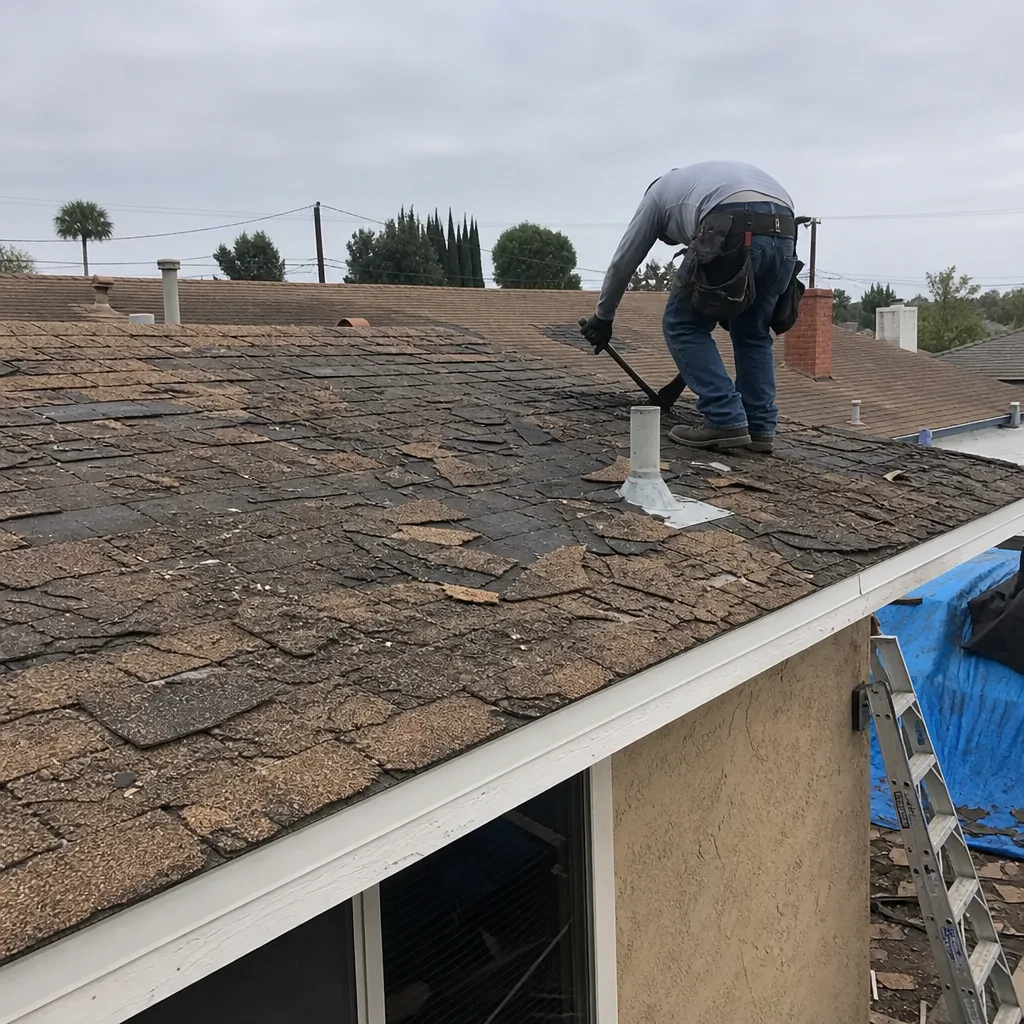 Before
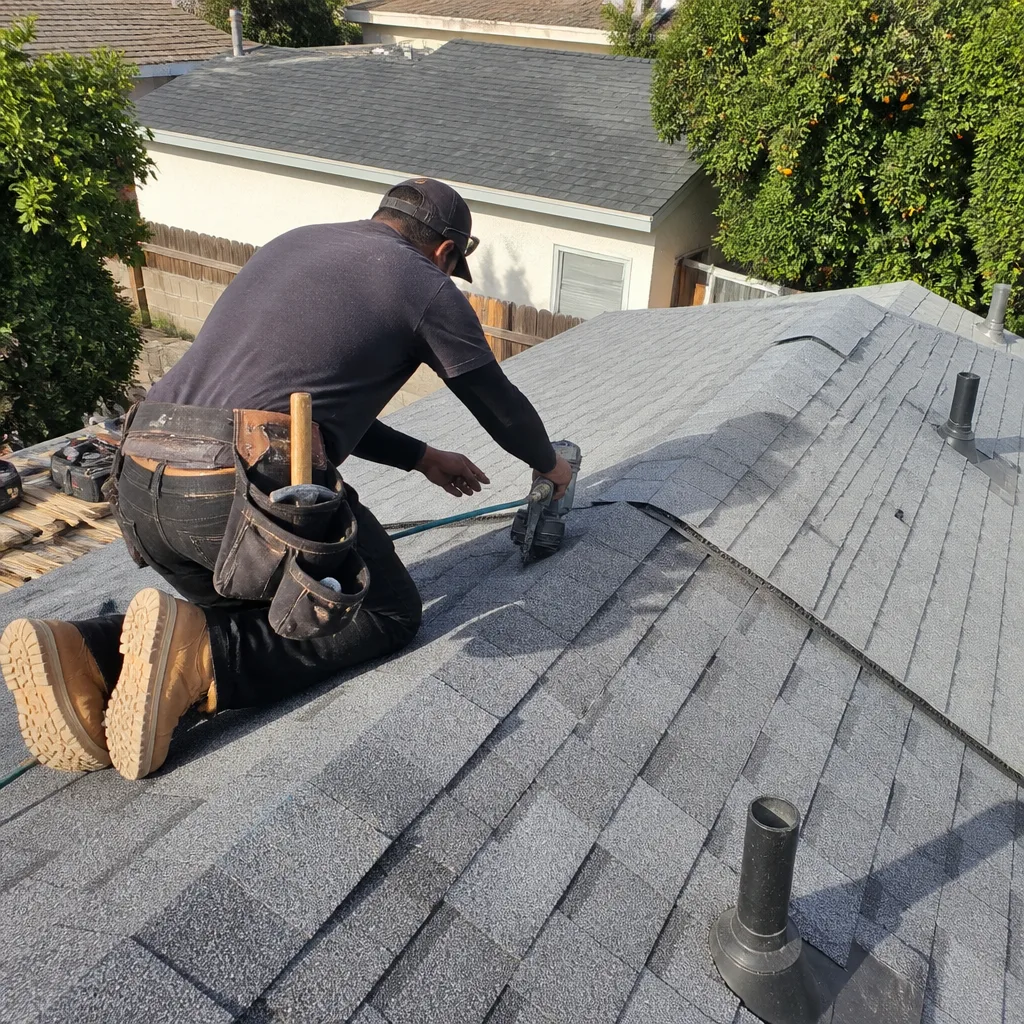 After
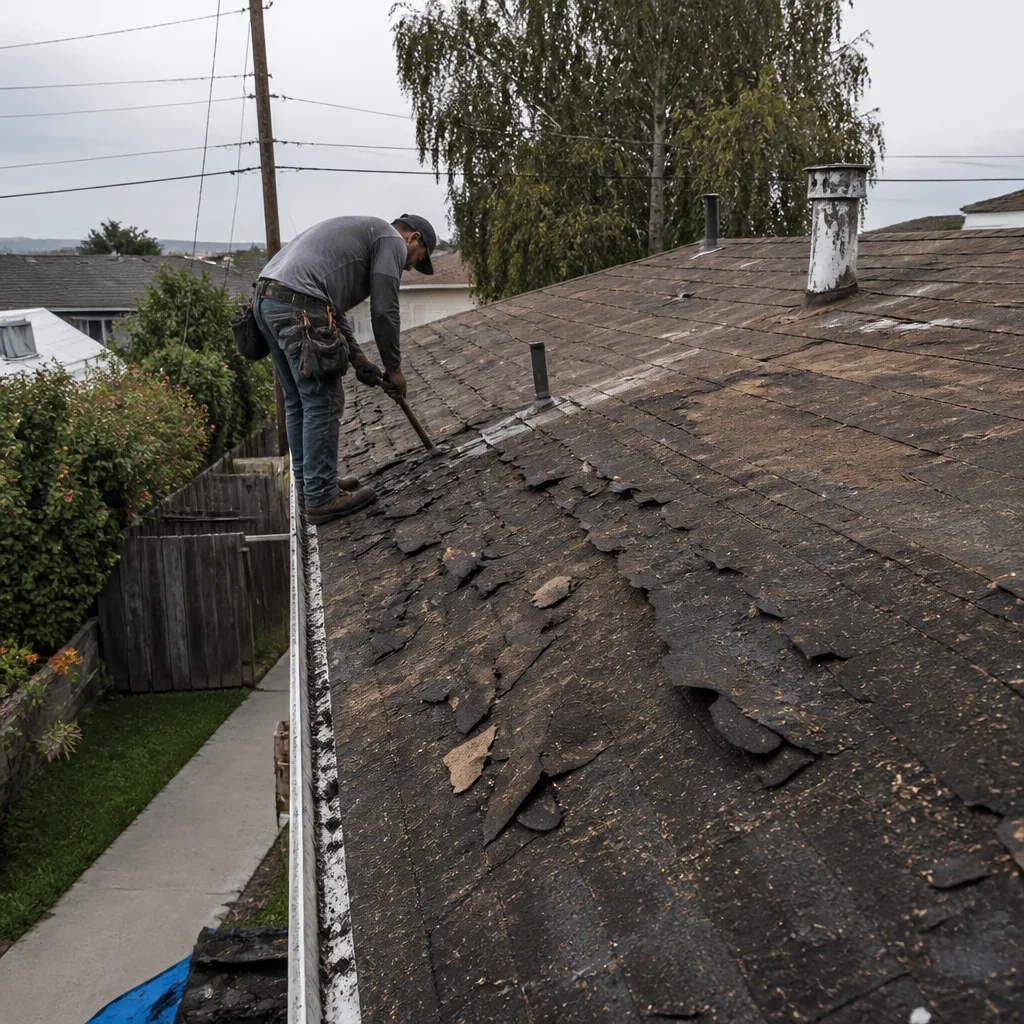 Before
 After
 Before
 After
When to Call a Professional
Call a professional roofer if you notice water staining on an interior ceiling, active dripping during rain, multiple slipped or missing shingles after a wind event, persistent granule loss that’s leaving bald patches, visible daylight through the attic roof deck, or water pooling on a flat section for more than 48 hours after rain. Also call if you see failed sealant around pipe boots, HVAC curbs, skylights, or wall flashing but are not confident about inspecting it safely from a ladder. Roof work is dangerous, especially on steep pitches and second-story edges, and falls remain a leading cause of preventable injury. Buena Park Roof Repair offers free estimates in Buena Park. Call (866) 282-5070 to schedule yours.
Frequently Asked Questions
Twice a year for steep-slope sections, and every three months for flat or low-slope sections. The best inspection times in Buena Park are late March to early April and late October, so you’re catching problems after winter rains and before the heaviest rain months arrive. Flat sections need more frequent checks because the time between visible surface cracking and active leaking is shorter than on pitched roofs.
Professional roof inspections in Buena Park typically cost between $150 and $400 depending on roof complexity and access; see our Roofing Cost Breakdown: The Buena Park Homeowner’s Reference for 2026 for fuller pricing context. Small repairs, such as replacing a pipe boot or resealing a penetration, commonly run $250 to $600. Larger repairs, like replacing a section of shingles or reflashing a wall intersection, range from $800 to $2,500 depending on scope. Ongoing maintenance is always cheaper than emergency leak repair, which often includes interior drywall and paint work on top of the roof fix. Call (866) 282-5070 for an exact quote on your specific roof.
Composition shingle roofs in Buena Park typically last 18 to 25 years, with premium architectural shingles at the higher end of that range and economy products at the lower end. The primary aging factor isn’t storms; it’s cumulative UV exposure that oxidizes the asphalt and causes granule loss. Tile and some premium materials can last significantly longer. The age of your roof material combined with visible condition is what matters for maintenance planning.
Yes. Debris from jacaranda, bottlebrush, and other common Buena Park landscape trees packs into valleys and flat sections, holding moisture against the roof surface for weeks after rain. That persistent damp cycles the roofing material through repeated wet-dry transitions and accelerates surface deterioration. On low-slope sections, debris can support algae and moss growth that roots into the surface and breaks through the protective layer.
Insurance covers sudden, accidental damage from covered events like wind, hail, or falling debris. It does not cover maintenance failures: dried-out sealant, cracked pipe boots from normal aging, or general wear and tear. That’s why documentation matters. If you can show the roof was maintained and a specific wind event caused specific damage, you have a much stronger claim than if the adjuster sees years of unaddressed wear. Document everything before any repair work begins.
If the failure is isolated to specific penetrations like pipe boots, flashings, or one slope, and the roof is under 15 years old with shingles still holding granule cover, repair is usually the answer. If shingles are bald or brittle across multiple sections, the roof is over 20 years old, or the decking is already water-damaged, replacement is the better financial decision. A professional inspection can give you a clear answer without a sales agenda.
The Bottom Line
Roof maintenance in Buena Park isn’t about following a seasonal winter prep routine. It’s about understanding what our specific climate does to roofing materials: UV bakes shingles and sealants brittle, Santa Ana winds stress fasteners and ridge caps, and flat sections collect debris that accelerates failure. The homeowners who save the most money are the ones who inspect twice a year, check flat sections quarterly, act on small problems before they become leaks, and document everything along the way. The biggest single mistake is waiting for water inside the house to be the signal that something is wrong. By then, the decking is already wet, the repair scope has expanded, and the insurance claim is harder to prove. If you’re uncertain what condition your roof is in, start with an inspection. Buena Park Roof Repair offers dedicated roof inspections with no repair commitment required. Call (866) 282-5070 today to schedule yours.
Written by the team at Buena Park Roof Repair, serving Buena Park since 2018.