Last updated October 31, 2026
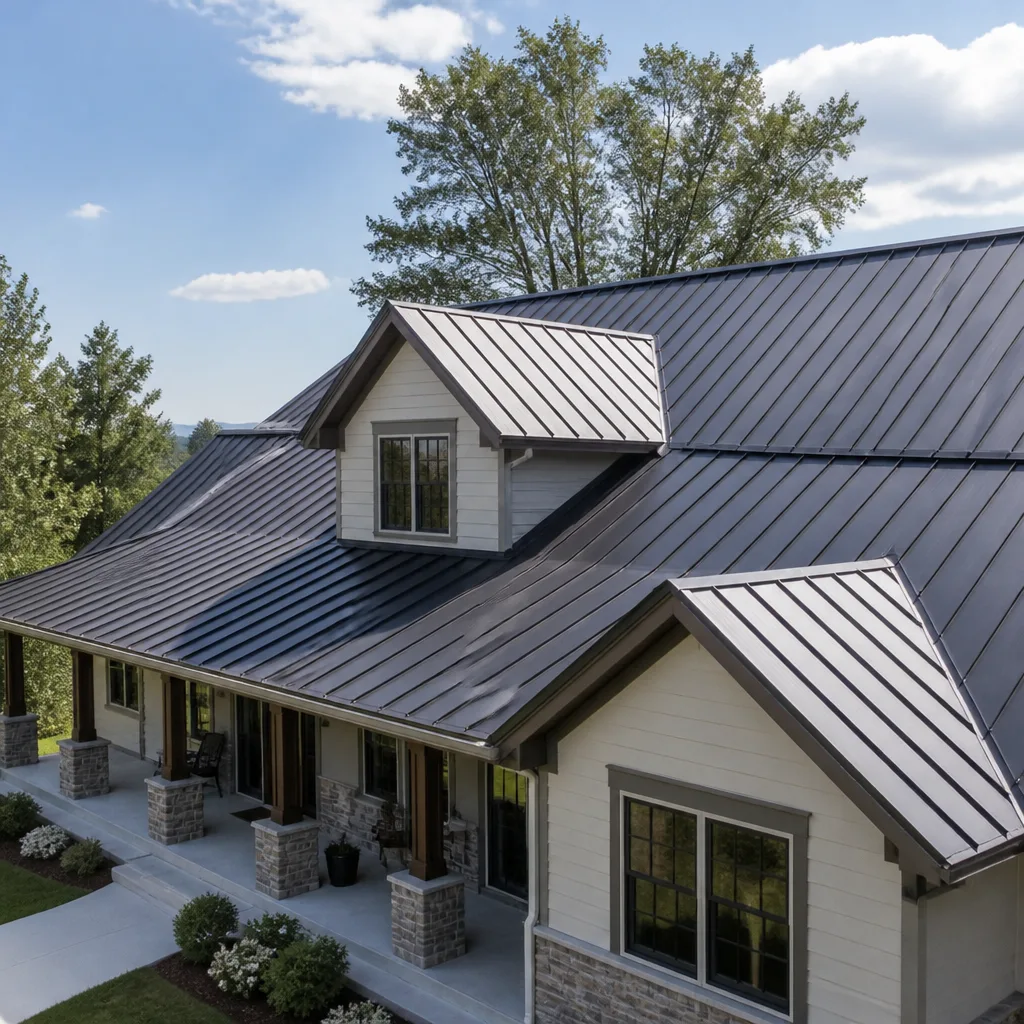 Metal roofing
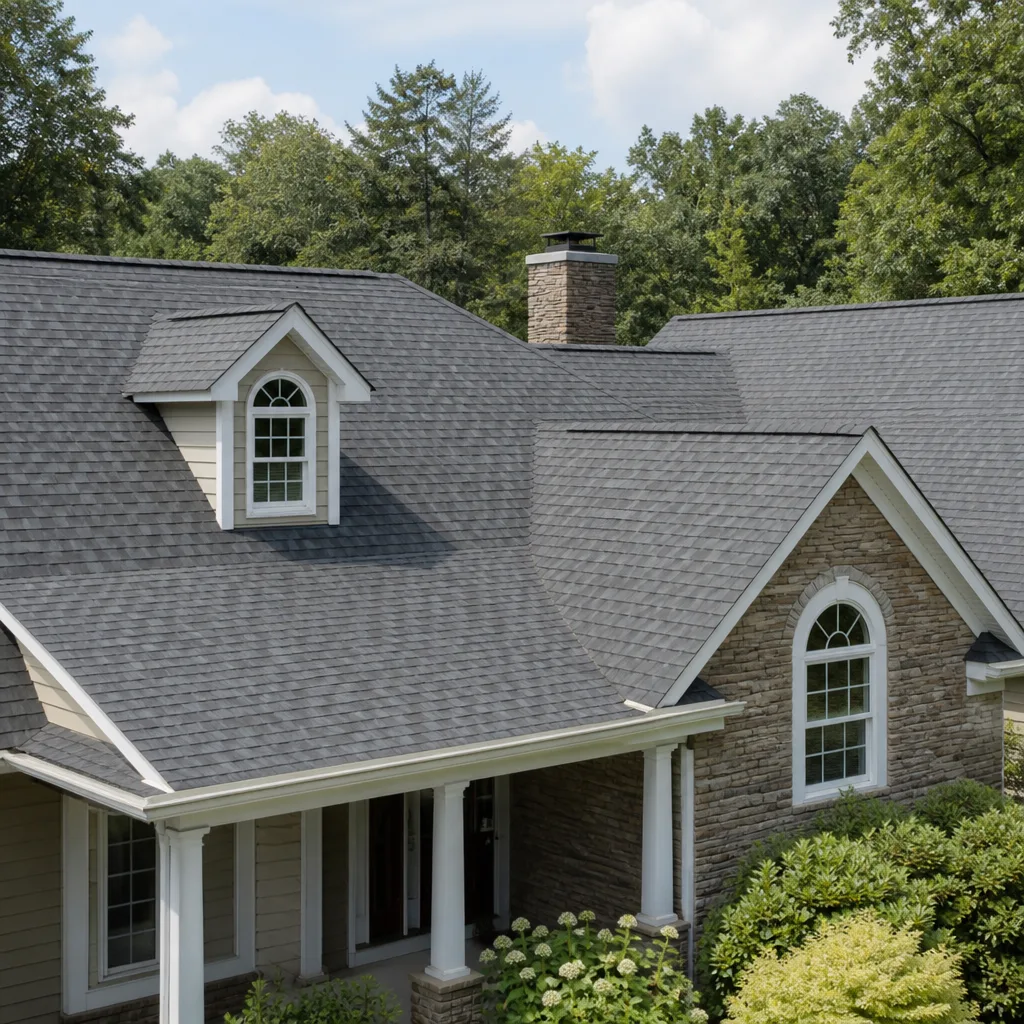 Architectural shingles
 Tile roofing
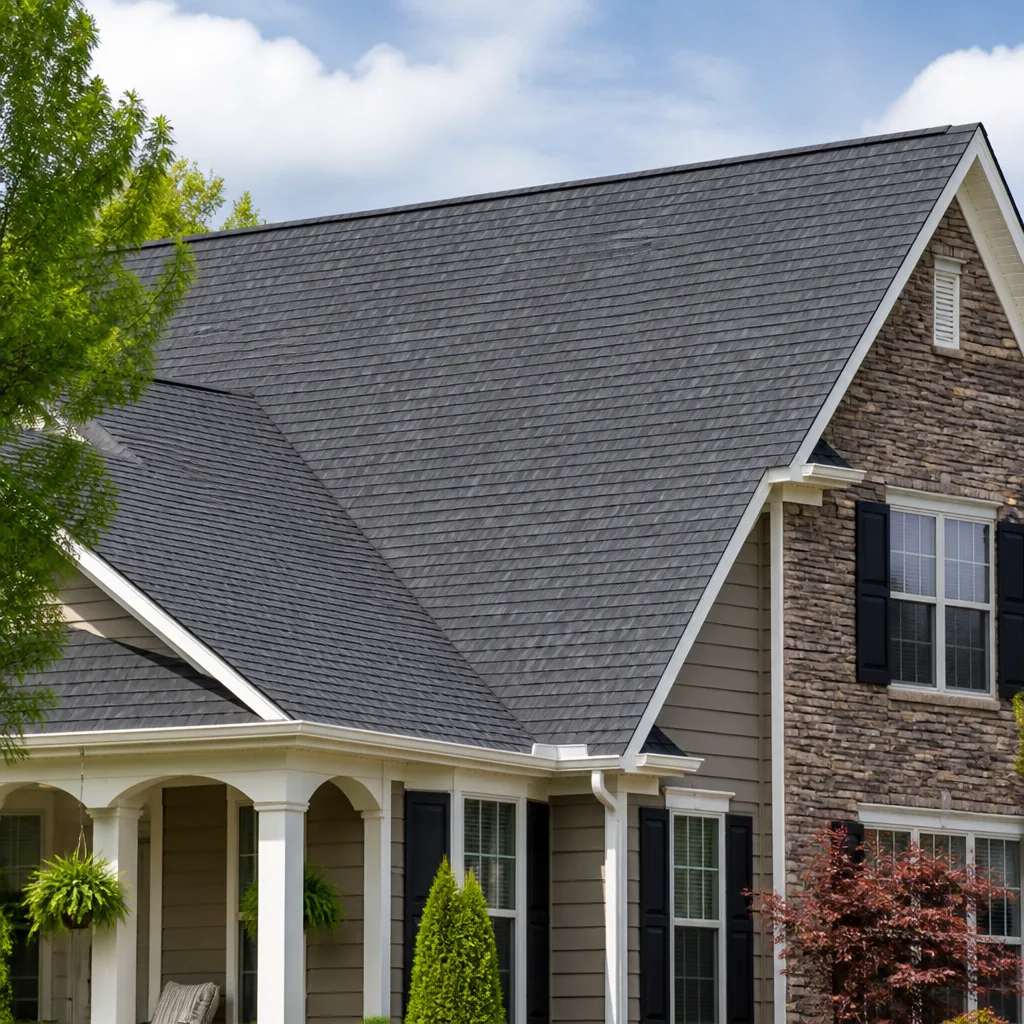 GAF
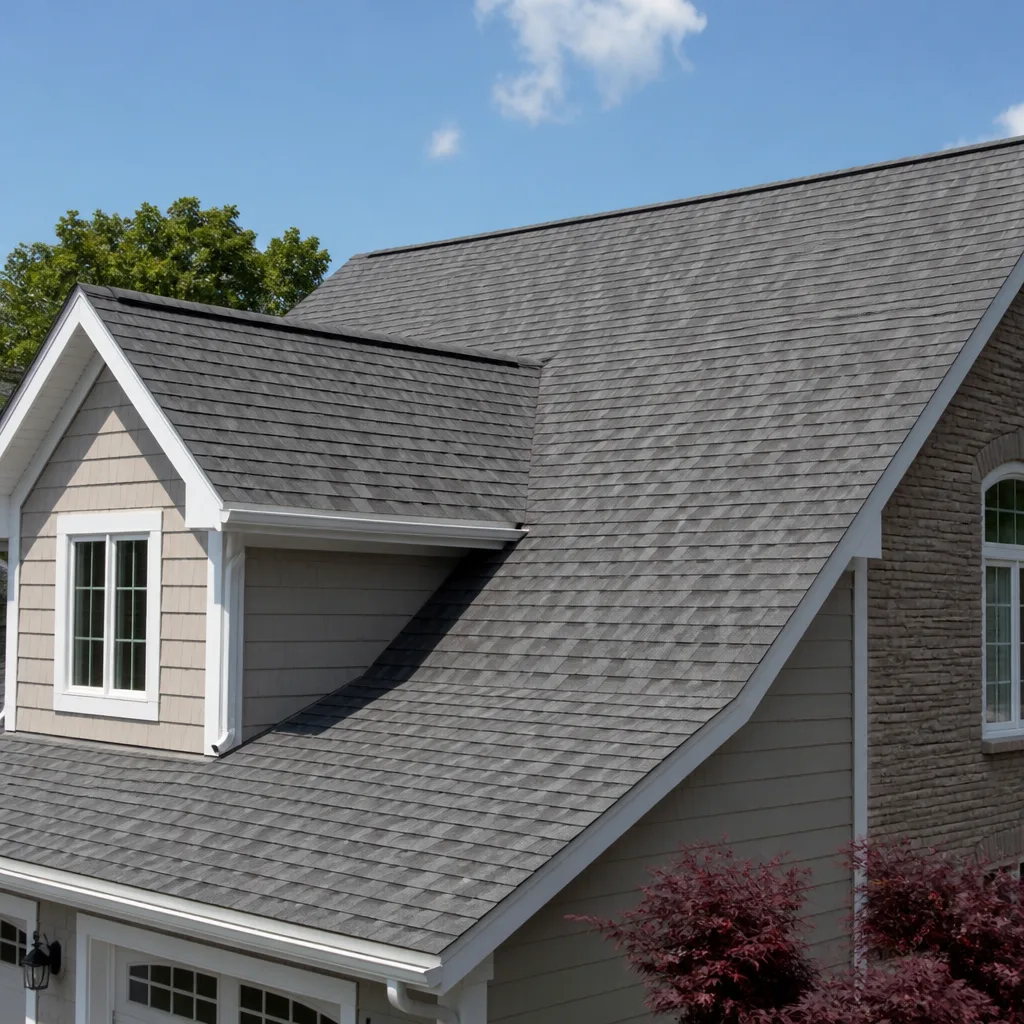 Owens Corning
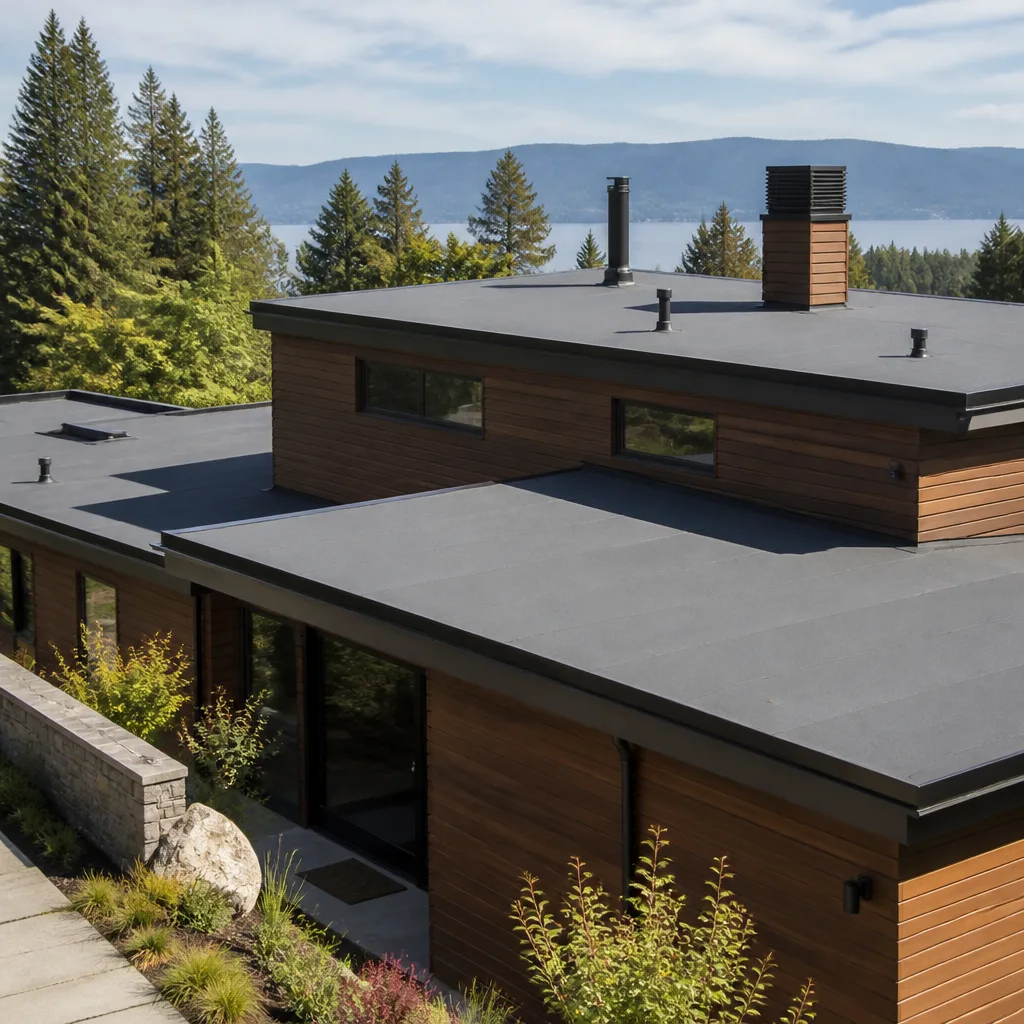 Flat & low-slope
Free roof inspection with deck photos before we talk money - GAF and Owens Corning certified installation
Roofing Emergency Preparedness Guide for Buena Park Homes
The worst time to research emergency roofing procedures is at 10pm during the first major rain after a Santa Ana wind event, which is exactly when most Buena Park homeowners do it, while water is coming through the ceiling. That late-night scramble usually leads to rushed decisions, overpriced tarp jobs, and repairs that get redone properly six months later. This guide walks through what actually happens to roofs in Buena Park, the response sequence that saves real money, and the preparation steps that keep you out of the emergency category entirely. We’ll cover the wind damage patterns we see every season in this city, what documentation your insurance company actually needs, and how to tell a legitimate emergency contractor from someone who shows up hoping you’re too panicked to check.
Quick Answer
Roofing emergencies in Buena Park happen in a predictable sequence: Santa Ana winds lift and loosen shingles or tiles, then the first rain finds those openings and water enters the home. The prepared homeowner’s response is tarp first, document second, call your insurance company third, and get a roof inspection before committing to any repair scope. Most post-storm damage in Buena Park can be repaired without full replacement if it’s addressed before water damage spreads.
Styles & brands we work with
Table of Contents
- The Santa Ana Wind Damage Pattern in Buena Park
- Post-Storm Ground Assessment: What to Check Before Anyone Gets on the Roof
- Emergency Tarping: What Legitimate Work Looks Like
- The Insurance Documentation Sequence
- Evaluating a Door-Knocking Emergency Contractor in Five Minutes
- Pre-Season Preparation Checklist for Buena Park Homes
- Repair vs. Replacement After a Storm
- Common Mistakes to Avoid
- When to Call a Professional
- Frequently Asked Questions
The Santa Ana Wind Damage Pattern in Buena Park
Buena Park sits in a specific wind corridor that most homeowners don’t think about until a shingle shows up in the backyard. Santa Ana winds blow from the northeast, channeling through the Santa Ana Canyon and hitting the flatlands of north Orange County with gusts that routinely exceed 50 mph. Those winds don’t hit every roof the same way. Homes east of Beach Boulevard and north of Orangethorpe see more direct exposure than properties tucked into the central residential streets, but the real variable is roof orientation.
Gusts catch the north and east roof planes first, lifting shingle edges and breaking the adhesive seal that holds the tabs down. Once that seal breaks, a shingle doesn’t need to fly off to become a problem. It sits slightly raised, and the next wind event works it further loose over hours, not minutes. This is why so many Buena Park homeowners discover damage days after a wind event rather than during it. The shingles that look fine from the street on Wednesday morning are flapping by Thursday afternoon.
Clay tile roofs, common in the older neighborhoods south of the 91 freeway, fail differently. Tiles are heavy enough that wind rarely lifts them directly, but the uplift pressure translates through the tile to the fasteners and underlayment beneath. We see cracked tiles at the ridge line, shifted hip tiles, and broken tiles where branches or debris got airborne during the gust. A single cracked tile is not an emergency, but a cracked tile directly above a broken underlayment seam becomes one the moment rain arrives.
The sequence matters because the repair approach is different at each stage. A few lifted shingles are a same-day fix. A torn-away ridge cap with exposed nail heads is still manageable. But once water has saturated the decking, the scope changes from patches to structural repairs. The earlier you’re on it, the smaller the job stays.
Post-Storm Ground Assessment: What to Check Before Anyone Gets on the Roof
After a significant wind event, most of what you need to know about your roof is visible from the ground. Nothing about this step requires getting on a ladder, and doing a ground pass first will make you a smarter consumer when a contractor pulls up and starts pointing at things. Walk the perimeter of your home slowly. It takes ten minutes.
- Look at the roof planes facing north and east first. These took the brunt of Santa Ana gusts. You’re looking for shingles sitting at an angle, gaps in the roofline, or dark spots where granules have scraped off. From the street, raised shingles catch sunlight differently than flat ones.
- Check the ridge line. The ridge cap is the spine of the roof. Missing or shifted ridge shingles are the most common wind damage we see after Santa Ana events. The ridge is also where water enters if the cap is compromised.
- Walk the yard and driveway. Shingles, tile fragments, underlayment paper, or granule accumulations in gutters and downspout splash zones tell you something came off. The color and texture help identify which part of the roof it came from.
- Look for roof cement spots or old repairs that are now exposed. Previous patches leave visible marks. Wind often lifts material around old repair areas because the seal was already weaker there.
- Inspect the attic if accessible. Daylight coming through the underside of the decking is the clearest indicator of a penetration. Take photographs with your phone. Spiderweb-shaped water stains, even dry ones, are evidence of previous intrusion.
- Check interior ceilings for fresh stains. Wind damage doesn’t always show on the ceiling immediately, but attic moisture from a broken seal can migrate and show up days later. Note the location. The ceiling stain is rarely directly beneath the roof penetration because water travels along rafters.
None of this requires specialty knowledge or equipment. What it requires is doing it before the rain starts, because once water is entering, the assessment changes from preventive to reactive and your options narrow considerably. If you find anything suspicious, a Roof Inspection in Buena Park is the next step, not a repair estimate. The inspection establishes what’s actually wrong before anyone proposes a fix.
Emergency Tarping: What Legitimate Work Looks Like
When water is actively entering your home, tarping is the correct emergency response. It’s also the step where we see Buena Park homeowners get taken advantage of most. A legitimate emergency tarp does one thing: it prevents additional water intrusion until permanent repairs can be scheduled. It does not fix the roof. It does not act as a substitute for proper repair. And it should cost a reasonable amount for a temporary measure.
A proper emergency tarp extends from the eave up past the damaged area and over the ridge line by at least four feet. If the tarp stops short of the ridge, water runs down the roof slope, hits the top edge of the tarp, and flows underneath it. This is the most common tarp failure we’ve seen, and it’s usually the result of a contractor using a tarp that’s too small rather than bringing the right size. The tarp gets anchored with wood strips screwed through the tarp into the decking. Nails are not sufficient for Santa Ana wind territory; any contractor doing nail-only anchoring is doing temporary work that the wind will undo.
What to watch for: a contractor who wants to use roof cement or sealant as the anchor method. Silicone and tar-based sealants make proper repair harder later because they bond to shingles and tear them when removed. A tarp that doesn’t reach the ridge. A tarp that isn’t secured at all edges, leaving flapping material that the wind will shred. And any contractor who wants to do “permanent” repair work during an active storm. Permanent work requires dry conditions; anyone doing full repairs in the rain is creating warranty problems for you.
Emergency tarping is a stopgap. It’s not part of a repair quote, and it should not be folded into an inflated emergency repair bid as if the labor involved was extensive. Estimates in the Buena Park market for legitimate emergency tarping, including materials and labor, typically run in the low hundreds, not thousands. If the number you’re quoted makes you flinch, get a second opinion before signing. The water damage from waiting another hour for a second call is rarely worse than the financial damage of an overpriced emergency contract.
The Insurance Documentation Sequence
Insurance adjusters see hundreds of post-storm claims. What separates a smooth claim from a denied one is documentation quality, and the order of operations matters more than most homeowners realize. Document before you repair anything beyond the emergency tarp. The tarp is allowed, even expected. Any permanent repair before an adjuster documents the damage gives the insurance company grounds to claim the damage wasn’t as described.
- Photograph the exterior damage from the ground first. Wide shots of the affected roof plane, then close-ups of the specific damage. Your phone camera’s zoom can capture details from the street that your eyes can’t see.
- Photograph the interior before moving anything. Wet insulation, water stains, damaged drywall, furniture damage. The damaged state is your evidence. Moving soaked furniture onto the driveway before photographing it weakens the claim.
- Photograph the emergency tarp in place. This shows you took steps to mitigate further damage, which insurance companies expect and sometimes require.
- Keep receipts for anything you spend. Tarping, water extraction, hotel stays if the home is uninhabitable. Temporary mitigation costs are generally reimbursable.
- Call your insurance company before scheduling permanent repairs. The adjuster may want to inspect first. If repairs happen before inspection, save the damaged materials (shingles, underlayment pieces) so the adjuster can verify the failure mode.
- Get an independent inspection. Insurance adjusters write estimates based on what they can see and what the policy covers. A dedicated roof inspection gives you a second opinion on scope, which is valuable if the insurance estimate seems light. We tell Buena Park homeowners what the roof actually needs, regardless of what the adjuster’s estimate says, and the inspection report can support a claim negotiation.
The common failure point is moving too fast. The anxiety of an open hole in your roof makes waiting feel wrong, but a few days of delay for proper documentation is almost always worth it. Insurance claims fail for procedural reasons more often than technical ones.
Evaluating a Door-Knocking Emergency Contractor in Five Minutes
After every major wind event in Buena Park, out-of-town crews circulate through residential neighborhoods offering same-day emergency repairs. Some are legitimate. Many are not. The difference is checkable in five minutes, and you should do these checks before letting anyone on your roof or signing anything.
- Ask for the contractor’s license number. In California, roofers performing work over $500 in value must hold a C-39 roofing contractor license issued by the Contractors State License Board. Take the number and verify it on the CSLB website. This takes three minutes. An unlicensed roofer on your roof is a liability for you, not for them.
- Ask for proof of workers’ compensation insurance. If a worker falls off your roof and the contractor lacks coverage, the worker’s claim can fall back on your homeowner’s insurance. Legitimate contractors carry workers’ comp and can produce the certificate.
- Ask where the crew is from. Out-of-town storm chasers often disappear after the immediate emergency passes, leaving you without recourse if their tarp fails or their patch leaks. Local crews with a Buena Park or greater Orange County presence can be reached when problems emerge later.
- Ask what they found wrong. A contractor who won’t walk the property with you or explain exactly what they saw is selling you fear, not repair. Legitimate roofers will point at the specific damaged area from the ground and explain what they’re seeing.
- Get the estimate in writing before work starts. Verbal estimates and “we’ll figure out the total after” arrangements are how emergency pricing balloons. A written scope with a fixed price is the standard for legitimate contractors. We provide written, line-item estimates for every project in Buena Park, and the number on the estimate is the number on the invoice unless the scope genuinely changes.
The storm-chaser model relies on urgency. The longer you take to decide, the less likely the sale, which is exactly why resistance to pressure is your best filter. A legitimate roofer can schedule you for tomorrow morning without needing a signed contract by 7pm.
Pre-Season Preparation Checklist for Buena Park Homes
Most emergency roof damage we see during and after Santa Ana season in Buena Park traces back to maintenance items that were visible months earlier. If you do these six things before wind season starts in September, the probability of a genuine emergency drops substantially. The Roof Repair in Buena Park calls we take in December are almost always from homes that skipped at least three of these.
- Inspect the ridge cap every fall. The ridge cap is the highest-wind-exposure component on any Buena Park roof. Cracked, curling, or missing ridge shingles should be replaced before the first Santa Ana event, not after. This is the single highest-ROI maintenance item in our experience.
- Clear debris from valleys and behind chimneys. Santa Ana winds deposit leaves, twigs, and sometimes whole branches onto roofs. Debris dams in valleys redirect water sideways under shingles, which is exactly how a minor wind event turns into an interior leak.
- Re-secure loose flashing. Chimney, pipe boot, and valley flashing loosens over time with thermal cycling. A loose flashing edge catches wind like a sail and peels back, exposing the seam beneath. A tube of roof cement applied before wind season costs $12 and saves hundreds.
- Trim overhanging branches. The most common single cause of impact damage in Buena Park is not hail, it’s tree limbs. Branches that hang within six feet of the roofline in calm weather will contact the roof during gusts. Eucalyptus trees, common in this city’s older neighborhoods, are particularly prone to sudden limb drop.
- Check attic ventilation after summer. Blocked ridge vents or soffit vents trap heat, which cooks shingles from underneath and breaks down the adhesive that holds them against wind uplift. If your attic is consistently hotter than ambient in October, ventilation is compromised.
- Photograph your roof from all four sides. A baseline photo set from before storm season gives you a comparison point for after. Adjusters respond well to “here’s what the roof looked like in September, here’s what it looks like now.” This documentation habit takes fifteen minutes and costs nothing.
None of these items requires getting on the roof themselves, and none requires professional help unless you’re not comfortable evaluating the condition. If you want a professional assessment of where your roof stands before storm season, a Roof Inspection in Buena Park establishes a documented baseline. The inspection report gives you the condition assessment and prioritized recommendations. No repair commitment is required to get a professional condition report, and the inspection is valuable even if you do nothing with it immediately.
Repair vs. Replacement After a Storm
After a storm damages your roof, you’ll hear two opinions. Emergency door-knockers will often push toward immediate replacement. More measured contractors will tell you to assess what’s actually broken first. The honest answer sits somewhere in the middle, and Buena Park homeowners benefit from understanding the factors that determine which side of the line their roof falls on.
Storm damage is repairable when it’s isolated: a few lifted shingles, a section of damaged ridge cap, a cracked tile here and there, a single penetration around a pipe boot. The material around the damaged area matters. If the surrounding shingles or tiles are in good condition, then a targeted repair restores the roof to its pre-storm condition at a fraction of replacement cost. Our repair-first approach exists because most post-storm damage falls into this category. We evaluate repair scope before replacement is even proposed, which is how we’ve saved Buena Park homeowners thousands of dollars over the years.
Replacement becomes the honest recommendation when the damage exposes a broader underlying problem: decking rot that’s been progressing for years, widespread shingle seal failure across multiple roof planes, or a roof that was already at the end of its serviceable life when the storm hit. The wind event didn’t cause these problems. It revealed them. In cases like that, patching the storm damage is a temporary measure before a full Roof Replacement in Buena Park is scheduled.
Material matching is a factor that shouldn’t be underestimated when evaluating repair scope. Homes with discontinued shingle colors or tile profiles can’t get a seamless patch from the original line, and the visual mismatch is permanent. Because we work with materials from GAF, CertainTeed, Owens Corning, and IKO, among other manufacturer lines, we’re often able to source a closer match for partial repairs than a roofer locked into a single brand. In some cases, a near-match from Atlas or Tamko preserves the visual integrity of a roof that would otherwise require full replacement for aesthetic reasons.
The decision sequence we recommend to Buena Park homeowners: assess the storm damage, evaluate the overall roof condition, determine whether the damaged area can be repaired without creating a permanent visual mismatch, and only then consider replacement. If two different honest contractors give you the same answer about your roof’s condition, that’s your answer. If one says repair and another says replace, get a third opinion before committing to either.
Common Mistakes to Avoid
- Waiting until rain is falling to deal with wind damage. The gap between a Santa Ana event and the first rain is often a week or more in Buena Park. That’s the window for affordable repairs. Once water is actively entering, the scope expands and the urgency premium kicks in.
- Signing an emergency contract without a written, fixed-price estimate. Verbal emergency pricing is where the bad stories come from. A legitimate roofer can write the scope and price on a page in five minutes. If they won’t, they have a reason.
- Letting anyone on the roof before verifying their license. The five-minute CSLB check described above is free and accessible from your phone while standing at the door. An unlicensed worker injured on your property is a homeowner’s insurance claim with your name on it.
- Paying for a full replacement before an independent inspection. Some storm damage looks catastrophic from the ground but turns out to be repairable on closer inspection. A professional roof inspection costs a fraction of even a modest repair and can prevent a premature replacement decision.
- Skipping interior photos before cleanup starts. The moment you move furniture, tear out wet drywall, or extract water, the evidence trail weakens. The adjuster needs to see the damage as it existed. Thirty seconds of phone photos before cleanup starts is the single most consequential action in the insurance process.
- Using sealant as a permanent repair. Roof cement and silicone are designed as temporary patches and flashing seals, not as substitutes for proper shingle or tile replacement. A sealant blob on a damaged shingle lasts a season or two at best and makes proper repair harder later because the material bonds to surrounding shingles.
- Assuming your insurance company’s estimate is complete without checking. Adjusters are human and they work under time pressure. Missing line items, dated material pricing, and incorrect coverage determinations happen regularly. An independent inspection report gives you a reference point for what the roof actually needs, which matters when the insurance check arrives and the numbers don’t match the quotes you’re getting.
When to Call a Professional
Water actively entering your living space is always a reason to call. Any visible sag in the roof decking is a structural concern that needs immediate professional attention. If you can see daylight through the attic ceiling, if multiple shingles are missing from the same roof plane, or if the ridge cap is visibly displaced, don’t wait. These conditions don’t resolve on their own, and the damage compounds with every additional wind or rain event. If you’re in Buena Park and not sure whether what you’re seeing warrants a call, describe it to us. We’ll tell you what it actually needs. Buena Park Roof Repair offers free estimates in Buena Park, and the inspection process is designed to distinguish what genuinely needs replacement from what can be fixed at a fraction of the cost. Call (866) 282-5070 to schedule yours.
Frequently Asked Questions
Move valuables out of the water path, place a bucket or trash can under the active leak, and photograph the interior damage before disturbing anything. Then call a roofing contractor for emergency tarping if the leak is active or spreading. Do not attempt to access the roof during a storm; the surface is slick and the risk of injury isn’t worth the minimal water you’d stop by putting a bucket in the attic. Once the storm passes, schedule an inspection to identify the penetration point before planning repairs. Call (866) 282-5070 and we’ll walk you through the immediate steps specific to your situation.
Emergency tarping in Buena Park typically runs between $250 and $600 depending on the size of the damaged area and roof accessibility. Factors include how many roof planes the tarp must cover, whether the ridge line is involved, and whether the damage is reachable with a ladder or requires specialized access. If you’re quoted a number significantly above this range for tarping alone, get a second opinion before signing. Emergency tarping is temporary mitigation, not repair work, and the pricing should reflect that. For roofing emergencies in Buena Park, call (866) 282-5070 and we’ll give you a straight answer on what the tarping should cost for your specific situation.
Most homeowner policies cover wind damage, but the specifics depend on your policy terms, deductible, and the condition of the roof before the storm. Insurance generally covers sudden, accidental damage from a covered peril, which wind is. What insurance doesn’t cover is deterioration from neglect, so if the adjuster determines the shingles were already failing due to age, the claim may be partially denied or limited. Documentation matters: photos taken before storm season establish your roof’s baseline condition and strengthen your position. The claims process flows more smoothly when you have a professional inspection report to support your description of the damage.
A properly installed emergency tarp can protect your roof for 30 to 60 days without issue in most cases. Beyond 90 days, tarps begin to degrade from UV exposure, and the attachment points can work loose. The tarp is a bridge, not a destination. The goal is to get permanent repairs scheduled before the next wind or rain event finds the tarp’s weak points. Santa Ana winds are particularly hard on tarps because the gusts catch loose edges and peel them back. If your tarp has been up through multiple wind events, have it checked and re-secured. The longer a tarp stays up, the higher the risk of failure and further damage.
A roof inspection is a condition assessment: what you have, what condition it’s in, what needs attention now, what can wait, and what’s working fine. An estimate is a price for a defined scope of work. The inspection comes first; an honest estimate depends on accurate damage assessment. At Buena Park Roof Repair, we provide the inspection as a standalone service with no repair commitment required, because we believe homeowners should get an honest condition report before any money changes hands. The report tells you what the roof actually needs, which you can then use to get apples-to-apples estimates from any contractor.
Most repairs under 25% of the roof’s total area don’t require a permit in Buena Park, but full replacements almost always do. The line between a large repair and a replacement that triggers permit requirements depends on the specific scope. A legitimate local roofing contractor will know which projects require permits and should pull them as part of the job, not ask you to handle it. When you’re evaluating contractors, asking about permits is a useful filter: the contractor who waves off the permit requirement for obvious full replacements is telling you something about how they operate generally.
The Bottom Line
Roofing emergencies in Buena Park are largely predictable, which means they’re largely preventable. The wind damages roofs in a known pattern. The damage is visible from the ground before it becomes an interior problem if you take the time to look. The documentation sequence that protects your insurance claim is simple but order-dependent. And the preparation checklist that prevents most emergencies takes a single weekend in early fall. The homeowners who navigate storms smoothly are the ones who did the ground assessment in advance, who go into contractor conversations with eyes open, and who got a professional inspection before the stakes were high. Everything in this guide reduces to one principle: act before the rain, not during it. If you want to know where your roof stands before the next Santa Ana event, schedule a roof inspection. We’ll tell you what it actually needs, repair when possible, replace when necessary, and never push a replacement that isn’t warranted. Call (866) 282-5070 to get started.
Written by the team at Buena Park Roof Repair, serving Buena Park since 2018.
See the difference
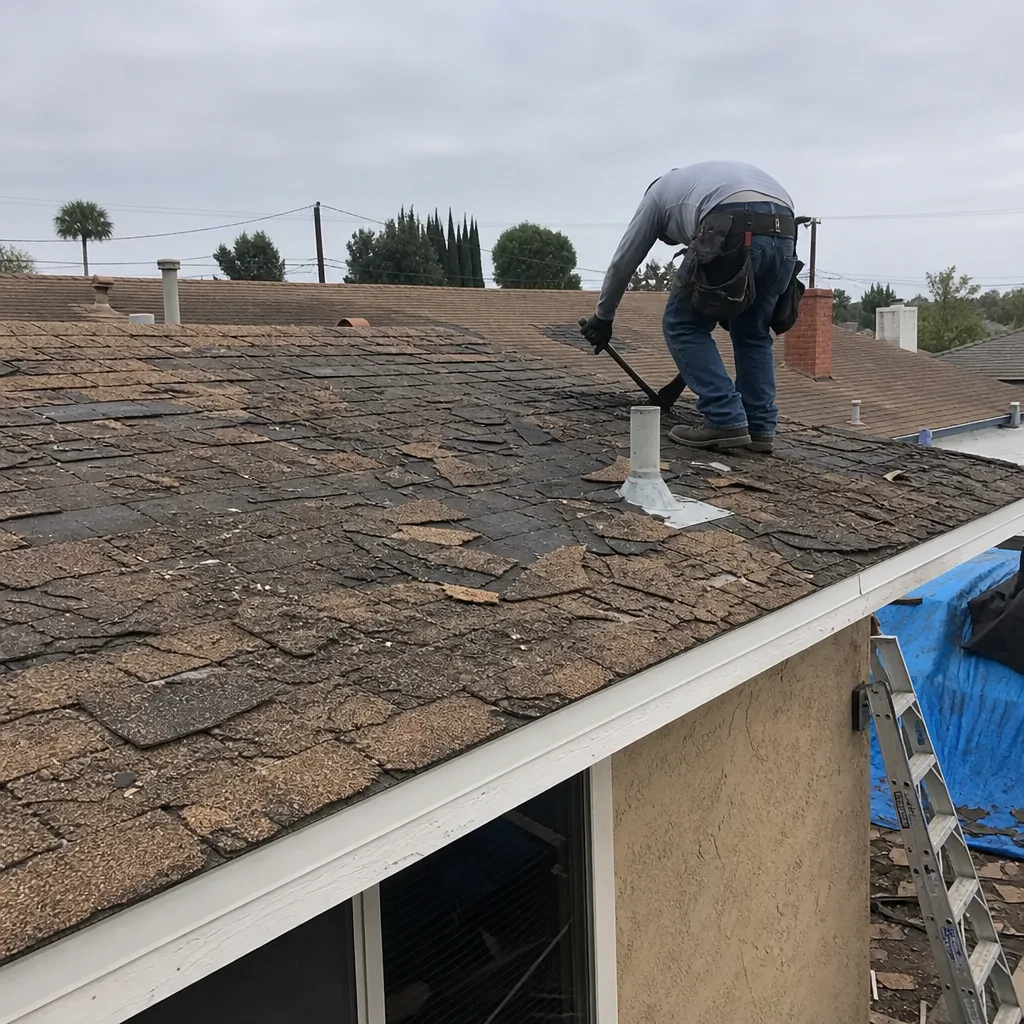 Before
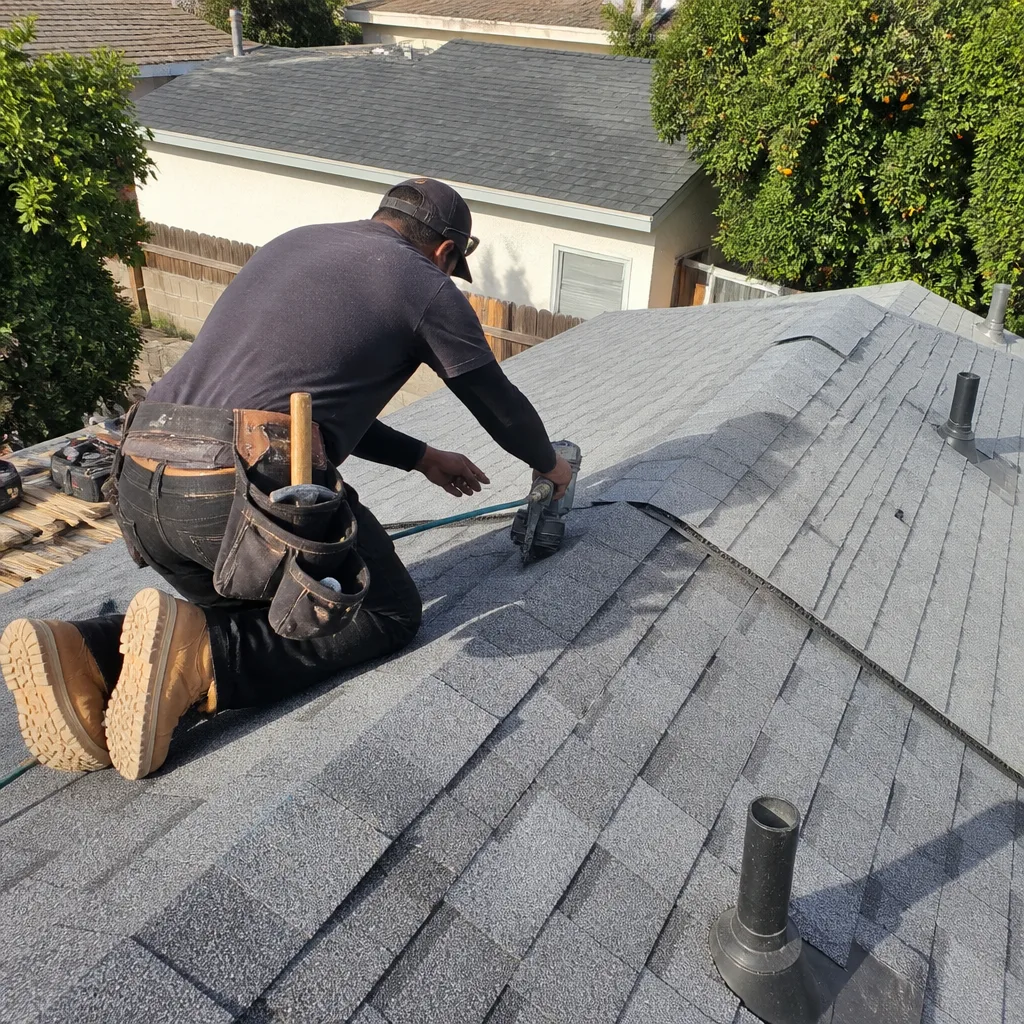 After
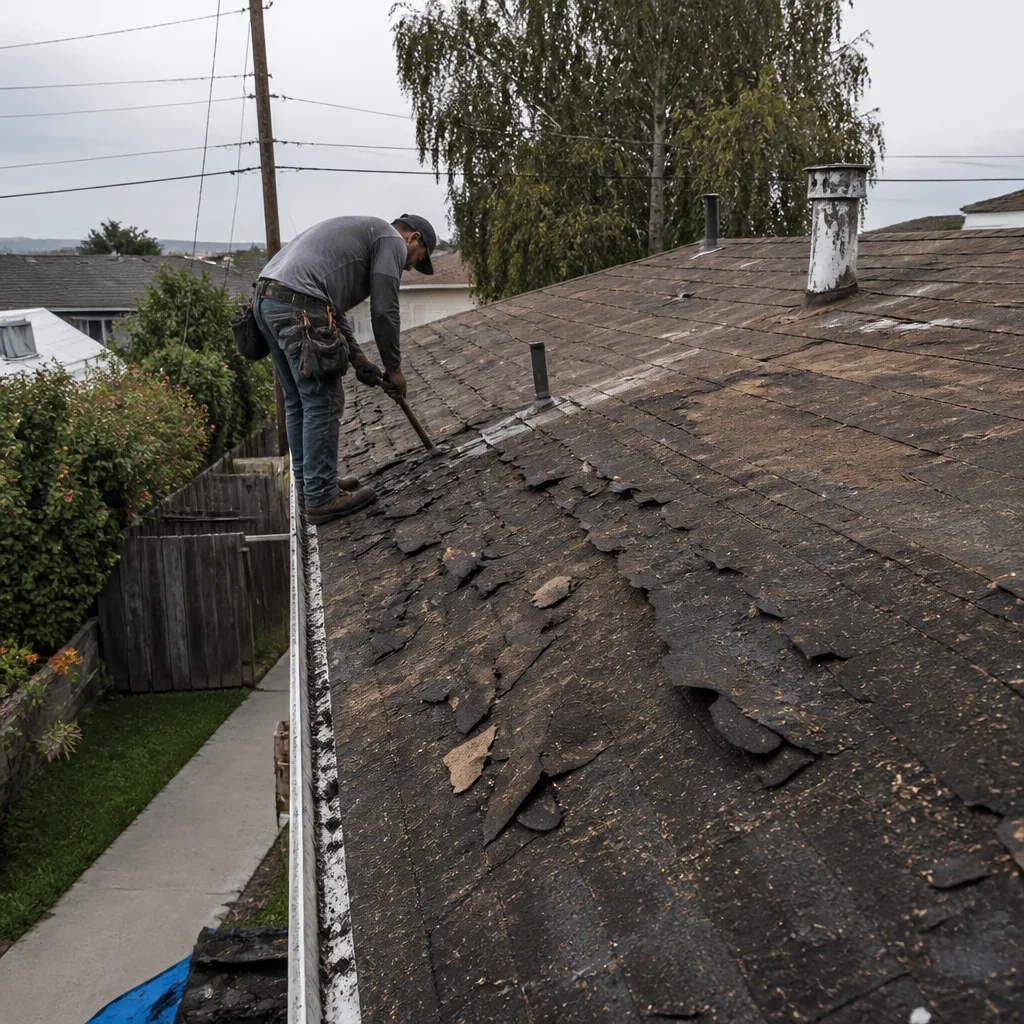 Before
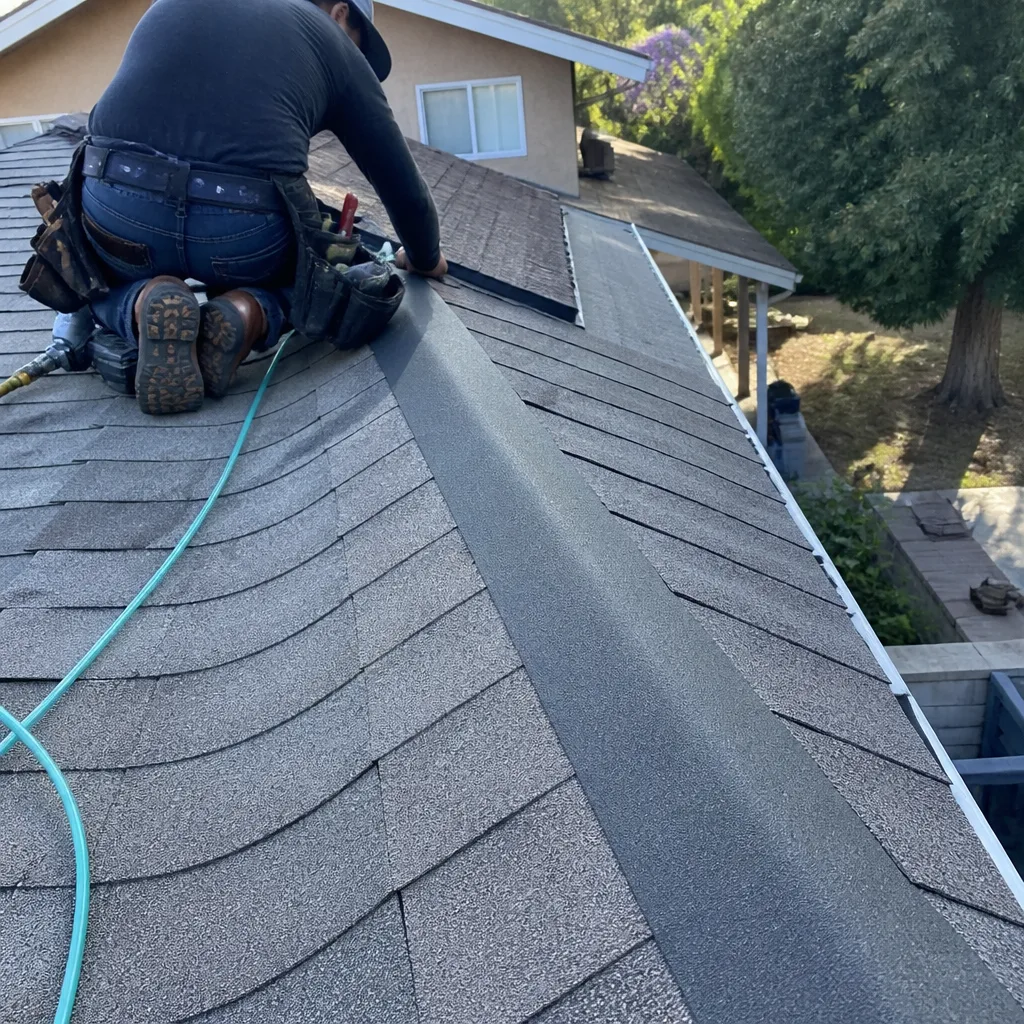 After
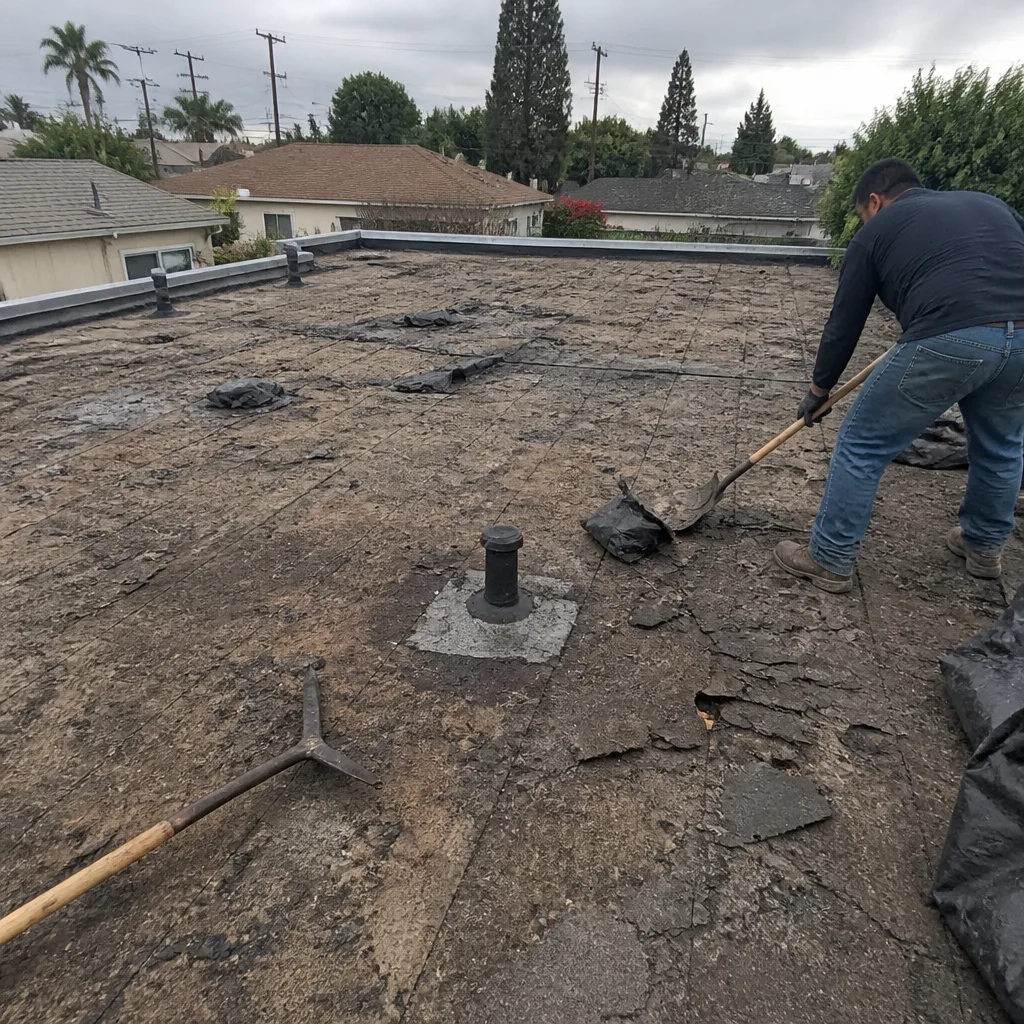 Before
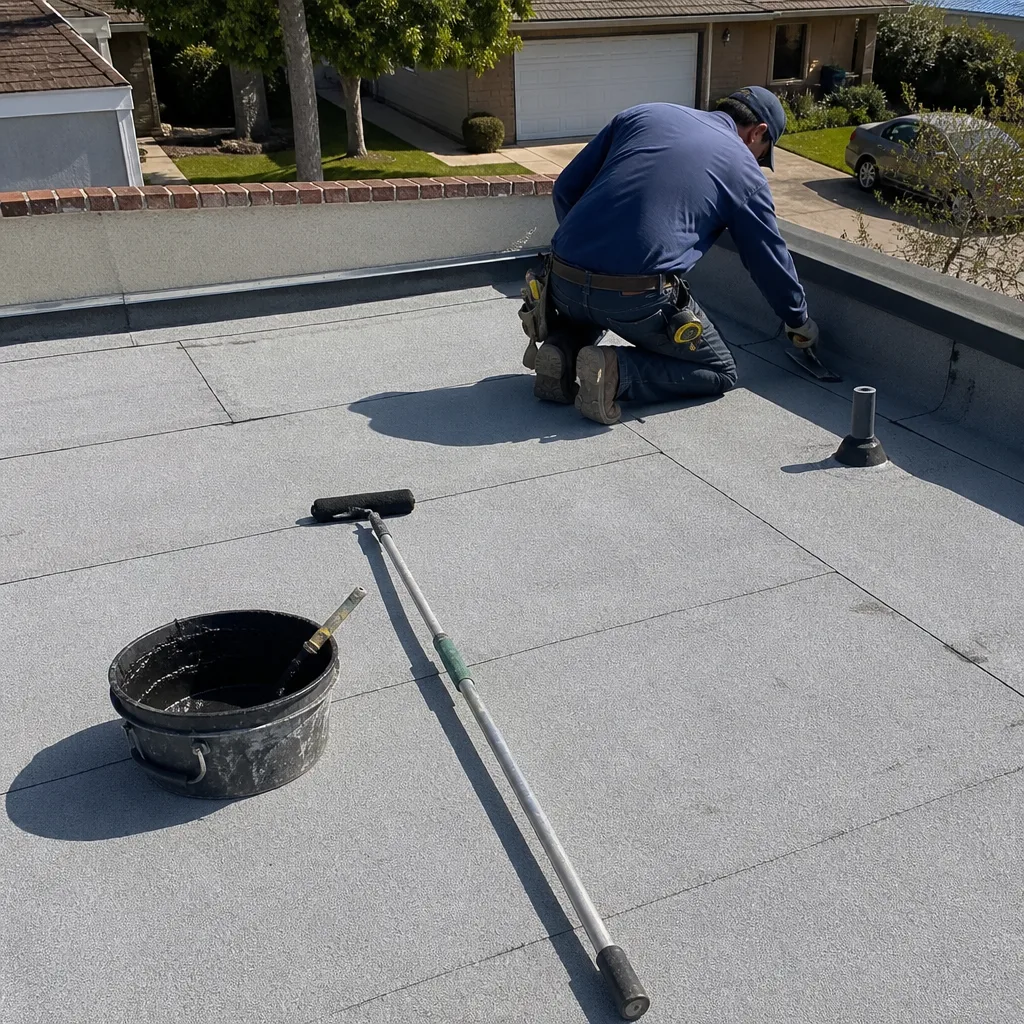 After