Last updated October 31, 2026
 Metal roofing
 Architectural shingles
 Tile roofing
 GAF
 Owens Corning
 Flat & low-slope
Free roof inspection with deck photos before we talk money - GAF and Owens Corning certified installation
Seasonal Roofing Care for Buena Park: Year-Round Homeowner’s Guide
Most roofing advice written for Buena Park homeowners is imported from places with snow, ice dams, and falling leaves. That guidance is useless here. Orange County roofs fail from two forces: ultraviolet radiation and wind-driven rain. The first rain of the season in Southern California is essentially a leak audit. Every compromised flashing joint, dried-out sealant bead, and low-slope drain that went unattended all summer reveals itself within the first 48 hours of rain. This guide covers what to actually check in Buena Park, when to check it, and what you can safely handle yourself versus what warrants a professional set of eyes. For a broader overview, see our Complete Guide to Roofing in Buena Park. We’ll also explain why the October window matters more than any spring checklist ever could.
Quick Answer
Effective seasonal roof care in Buena Park revolves around two seasons, not four: a dry season (roughly April through October) where UV exposure and Santa Ana winds cause gradual material breakdown, and a wet season (roughly November through March) where those weakened points become leaks. The most important homeowner task is a pre-rain inspection and maintenance pass every October, before the first significant storm arrives. That single effort prevents most of the interior damage we see each winter.
Styles & brands we work with
Table of Contents
- Why Buena Park Has Two Roofing Seasons, Not Four
- The Santa Ana Overlap: September Through November
- The October Pre-Rain Checklist Buena Park Homeowners Actually Need
- Summer UV and Heat: What Degrades and What to Look For
- Marine Layer Humidity and Spring Roof Growth
- The Post-Rain Interior Checklist: Attic Signs That Precede Ceiling Stains
- Low-Slope and Flat Roof Sections: A Different Maintenance Logic
- What a Roof Inspection in Buena Park Actually Tells You
Why Buena Park Has Two Roofing Seasons, Not Four
Buena Park sits about 10 miles inland from the Pacific, which means the marine layer burns off by mid-morning most days and the roof takes direct sun for the bulk of the year. The city gets roughly 14 inches of rain annually, and nearly all of it falls between November and March. That creates a very specific pattern: seven to eight months of uninterrupted UV and heat stress, followed by four to five months of intermittent but sometimes intense rain. A roof that looks fine in October can be actively leaking by December because the failure mechanism started months earlier.
What actually breaks down during the dry season? Asphalt shingles lose volatile oils under continuous UV exposure. The shingle edges curl slightly. The granule surface erodes, which is why you find gray granules in gutters and at downspout elbows. Flashing sealants, particularly the butyl and silicone beads around roof penetrations like plumbing vents, exhaust flues, and furnace stacks, shrink and crack. Nail heads back out slightly with thermal expansion. None of these are visible from the ground. None of them cause a leak in August. But the first sustained rain finds every one of them.
The rainy season in Buena Park is not a monsoon season. It’s a series of storm fronts, often separated by a week or more of dry weather. That gap matters. A small leak that gets in during one storm can dry out before the next one arrives, so the interior damage stays hidden while the roof decking slowly rots. By the time a homeowner sees a ceiling stain in February or March, the moisture may have been penetrating for months. This is the central pattern we’ve seen across Buena Park homes: slow, invisible moisture intrusion during the wet season, rooted in dry-season material degradation. For a deeper look at identifying and fixing these issues, read our Complete Roof Repair Guide for Buena Park Homeowners.
For a deeper look at what repairs look like when those dry-season cracks get exposed, see our Roof Repair in Buena Park page.
The Santa Ana Overlap: September Through November
Most seasonal guides treat wind and rain as separate chapters. In Buena Park, they are inseparable because of how the calendar works. Santa Ana wind events typically peak from September through November. Rain season typically starts in November, sometimes late October. That means the strongest winds of the year hit the roof immediately before, and sometimes during, the first rains. This is the highest-risk transition window for Orange County roofing, and it’s a specific vulnerability that generic guides from other regions simply do not address.
What actually happens during a Santa Ana wind event? The hot, dry air comes out of the northeast and can gust to 40 or 50 mph in Buena Park, with stronger gusts possible in exposed areas. The wind direction matters because most residential roofs in Buena Park are oriented to shed rain, not to resist sustained gusts from an unusual angle. Wind-driven rain entering through a lifted shingle edge or a compromised rake edge flashing is a common source of damage we find after the first Santa Ana-plus-rain combination of the season.
Homeowners should think of two separate wind tasks:
- Pre-wind visual pass (September): Walk the perimeter of the home and look up. Are any shingle tabs lifted or flapping? Are there visible gaps at ridge caps or hip lines? Is there debris accumulating at the valley intersections? These are the most wind-vulnerable points on the roof.
- Post-wind granular check (October): After the first significant Santa Ana event, check the ground around downspouts for new granule accumulation. A heavy fresh deposit indicates the wind sheared off more surface than normal. Check for shingle material in the yard itself, particularly near the drip edge or along fence lines.
The repair that matters most in this window is re-sealing exposed nail heads and re-adhering lifted shingle tabs. Those are small, targeted fixes that often cost a fraction of a full replacement. The second most common wind-related issue we see in Buena Park is lifted flashing at the rake edge, where a shingle acts like a sail and pries up the metal underneath. The Buena Park Roof Repair home page covers our overall approach to this kind of targeted work.
The October Pre-Rain Checklist Buena Park Homeowners Actually Need
The single most valuable seasonal task for a Buena Park homeowner is the October roof check. Not March. Not “spring maintenance.” October, because everything you do in October prevents damage in November through March. Here is the checklist we recommend, in priority order.
1. Clear All Debris from Valleys, Drains, and Scuppers
Buena Park trees include mature eucalyptus, palm, and various deciduous species. Palm fronds and eucalyptus bark are particularly bad for roofs because they don’t break down quickly, and they trap water against the shingle surface. Valleys are the most important area. A blocked valley concentrates water and creates ponding that can reach the fastener line. On low-slope sections, drain lines and scuppers must be completely clear. A blocked scupper on a flat section of a Buena Park home means standing water with nowhere to go except through the roof assembly.
2. Check and Re-Seal Penetration Flashings
Every pipe, vent, and exhaust that passes through the roof is a potential leak point. The rubber boots around plumbing vents crack under UV exposure, usually within 3 to 5 years. The sealant around furnace flues and bathroom exhaust vents dries and separates from the metal. This is one of the most common leak sources we find. In many cases, the fix is a small re-seal, not a major repair. But it has to happen before the rain starts.
3. Inspect Ridge Caps and Hip Lines
Ridge cap shingles take the most UV because they sit at the highest exposure angle. They also take the most wind because they are at the top of the roof. If ridge caps are cracked, curled, or missing, rain has a direct path to the decking. Ridge cap repair is inexpensive compared to the decking replacement it prevents.
4. Verify That Your Gutters (If Present) Actually Move Water
Many Buena Park homes have no gutters at all, particularly those built in the 1950s and 1960s. If you do have gutters, walk them during the October window and make sure they are pitched correctly, the downspout elbows are clear, and no sections are pulling away from the fascia. A blocked gutter in Buena Park often overflows directly onto a low-slope section or a wall intersection, which brings water into places it would never reach otherwise.
5. Schedule a Roof Inspection Before Thanksgiving
The October window is also the most practical time to schedule a Roof Inspection in Buena Park. Roofers are busiest after the first big storm, when everyone discovers their leaks simultaneously. Getting an inspection before the rush means you get a condition report without the pressure of an active leak, and any needed repairs can be scheduled before your ceiling starts staining. A dedicated inspection is always available as a standalone service. You do not need to commit to a repair or replacement to get an honest assessment.
Summer UV and Heat: What Degrades and What to Look For
Buena Park gets roughly 280 sunny days per year. Roof surface temperatures on a hot August afternoon routinely reach 140 to 160 degrees Fahrenheit on asphalt shingle roofs. That heat does not just affect the shingles. It affects every sealant, adhesive, and underlayment in the roof assembly. Understanding what heat does helps you know what to look for.
Asphalt shingle degradation follows a predictable sequence. First, granule loss accelerates, exposing the asphalt substrate to direct UV. The exposed asphalt hardens and becomes brittle. The shingle then cracks, often starting at the corners where stress concentrates. Once water reaches the cracks, it finds the fiberglass mat underneath, and the mat begins to delaminate. At that point, the shingle has structurally failed.
What can a homeowner actually see from the ground in summer? A surprising amount, if you know what to look for:
- Granule accumulation at downspout bases or in driveway expansion joints after a heavy rain or manual roof rinse. Some granule loss is normal. Visible color change across the roof plane is not.
- Shingle edges that appear lifted or curled at the corners, even slightly. This is a sign the shingle is losing flexibility.
- Color inconsistency, particularly darker patches where granules have worn thin or lighter patches where new repairs were done with mismatched materials.
- Exposed nail heads along ridge lines or in the field of the roof. These should not be visible from the ground.
- Sagging between rafter spans, which often shows as a subtle wavy pattern along the roof plane in low-angle afternoon light.
What requires someone actually on the roof? Checking sealant condition at penetrations, verifying that sidewall flashing is still embedded into the stucco joint rather than separating from it, and checking for soft spots or spongy decking in the field. These require a professional assessment. We never recommend homeowners walk on a tile or steep-slope roof in Buena Park without fall protection and proper training. The injury risk is real and the damage you can cause by walking on fragile shingles is often worse than whatever you were trying to inspect.
Material choice also matters for heat resilience. Certain shingle lines from IKO and Atlas are engineered for higher-temperature performance, and Boral’s stone-coated steel profiles reflect significantly more solar energy than standard asphalt. Our team can walk you through the trade-offs of each, and we install from seven major brands so the recommendation is based on your roof’s specific conditions, not on what we happen to have in stock. See Choosing the Right Roofing Brand: A Buyer’s Guide for Buena Park to compare options.
Marine Layer Humidity and Spring Roof Growth
Buena Park’s distance from the coast means the marine layer is less persistent here than in Huntington Beach or Newport Beach, but it still matters in spring. May and June bring the familiar “June gloom” pattern: overnight and early morning cloud cover, morning condensation, then clear skies by midday. On north-facing roof sections and in shaded areas near mature trees, that morning moisture does not burn off as quickly. The result is persistent surface dampness on certain sections of the roof, which is exactly what algae, moss, and lichen need to establish.
The growth pattern in Buena Park is almost always directional. South-facing slopes get too much direct sun for significant biological growth. North-facing slopes, and sections shaded by eucalyptus or oak canopies, are the ones that develop streaking and discoloration. That black streaking is typically Gloeocapsa magma, a cyanobacterium that feeds on the limestone filler in asphalt shingles. It is primarily cosmetic. Moss is a different issue. Moss is a plant with roots that penetrate and lift the shingle surface, creating water-trapping pockets that accelerate granule loss.
What should you do about it? For algae streaking, the practical answer is: nothing urgent needs to be done from a structural standpoint, but it should be noted and monitored. For moss, the growth should be removed if it’s thick enough to lift shingle edges, because that is a legitimate roofing concern, not just an aesthetic one. The cleaning method matters. High-pressure washing is damaging to shingles and can void warranty coverage. Low-pressure chemical cleaning with a roof-safe solution is the appropriate approach, and it’s worth having a professional handle it if the roof is steep or has fragile material.
One Buena Park-specific consideration: many homes in the city’s older neighborhoods have roof sections that abut large trees. If you have branches that keep part of the roof in permanent shade, you have created a microclimate that favors biological growth even though Buena Park is dry. The pruning decision is up to the homeowner, but from a roof longevity perspective, more sun exposure on the roof surface is generally better for drying.
The Post-Rain Interior Checklist: Attic Signs That Precede Ceiling Stains
The most damaging misconception we encounter in Buena Park is that ceiling stains are the first sign of a roof leak. They are not. By the time water reaches the ceiling drywall, it has already passed through the roof decking, the insulation, and possibly the framing. That means the ceiling stain is evidence that a leak has been active for weeks or months. The earlier warning signs are in the attic, and most of them are visible to a homeowner who knows what to look for.
After the first significant rain of the season, and again after any heavy storm, check these attic indicators:
- Darkened or water-stained wood on the underside of the roof decking, particularly around penetrations, valleys, and the ridge line. This is the single most reliable sign of active intrusion.
- Damp or matted insulation in specific areas rather than uniformly across the attic. Uniform condensation is a ventilation problem. Localized dampness is a leak.
- Rust on exposed nail tips protruding through the decking. Nails that are wet from above rust within weeks.
- White or gray mold spotting on the wood underside or along the rafter tops, particularly in the areas near plumbing vents or exhaust flues.
- A distinct musty smell that appears only after rain. This is a reliable indicator of moisture that has not yet caused visible staining.
The crucial habit is checking the attic after rain, not when you first notice a problem. A homeowner who checks once per season will usually catch intrusion at the decking stage, when repairs are minor. A homeowner who waits for the ceiling stain is often looking at a repair that includes drywall, insulation, and possibly framing remediation. The difference in cost is substantial, and the difference in detection timing is entirely within the homeowner’s control.
Low-Slope and Flat Roof Sections: A Different Maintenance Logic
A notable share of Buena Park’s housing stock includes homes with low-slope or flat roof sections. Many of the city’s mid-century homes were built with architectural profiles that combine a pitched front elevation with a low-slope section over the rear addition, the patio cover, or the garage. Low-slope roofing follows a fundamentally different maintenance logic than pitched shingle roofing, and getting this wrong is expensive.
The defining characteristic of a low-slope roof is that water does not shed quickly. It lingers. That means the waterproofing layer must be continuous and seamless in a way that pitched roofing does not require. The typical low-slope system is either a modified bitumen (“mod bit”) or a torch-down or a single-ply membrane like TPO. Each has specific failure modes. Modified bitumen seams can delaminate. TPO seams can fail if the heat welding was imperfect. Both are vulnerable to punctures from foot traffic, fallen branches, and UV degradation at the flashing transitions.
The homeowner checklist for low-slope sections is different from the pitched-roof checklist:
- Look for ponding water that remains 48 hours after a rain event. Any low-slope roof that holds water for more than two days has a drainage problem that will eventually become a leak problem.
- Check the parapet wall flashings and any wall-roof intersections for cracked sealant or lifted membrane edges. These are the highest-leak-probability points on any low-slope section.
- Look for surface cracks or blistering in the membrane itself. Small surface cracks can often be repaired with a membrane-compatible patch. Ignored cracks become full-thickness failures.
- Clear debris immediately. A single palm frond sitting on a low-slope section for a month can hold enough moisture against the membrane to accelerate deterioration at that exact spot.
Low-slope repairs are often genuinely small jobs: a membrane patch, a re-seal at the flashing transition, a drain line clear. The challenge is knowing what needs patching. That is where the inspection commitment matters.
What a Roof Inspection in Buena Park Actually Tells You
There’s a difference between a roofing company that sends a salesperson with a clipboard and a roofing specialist who produces a condition report. We operate on the latter model. A Roof Inspection in Buena Park from our team is a standalone service. You pay for the inspection, you receive a written condition report, and there is no subsequent obligation to purchase a repair or replacement from us. The report is what matters, not the sales pitch.
What does a real inspection cover? The condition of the shingle surface, including granule loss, curling, cracking, and impact damage. The condition of all flashings: valleys, sidewalls, chimneys, pipe boots, and ridge caps. The condition of the low-slope membrane, if present. The attic condition, including decking, ventilation, and any evidence of prior or active moisture intrusion. The drainage system, including scuppers, gutters, and downspouts. And the fastener condition, including exposed nail heads and backing-out across the field.
Our repair-first philosophy comes directly from the inspection process. In many cases, a roof that “needs replacement” according to a one-size-fits-all assessment actually needs a targeted repair. When we evaluate a roof, the first question we ask is: what does this roof actually need? Sometimes the answer is five pipe boot replacements and two valley re-flashes. Sometimes it’s more involved. We’ll tell you what it actually needs, not what inflates the invoice. And because we install from seven manufacturer lines including Tamko, Atlas, Boral, and IKO, we can match repair materials to the existing roof with a precision that single-brand installers cannot replicate. That matters for both visual integrity and warranty validity.
Common Mistakes to Avoid
- Waiting until the first leak to check the attic. The first leak you see on the ceiling is months old. Check the attic before the rain, not after the damage becomes visible.
- Ignoring the low-slope sections because the pitched roof looks fine. In Buena Park’s housing stock, the low-slope sections carry a disproportionate share of leak risk and are the most frequently neglected.
- Using a pressure washer to clean moss or algae. High-pressure water strips granules and can void your shingle warranty. The damage from improper cleaning is often worse than the biological growth it was meant to address.
- Letting a Santa Ana event pass without a follow-up check. The wind itself may not cause visible damage, but it opens the door. The first rain after a strong wind event is when those openings become leaks.
- Paying for a full replacement without an independent condition report. You should never buy a five-figure roof replacement from someone who has not documented why it’s necessary. Get the report first. If a roofer will not produce one, get a different roofer.
- Ignoring persistent attic mustiness because there’s no visible stain. Smell is a leak detector. If the attic smells damp after rain, you have a moisture source that needs to be located before it becomes structural damage.
- Walking on the roof to inspect it yourself. Tile and shingle roofs are not walkable surfaces for untrained people. The risk of injury is significant, and the roof damage you cause by walking on fragile material adds cost to whatever repair was needed in the first place.
See the difference
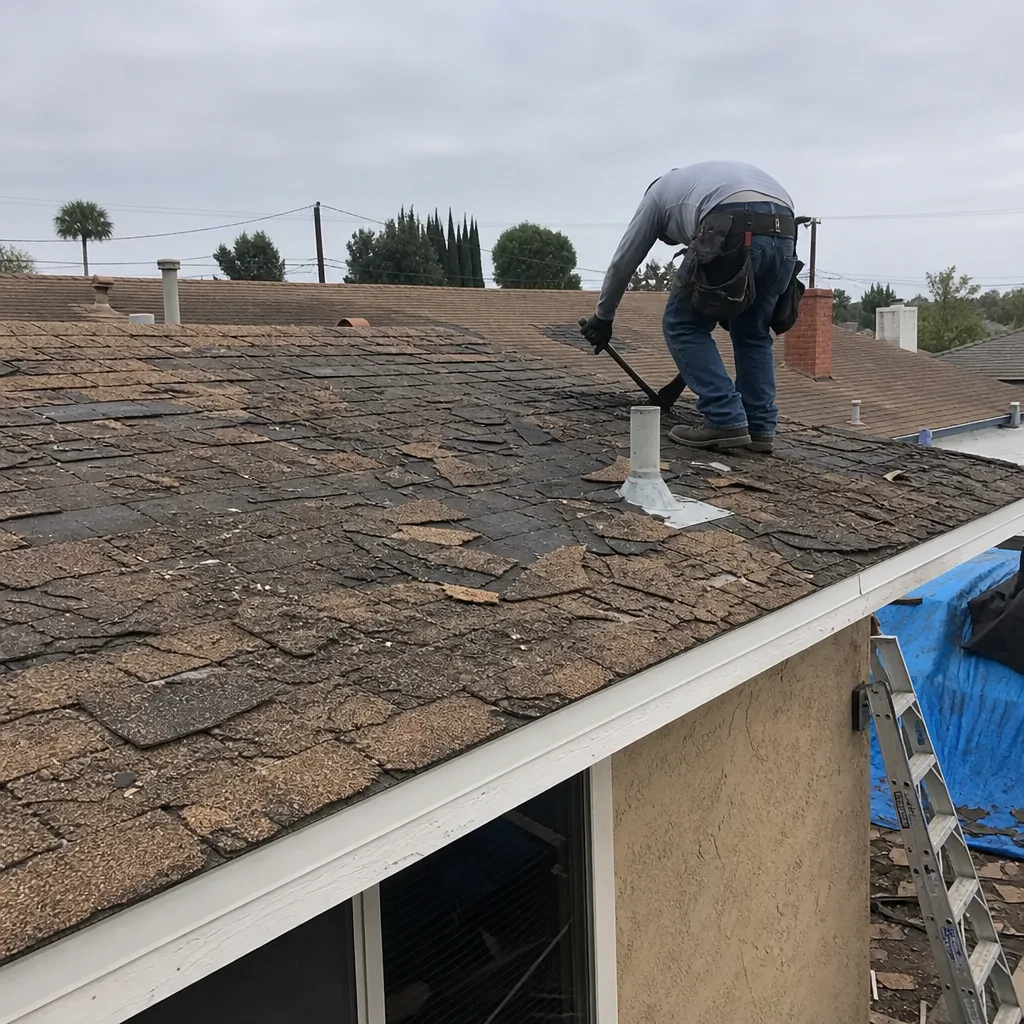 Before
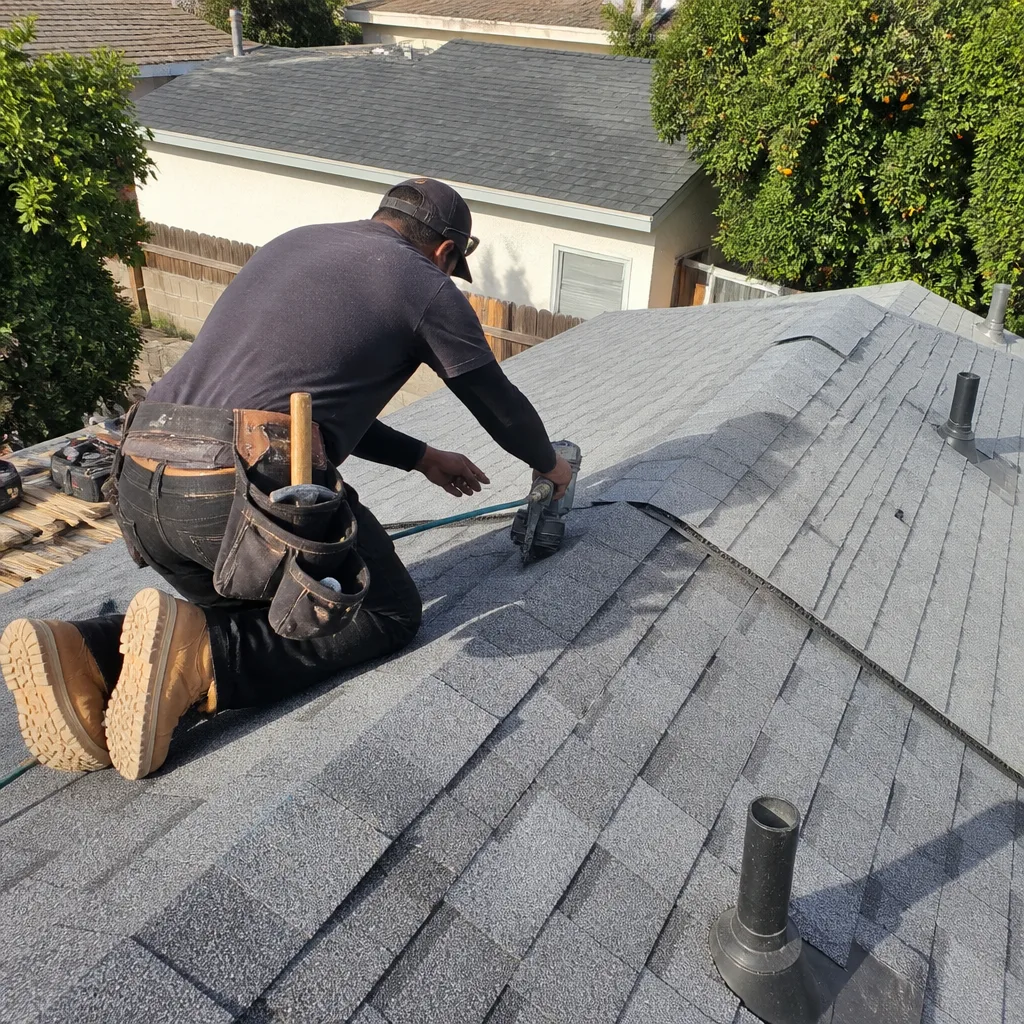 After
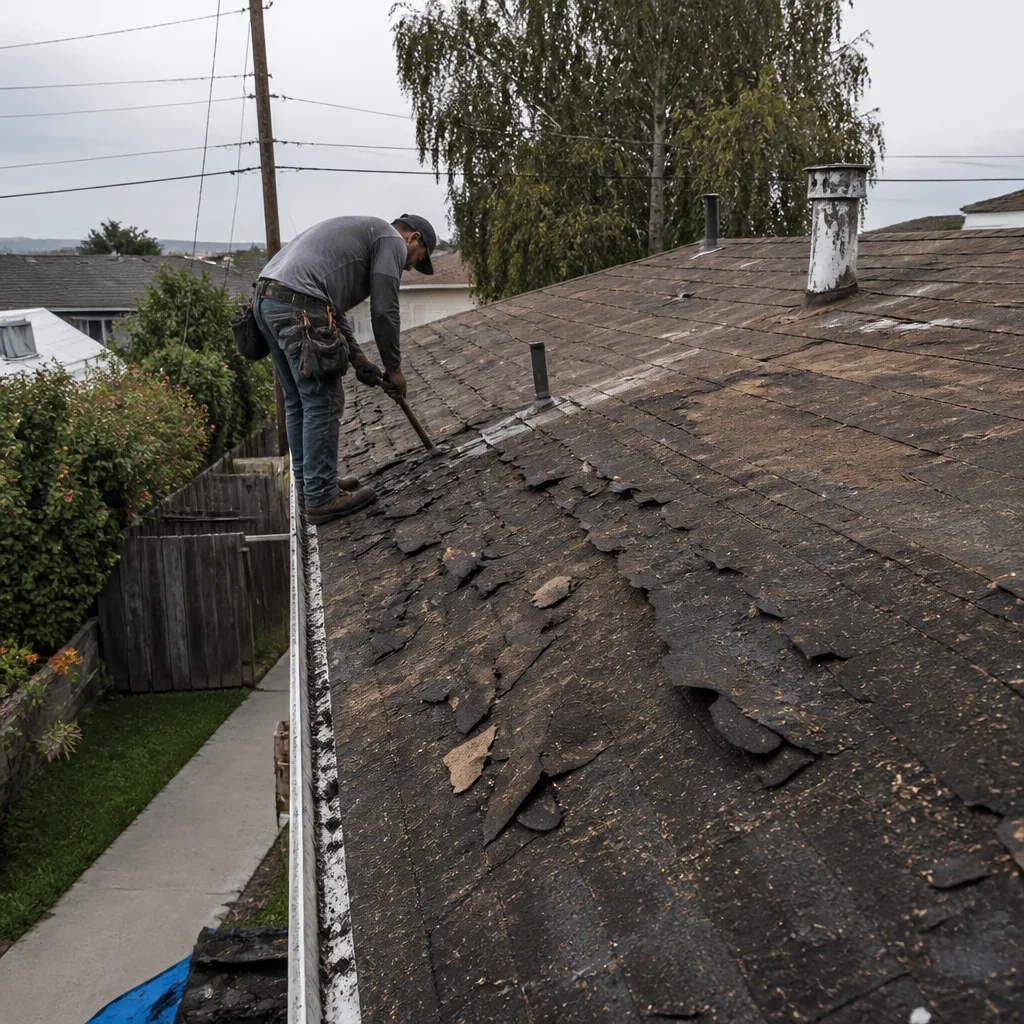 Before
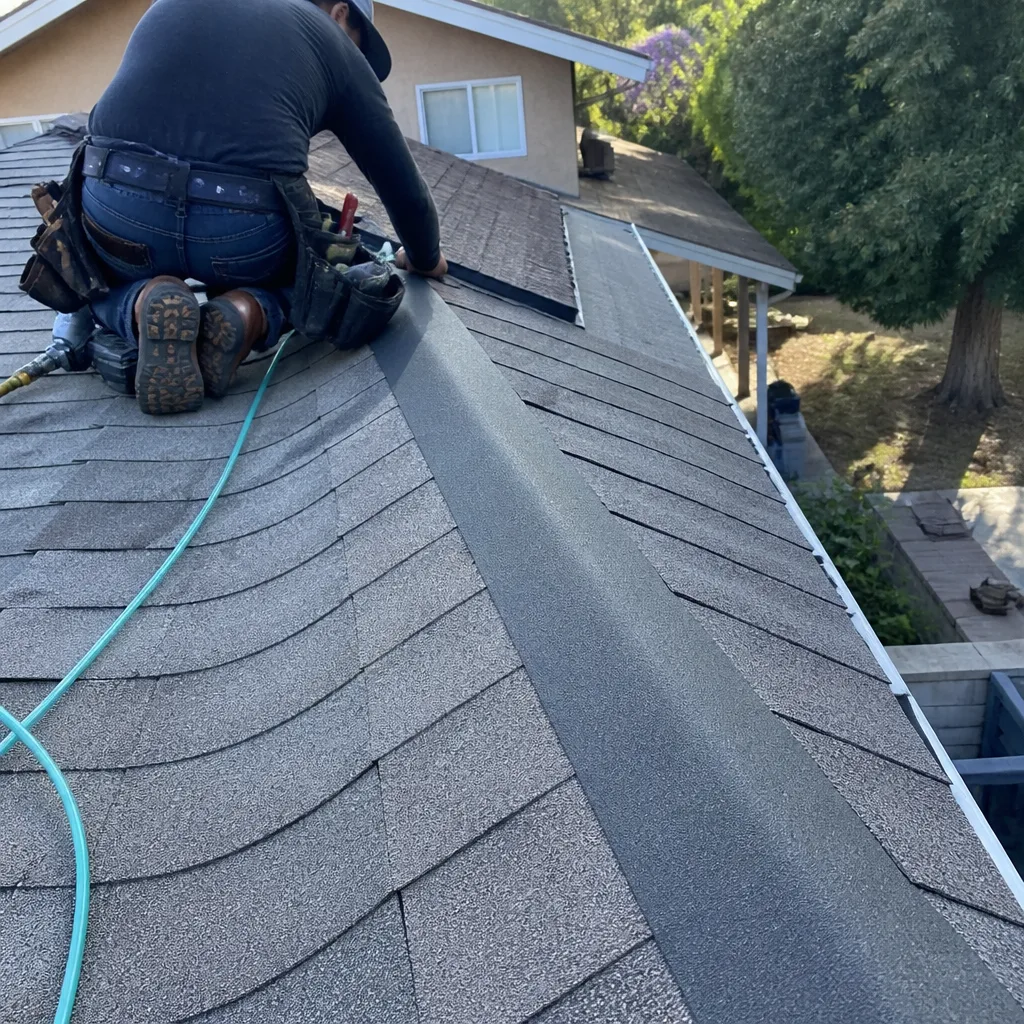 After
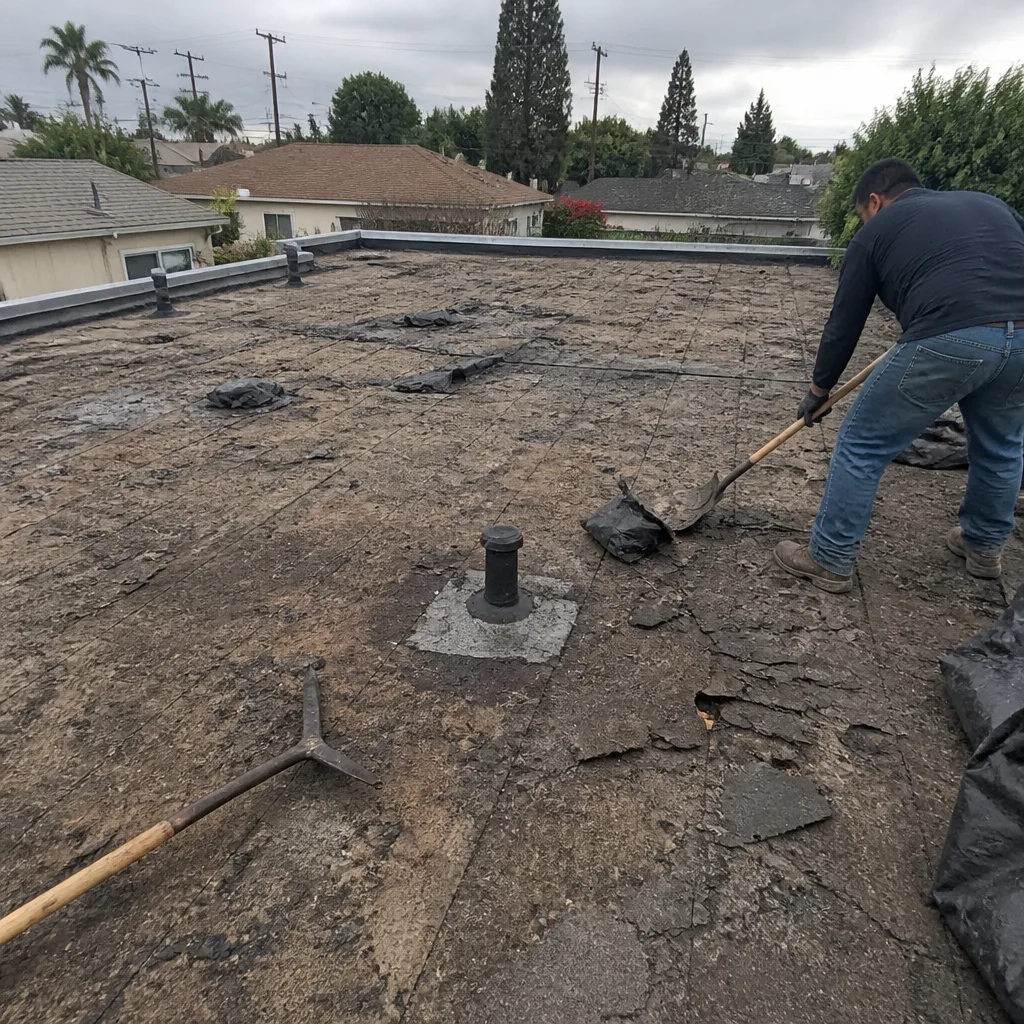 Before
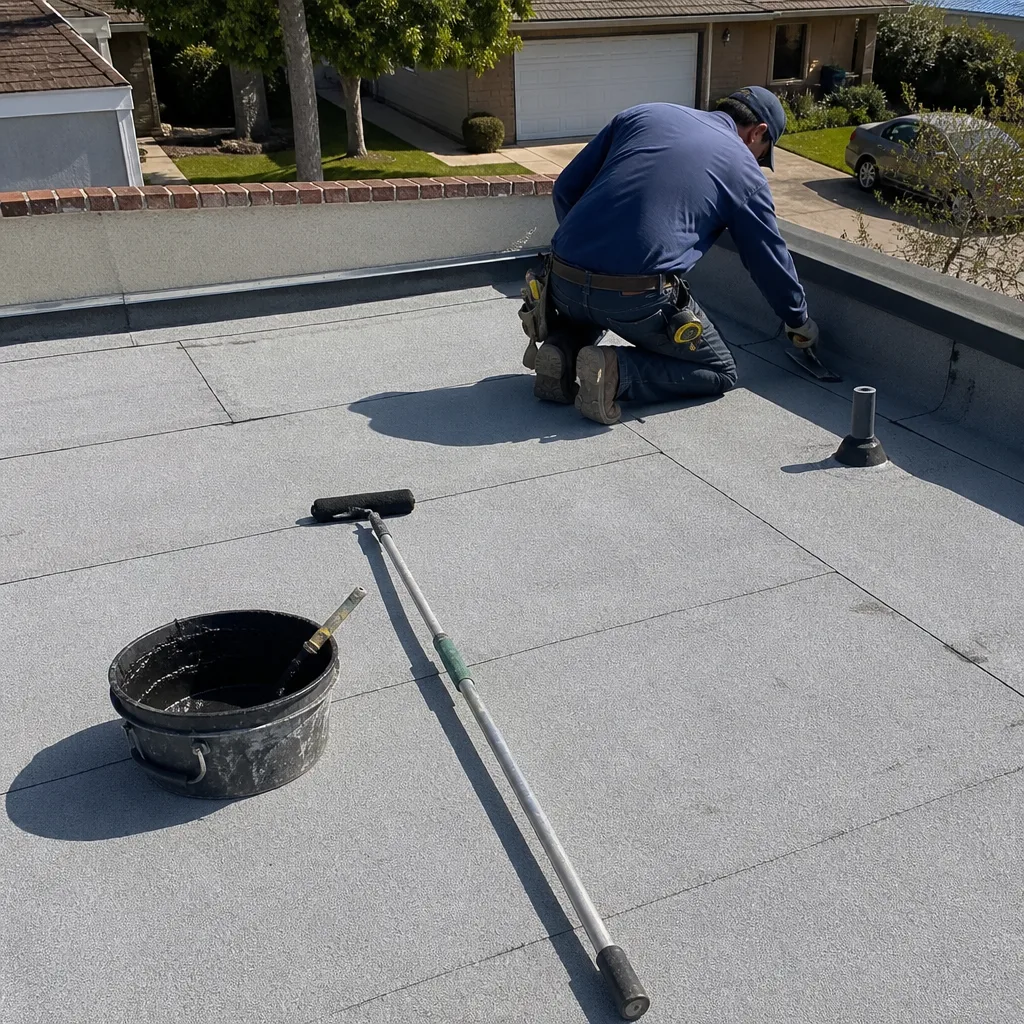 After
When to Call a Professional
Call a professional if you see active water intrusion in the attic, if you have visible shingle displacement after a wind event, if your low-slope section is ponding water, if you notice sagging in the roof plane, or if your home is approaching the 15-year mark and has never had a complete roof condition assessment. You should also call if you simply do not know what condition your roof is in. Not knowing is a lot more expensive than finding out. Buena Park Roof Repair offers free estimates in Buena Park. Call (866) 282-5070 to schedule yours.
Frequently Asked Questions
We recommend a full roof inspection every two years for most Buena Park homes, with an annual visual check from the ground and an attic check after major storm events. Homes over 15 years old or with low-slope sections should lean toward annual inspections. The incremental cost of consistent inspection is far lower than the cost of undetected leak remediation.
October is the single most valuable month for roof maintenance in Buena Park. It falls after the worst Santa Ana wind exposure and before the first significant rains. Any repair completed in October protects the home for the entire wet season. Spring maintenance is secondary and focuses on clearing wind debris and addressing any minor issues that developed over the winter.
Minor repairs such as pipe boot replacement, sealant re-application, or single shingle replacement typically range from $300 to $800. More involved repairs like valley re-flashing or membrane patching on low-slope sections can range from $800 to $2,500 depending on scope and accessibility. Full roof replacement in Buena Park typically starts around $12,000 and varies widely by material choice and roof complexity. Call (866) 282-5070 for an exact quote for your specific roof. Estimates are free.
No. A single leak, even a significant one, often requires only a targeted repair. The decision between repair and Roof Replacement in Buena Park depends on the overall condition of the roof, the number and location of failure points, and the remaining service life of the existing materials. Our inspection process is designed to answer exactly this question without bias. We recommend replacement only when the roof’s overall condition no longer justifies continued repair investment.
The most common invisible causes are failed sealant at roof penetrations, lifted flashing behind stucco sidewalls, and unsealed nail heads that have backed out over time. These failures are rarely visible from the ground and often leave no obvious shingle damage. A professional inspection is the only reliable way to locate them. The good news is that these are typically inexpensive to fix once identified.
Yes, and you should. A ground-level visual pass can identify many issues: lifted shingles, visible granule accumulation, damaged ridge caps, debris in valleys, and sagging roof planes. What you cannot see from the ground is sealant condition, flashing integrity, nail head exposure, and the condition of the roof decking. Those require a professional on the roof, and we strongly advise homeowners not to access their own roofs without proper training and fall protection. Call (866) 282-5070 to schedule a professional inspection if your ground-level check raises any concern.
The Bottom Line
Buena Park roofing has a rhythm that is predictable and a maintenance schedule that is simple: check the roof in October, check the attic after rain, and watch the low-slope sections constantly. The homeowners who follow that rhythm catch problems at the repair stage. The ones who don’t catch problems at the replacement stage. The cost difference is enormous, and the determining factor is almost never luck. It’s whether the check happened before the storm or after the leak. Choose your material, not ours. Repair when possible, replace when necessary. And if you’re not sure what your roof needs, get the inspection before you make any decision. For more guides & resources, visit our blog.
Written by the team at Buena Park Roof Repair, serving Buena Park since 2018.