Last updated October 31, 2026
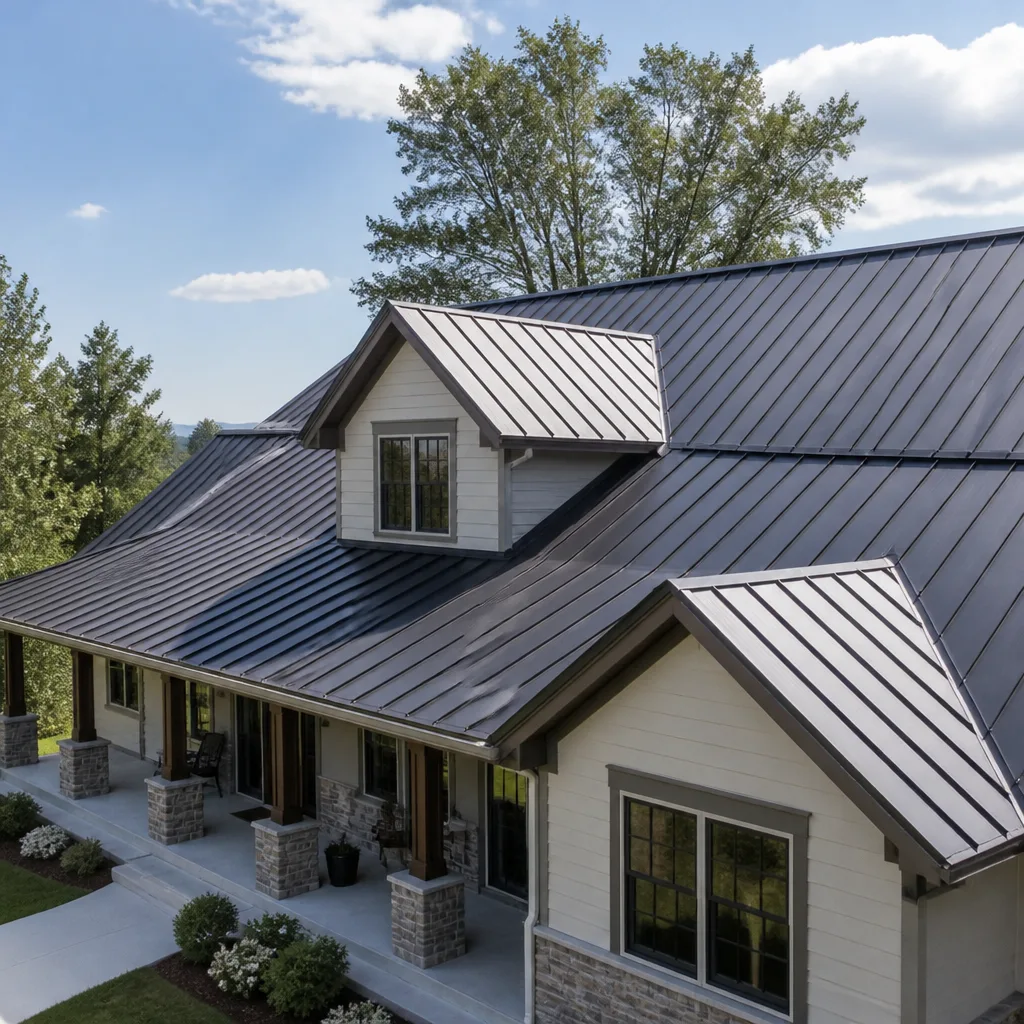 Metal roofing
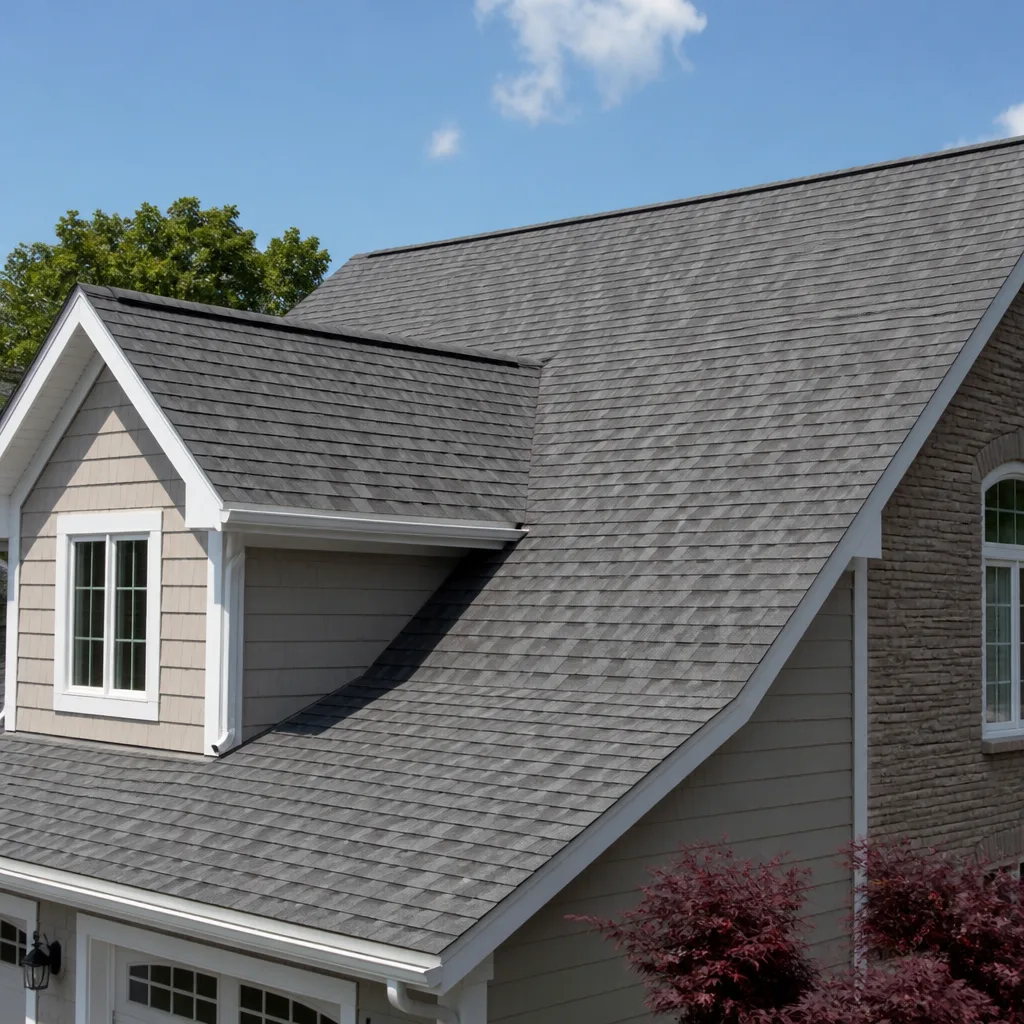
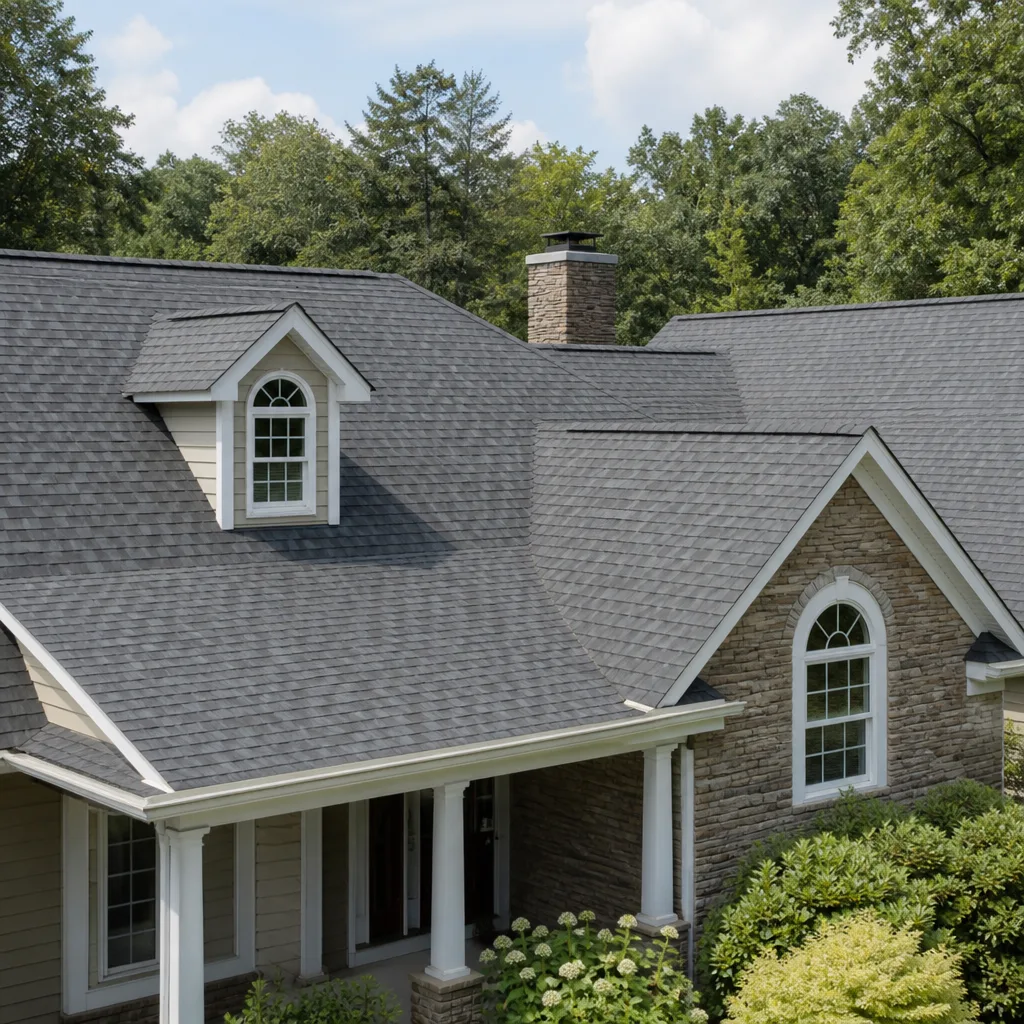 Architectural shingles
 Tile roofing
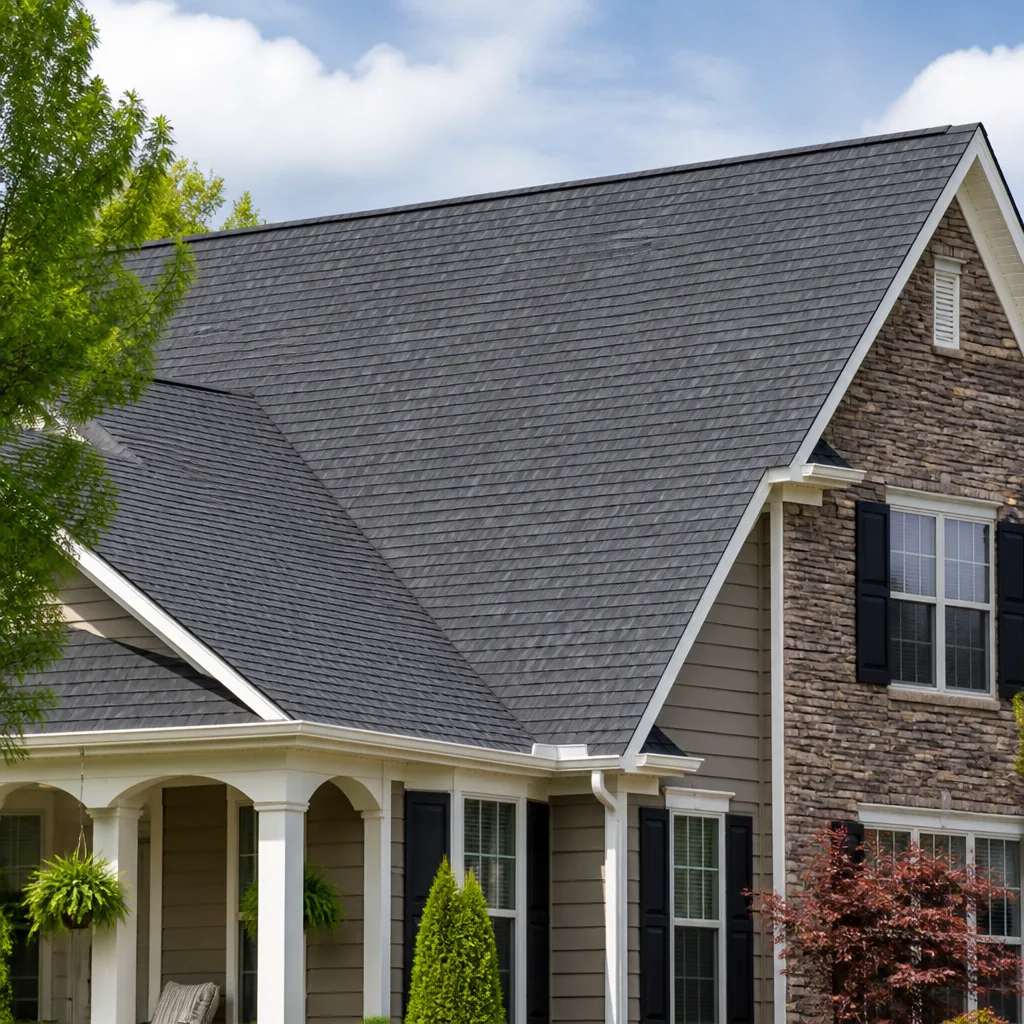 GAF
 Owens Corning
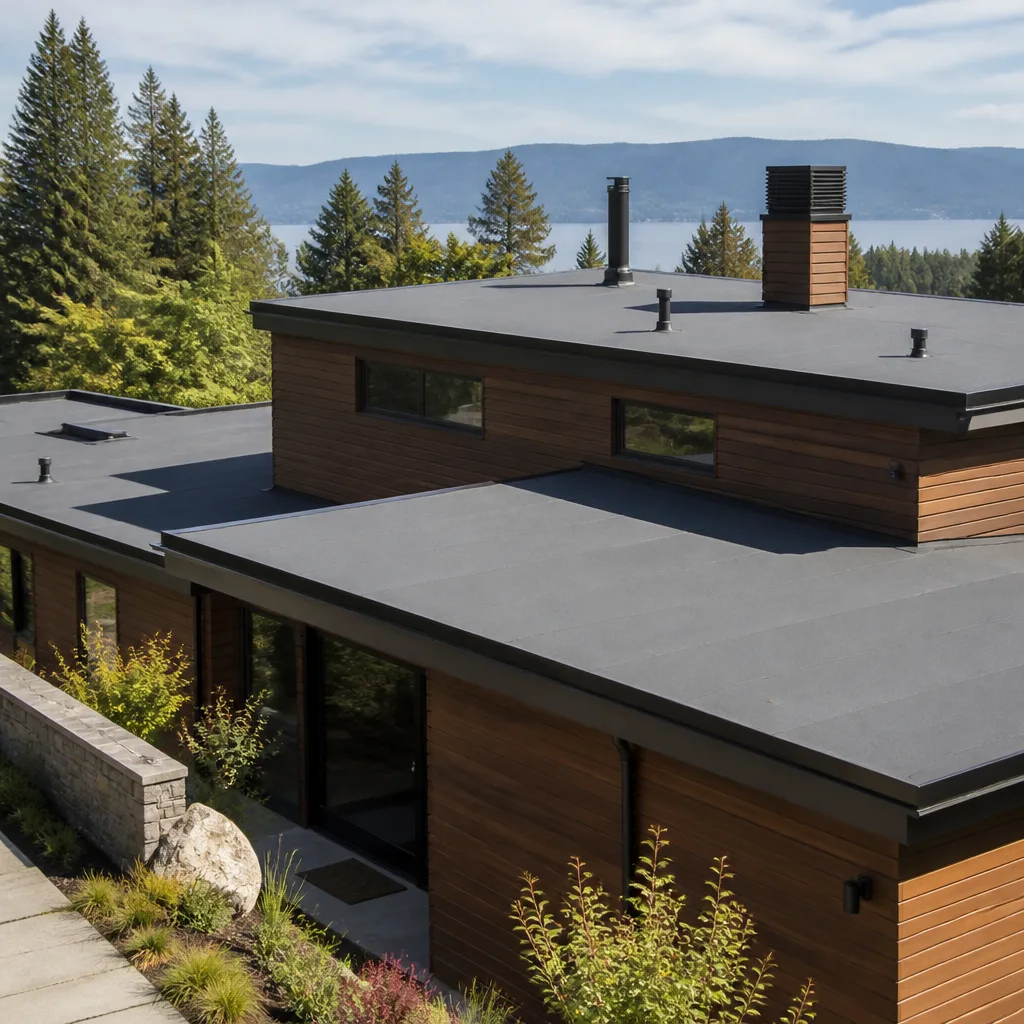 Flat & low-slope
Free roof inspection with deck photos before we talk money - GAF and Owens Corning certified installation
Roofing Warning Signs: A Buena Park Homeowner’s Reference Guide
In Southern California, the roof fails before the ceiling stains. Granule loss, flashing separation, and ridge cap movement are visible for 12 to 18 months before water ever reaches your interior, if you know what you’re looking for from the ground. Most Buena Park homeowners miss these early warning signs because they’re watching for water stains on the ceiling, when the real story is already being told in the attic, at the flashings, and on roof planes they rarely see. This guide walks through the signals that actually matter for asphalt shingle roofs in a high-UV, low-rainfall climate, and which ones are cosmetic versus structural. For a deeper dive, see our Complete Guide to Roofing in Buena Park.
Styles & brands we work with
Quick Answer
The most common roofing warning signs in Buena Park are granule loss visible in gutters, curling or discolored shingles on south-facing slopes, failing flashing around chimneys and HVAC penetrations, and attic daylight gaps that precede any interior staining. These conditions typically show up 12 to 18 months before a leak reaches the ceiling. If you notice any of them, schedule a professional roof inspection before the problem becomes an interior repair.
Table of Contents
- Ground-Level Warning Signs You Can See From the Sidewalk
- What Your Gutters Are Telling You About Your Shingles
- Attic Warning Signs That Appear Before Ceiling Damage
- Flashing Failures: The Most Common Leak Source in Buena Park
- How to Read a Sag or Depression in the Roof Plane
- High-UV Shingle Deterioration: What Buena Park Sun Does to Asphalt
- Common Mistakes to Avoid
- When to Call a Professional
- Frequently Asked Questions
- The Bottom Line
Ground-Level Warning Signs You Can See From the Sidewalk
You don’t need a ladder to spot most roofing problems in Buena Park. In fact, some of the clearest warning signs are visible from the street or your driveway, and learning to read them can save you from a surprise leak during the next Santa Ana-driven rain event. The key is knowing what’s normal aging versus what’s actively failing.
Curling and Cupping Shingles
When shingle edges turn upward (curling) or the middle of the shingle sinks (cupping), the asphalt has begun to lose its flexibility. In Buena Park’s climate, this happens faster than in coastal communities because the sun bakes the asphalt binder, driving out the oils that keep shingles pliable. Curling shingles are a structural warning sign, not a cosmetic one. They no longer lie flat, which means wind can get underneath them, and they’ve lost much of their ability to shed water cleanly. If you see curling on the south and west-facing slopes of your roof, the UV exposure has accelerated aging on those planes specifically.
Discoloration Patterns and What They Mean
Dark streaks, especially the black staining that runs down roof slopes, are almost always algae, not a functional problem. In Buena Park’s dry climate, algae is less common than it is in humid regions, but it still appears on north-facing slopes that stay shaded and damp longer after morning fog. Algae staining is cosmetic. It doesn’t shorten the life of your roof meaningfully, and it’s not a sign of leaking. What you should pay attention to instead is patchy color variation where individual shingles look lighter or washed out. That indicates granule loss, which is structural. When the colored granules wear away, the asphalt underneath is exposed to direct UV radiation, which accelerates deterioration rapidly. A single shingle that’s significantly lighter than its neighbors has already lost most of its protective surface.
Missing Shingles
After a wind event, check your roof from the ground for any bare patches where shingles used to be. Missing shingles are the most obvious ground-level warning sign, but what’s less obvious is that the shingle didn’t need to fall off for wind damage to have occurred. Wind can break the seal between shingles without removing them entirely. A shingle that’s still in place but no longer sealed to the one below it becomes a flap that catches wind and accelerates wear across the surrounding area. After a strong wind event in Buena Park, give your roof a visual once-over from the street. Look for shingles that seem lifted, twisted, or out of alignment, not just the ones that are gone entirely.
Ridge Cap Deterioration
The ridge cap covers the peak where two roof planes meet, and it’s one of the most UV-exposed parts of any roof. Ridge cap shingles are often installed as a pre-cut, thicker product, but they still fail on roughly the same timeline as the field shingles. From the ground, look for ridge cap sections that appear uneven, cracked, or missing. If the ridge line looks wavy or broken in places, those caps have degraded enough to let water reach the nails underneath them. Ridge cap failure is a leading cause of leaks that appear near the peak of vaulted ceilings or along interior walls that align with the roofline.
What Your Gutters Are Telling You About Your Shingles
Gutters collect more than leaves in Buena Park. After each rain, or even during dry periods when wind moves across the roof, they collect a visible record of what’s happening to your shingles above. Learning to read your gutters gives you a non-invasive diagnostic tool that most homeowners overlook entirely.
Granule Volume: How Much Is Too Much?
Every asphalt shingle roof sheds some granules over its life. A new roof sheds a noticeable amount during the first year as loose surface granules wash away. After that, a small amount of granules in the gutter is normal. What’s not normal is volume. If you can run your hand through the gutter debris and come away with a handful of granules, not just a light dusting, your shingles are deteriorating faster than they should be. In Buena Park’s high-UV environment, accelerated granule loss is common on roofs that have passed the 15-year mark, but it can happen earlier on lower-quality shingles or roofs with poor attic ventilation.
Granule Color and What It Tells You
The color of granules in your gutters can help you identify which part of the roof is failing. If the granules are uniformly mixed and match the overall shingle color, the wear is spread across the roof surface, which points to age-related deterioration. If the granules are concentrated in a specific color or match a particular section of your roof, you may have localized failure, often at a valley, a ridge, or a section with ventilation problems. Dark granules that look black or asphalt-colored, regardless of your shingle color, indicate that the colored ceramic coating has worn through and the asphalt substrate itself is now exposed. That’s a late-stage warning sign, and it means the affected shingles have already lost most of their UV protection.
Timing: When You Find Granules Matters
Finding granules in your gutters after a rainstorm is expected, especially on a roof over ten years old. Finding granules during a dry week is more concerning. When water isn’t moving granules, wind and thermal expansion are. The daily heating and cooling cycle in Buena Park causes shingles to expand and contract, and as they lose flexibility, the surface cracks and granules release even without rain. If you’re cleaning your gutters on a dry summer day and seeing granule accumulation, the asphalt binder in your shingles is breaking down from thermal stress, not from water. That’s the same mechanism that eventually leads to cracking and splitting shingles.
Chunks of Asphalt or Shingle Pieces
Granules are normal. Chunks are not. If you find pieces of shingle in your gutters, even small ones, that means the shingle itself is fracturing. This happens when the asphalt becomes brittle and loses its structural integrity. Brittle shingles crack along their edges and corners, and small pieces break away. A fractured shingle is a failed shingle. It can’t protect the roof deck underneath it, and it’s only a matter of time before water reaches the nail line and finds a path inward. This is a repair situation, not a monitoring situation.
Attic Warning Signs That Appear Before Ceiling Damage
Water that reaches your living space ceiling has already traveled through your roof deck, your insulation, and probably your attic framing. That’s a long journey, and it leaves traces at every step. Checking your attic is the single most effective way to catch roofing problems before they become interior damage. A quarterly attic inspection takes ten minutes and can save thousands in repairs.
Daylight Gaps
This is the attic warning sign that matters most. On a sunny day, turn off any attic lights and look up through the roof deck. If you can see daylight coming through the decking anywhere other than at exhaust vents or ridge vents, that’s a hole. Small holes around nail pops are common, but daylight means the roof deck is no longer fully sealed beneath the shingles. The most common locations for daylight gaps in Buena Park homes are at ridge lines, valleys, and around pipe penetrations. If you see daylight, schedule a roof inspection. This is a problem that will not fix itself and gets worse every time it rains.
Staining Patterns on Sheathing
Not all stains are active leaks. In Buena Park’s dry climate, a water stain on the sheathing may be from a leak that happened months ago and hasn’t recurred. The way to tell the difference is the color and location. Dark, wet-looking stains that feel damp to the touch indicate an active leak. Dry, lighter stains with defined edges are historical. They tell you a leak happened at some point, but the source may or may not still be active. Multiple stains in the same general area, even dry ones, suggest a recurring failure point, which is almost always flashing-related. A single isolated stain near a nail or seam could be a one-time event from wind-driven rain. The pattern matters more than any individual stain.
Insulation Compression
Insulation in your attic works by trapping air. When water gets into the insulation and it dries, it compresses, losing much of its R-value. Compressed insulation looks flattened or matted compared to the fluffy insulation around it. If you notice areas where the insulation appears dented, sunken, or compressed, especially in a pattern that aligns with a known roof penetration above, that’s a sign water has been entering there. Insulation compression also creates cold spots in winter and hot spots in summer, which can drive up your energy bills even after the leak is repaired. Replacing compressed insulation is part of the repair, but the first step is finding the source of the water.
Rust on Nails or Fasteners
If the nails holding your roof deck show rust, that’s a moisture signal. It doesn’t necessarily mean an active leak, but it means humidity in the attic has been high enough to cause oxidation. In Buena Park, where the climate is dry, attic humidity is usually driven by two things: poor ventilation and water intrusion. If you see rusted nails in a concentrated area, water is getting in and the attic isn’t drying out properly. Rusted nails are also weaker, which means the decking may not be as securely fastened as it should be.
For homeowners in Buena Park, a dedicated Roof Inspection in Buena Park can identify these attic warning signs before they become ceiling stains. Our inspection process is designed to tell you what your roof actually needs, not what we’d like to sell you.
Flashing Failures: The Most Common Leak Source in Buena Park
If we had to name the single most common leak source on Buena Park homes, it’s flashing. Flashing is the metal material that transitions water from the flat roof plane around penetrations like chimneys, skylights, plumbing vents, and HVAC equipment. When flashing fails, water gets in even if every shingle on the roof is in perfect condition. The shingles aren’t the problem. The transitions are.
Chimney Flashing
Chimney flashing is the most intricate flashing on any roof. It involves base flashing, step flashing, counter flashing, and a saddle or cricket on the uphill side of the chimney, depending on its width. Chimney flashing fails in predictable ways. The metal can pull away from the chimney as the masonry and the roof structure expand and contract at different rates through the Buena Park heat cycle. The sealant between the counter flashing and the chimney eventually dries and cracks. From the ground, you can’t easily see chimney flashing condition, but you can see the results: rusted flashing is a sign of age, and any visible gap between the flashing and the chimney is an active leak waiting for rain. If your chimney shows rusted metal, crumbling mortar joints, or if you see daylight between the chimney and the roof, that flashing needs attention.
Skylight Flashing
Skylights in Buena Park homes are common, and their flashing is frequently the weak link. Skylight flashing failures often start as slow, intermittent leaks that appear during specific wind directions. The water may never reach your ceiling in a noticeable way because it’s absorbed by insulation first. The warning signs are subtle: warped or softened drywall near the skylight, a persistent musty smell in the room underneath, or insect activity around the skylight opening, which often indicates a moisture source. By the time water visibly stains the drywall, the leak has usually been active for months.
HVAC and Pipe Penetration Flashing
Every roof has penetrations: plumbing vents, exhaust pipes, and, on most Buena Park homes, HVAC equipment curbs. Each penetration is sealed by a boot or collar, typically made of rubber, plastic, or metal. The rubber and plastic versions are UV-degradable, which means they have a predictable failure timeline in our climate. A cracked or split vent boot is a cheap repair if caught early and an expensive one if ignored. Signs of failure include cracked or brittle rubber around the pipe, missing or corroded storm collars, and any visible gap between the pipe and the flashing. If you’re in the attic, look at the penetration from underneath. Water usually enters in a defined stream, so the staining pattern will align with the pipe or equipment location.
Flashing repair is one of the most cost-effective fixes in our Roof Repair in Buena Park service. In many cases, replacing a deteriorated vent boot or resealing a chimney flashing can extend the life of an otherwise healthy roof by years.
How to Read a Sag or Depression in the Roof Plane
Not every visual distortion in a roof is a structural emergency. Some are optical illusions created by the roof’s geometry, and others are genuine and urgent. Knowing how to distinguish between them, from the ground and from the attic, can save you either an unnecessary panic or an expensive repair.
Step 1: Confirm the Sag Is Real
Stand at the corner of your house and sight down the roof plane. A true sag will show as a visible dip or depression in an otherwise straight line. The angle of the sun matters. Early morning and late afternoon light casts longer shadows that make subtle sags easier to see. If you can see the sag from two different viewing angles, it’s real. If it only appears from one angle or in certain light, it may be a combination of shingle variation and the visual distortion of the roof’s rake edge.
Step 2: Check the Attic
Once you’ve confirmed the sag from outside, go into the attic and look at the decking and rafters in that area. A decking problem looks different from a rafter problem. Decking failure shows up as soft, spongy, or delaminated wood that sags between the rafters. You may see broken or cracked sheathing panels, especially if they’ve been wet. A rafter problem is a structural issue: a cracked, split, or undersized rafter that has deflected under load. From inside, a rafter problem may show as a visible bow or bend in the framing member itself, and it often runs in a straight line along the rafter’s length.
Step 3: Identify the Probable Cause
- Decking failure: Usually the result of prolonged moisture exposure. In Buena Park, this typically means a slow leak that went undetected, often at a flashing point. The decking delaminated or rotted, and the shingles above now follow the depression. This requires decking replacement and likely shingle replacement in that area.
- Rafter failure: Can be caused by undersized framing for the span, excessive weight (multiple roofing layers), or insect damage. Rafter failure is a structural concern that typically requires an engineer’s evaluation and reinforcement or replacement of the affected member.
- Layer distortion: If a second layer of shingles was installed over an original layer, the roof surface can show irregularities where the underlying layer shifted or settled. This is usually not urgent from a structural standpoint, but it does indicate an older roof and complicates future repairs.
Step 4: Respond Appropriately
If the sag is a decking issue, it needs professional attention before it worsens. A soft deck can fail under the weight of a person walking on the roof, and any water that’s already penetrated will continue to damage the framing below. If the sag is a rafter issue, stop walking on that area of the roof entirely and call a professional immediately. Rafter failure can progress quickly once it starts, and the consequences are significantly more expensive to address than the roofing work that would have prevented it. If the sag appears to be a visual distortion with no corresponding attic evidence, document it with photos and monitor it every six months. Some distortions are stable and benign. The key is knowing which kind you have.
High-UV Shingle Deterioration: What Buena Park Sun Does to Asphalt
Buena Park averages over 280 sunny days per year, and that sunshine is both a blessing and a slow-moving force working against your roof. The same UV radiation that makes the climate so livable is breaking down the molecular structure of your asphalt shingles every single day. Understanding this specific failure mode helps you interpret what you’re seeing on your roof.
Thermal Cycling Stress
Roof surface temperatures in Buena Park regularly reach 160 to 180 degrees Fahrenheit during summer afternoons, then cool by 60 to 80 degrees overnight. That daily expansion and contraction cycle is measured in microscopic movements, but over thousands of cycles it adds up. Asphalt shingles are designed to accommodate this movement, but as the asphalt ages and loses its volatile oils, the shingles become less flexible. Cracks form at the points of highest stress, which are typically the edges, the nail line, and the notches between shingle tabs. Cracking is a late-stage warning sign. It means the shingle’s structural integrity has been compromised, and the roof is in the replacement window rather than the repair window for that area.
South-Facing Slope Acceleration
In Buena Park, the south and southwest-facing roof slopes receive the most direct sunlight and typically fail years before the north-facing slopes on the same roof. This creates a common scenario: a homeowner sees that the north side of the roof looks fine and assumes the whole roof is fine, while the south side has already lost significant granule coverage and is developing cracks. This uneven wear is normal, but it means roof condition should always be evaluated by section, not by overall appearance. A roof inspection that averages the condition across all slopes may miss a failing south face that’s actively compromising the roof’s integrity.
Material Choice and UV Resistance
Not all shingles respond to UV exposure equally. Premium architectural shingles from manufacturers like CertainTeed and GAF are formulated with UV-stabilized asphalt and higher-density granule coatings that resist this degradation longer than entry-level three-tab products. When the time comes to replace your Buena Park roof, the material choice affects how well it will hold up to our specific climate. Our Choosing the Right Roofing Brand: A Buyer’s Guide for Buena Park breaks down what to look for. We work with seven major manufacturers, including GAF, CertainTeed, Owens Corning, IKO, Atlas, Tamko, and Boral, which gives us the ability to match the right material to your home’s exposure rather than pushing whatever is in stock. A home with full sun exposure on a low-slope roof benefits from a different product than a shaded roof with steep pitches, and that’s a decision that should be made intentionally.
When UV Damage Warrants Action
UV deterioration is gradual, which means you’ll typically see it coming. The progression is predictable: granule loss first, then surface cracking, then shingle brittleness, then failure. The window between the first visible granule loss and actual leaking is usually measured in years, not months. That’s good news, because it means you have time to plan. If your roof is showing UV-related wear, the smart move is a professional Roof Inspection in Buena Park that documents the condition and gives you a realistic timeline for planning a replacement. You don’t need to replace a roof at the first sign of granule loss, but you do need to know where you are in the aging curve.
For anyone considering a larger project, our Roof Replacement in Buena Park service includes a material consultation that compares products across all seven manufacturers we install, so the shingle choice is based on your home’s exposure and your budget, not our inventory.
Common Mistakes to Avoid
- Waiting for a ceiling stain to investigate. By the time water reaches your living space, it has already damaged the roof deck, the insulation, and possibly the framing. Buena Park’s dry climate means a leak can be slow and intermittent, so interior stains often appear months after the leak began. Investigate attic warning signs before they travel down.
- Assuming a north-facing slope indicates overall roof condition. The south and west-facing slopes fail first in Buena Park due to UV exposure. A north slope can look nearly new while the south slope is actively deteriorating. Always evaluate each roof plane separately.
- Ignoring granule accumulation during dry weather. Granules in gutters after rain are expected. Granules accumulating during a dry week indicate asphalt breakage from thermal stress, which is more serious than normal wear. Check your gutters year-round, not just after storms.
- Walking on a sagging roof to investigate it. If a section of the roof is visibly sagging, the decking may be compromised. Walking on it can cause a collapse and serious injury. Evaluate sags from the attic and from the ground, and let a professional with proper safety equipment handle any roof-level investigation.
- Replacing the roof without addressing flashing failures. A new shingle field with old flashing is a roof with the original leak sources still in place. Flashing has a different lifespan than shingles and needs to be evaluated separately. A proper replacement scope includes flashing replacement at all penetrations.
- Relying on a home inspector’s quick assessment for a purchase. Home inspections are general evaluations and rarely include the level of detail needed to identify early roofing failure. If you’re buying a Buena Park home, schedule a dedicated roof inspection rather than relying on the general home inspection report.
When to Call a Professional
Some roofing conditions can be monitored. Others demand immediate professional attention. If you see any of the following, call a roofer today: visible daylight in the attic through the roof deck, active water staining or dampness on sheathing, a sagging section of the roof plane confirmed by attic evidence, missing shingles after a wind event, cracked or separated flashing around any penetration, or granule loss severe enough that bare asphalt is visible on multiple shingles. These are active failure conditions, not wear-and-tear indicators. The longer they go unaddressed, the more the repair scope expands and the repair cost grows. Buena Park Roof Repair offers free estimates in Buena Park. Call (866) 282-5070 to schedule one, and we’ll tell you honestly whether your roof needs repair, replacement, or just monitoring.
You can learn more about our approach at the Buena Park Roof Repair home page.
Frequently Asked Questions
A roof can usually be repaired if the damage is localized: a few missing shingles, a failed vent boot, or flashing separation in one area. It’s replacement time when the damage is widespread across multiple slopes, the shingles have lost flexibility and granule coverage across most of the surface, or the decking underneath has been compromised. The only honest way to know is a professional inspection. We deliberately evaluate repair scope before we ever propose replacement, because a repair-first approach can save Buena Park homeowners thousands of dollars. Call (866) 282-5070 to get a straight answer on your specific roof.
The first signs of storm damage to check are missing shingles, lifted shingle edges, granule accumulation in gutters and at downspout outlets, and any debris that may have struck the roof. Wind damage often compromises shingle seals without removing the shingles entirely, so look for shingles that appear lifted or out of alignment even if none are missing. After a strong wind event, a ground-level visual check is worth doing immediately, and a professional inspection is worth scheduling if you see anything questionable.
Every three to five years for a roof under ten years old, and every one to two years for a roof over ten years old. The frequency increases with age because the failure modes accelerate. In Buena Park’s UV-intensive climate, a roof over 15 years old should be inspected annually. An annual inspection costs far less than the decking and insulation repairs that come from undetected leaks. We offer a dedicated roof inspection service with no repair commitment required.
You can and should monitor your roof from the ground and from inside your attic. Both are safe and effective ways to catch early warning signs. What you should not do is walk on the roof surface. Roofs are dangerous, and a roof with suspected damage is more dangerous than a healthy one. If a roof is aging or showing warning signs, the decking may not support your weight. Leave roof-level inspections to trained professionals who have the safety equipment and experience to work at height without getting hurt.
Entry-level three-tab shingles typically last 15 to 20 years in Buena Park’s high-UV climate. Architectural shingles from manufacturers like GAF, CertainTeed, and Tamko typically last 20 to 30 years, depending on the specific product, the roof’s ventilation, and the direction the slopes face. The south and west-facing slopes will usually need attention several years before the north-facing slopes on the same roof. These ranges are general guidelines, not guarantees, which is why regular inspections matter more than age-based assumptions.
A roof inspection should include a ground-level exterior evaluation, an attic evaluation from inside, and a roof-level assessment of shingles, flashing, ridge caps, and penetrations. It should produce a written condition report with documented findings, photos where relevant, and a prioritized recommendation. Costs in Buena Park vary by provider, but many reputable roofers, including us, offer no-charge or low-cost inspections when the homeowner is considering repair or replacement work. We’ll give you an honest condition report before any commitment to a scope of work. Call (866) 282-5070 to schedule one.
The Bottom Line
Roofs in Buena Park fail from the top down, not the inside out. The earliest warning signs are granule loss in your gutters, curling shingles on UV-exposed slopes, failing flashing at penetrations, and daylight gaps visible in the attic. These signals appear months or years before water ever reaches your ceiling, and learning to read them gives you time to act deliberately rather than react to a leak. Check your attic quarterly. Read your gutters after every rain. Evaluate each roof slope separately, because they age at different rates. And when you see something concerning, get a professional opinion before the problem expands. Visit our blog for more guides & resources on protecting your home. We’ll tell you what your roof actually needs, and we’ll quote the repair before we ever propose replacement. Call (866) 282-5070 for a free estimate.
Written by the team at Buena Park Roof Repair, serving Buena Park since 2018.
See the difference
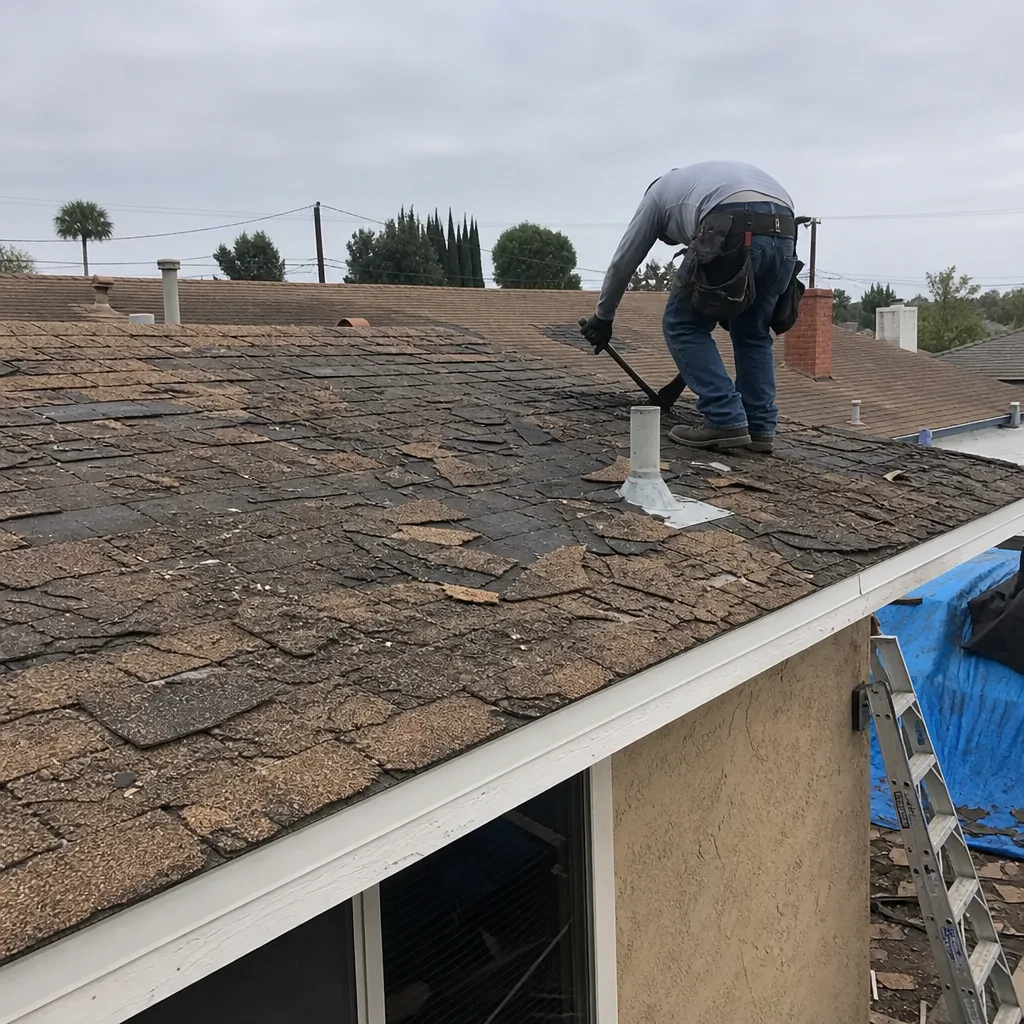 Before
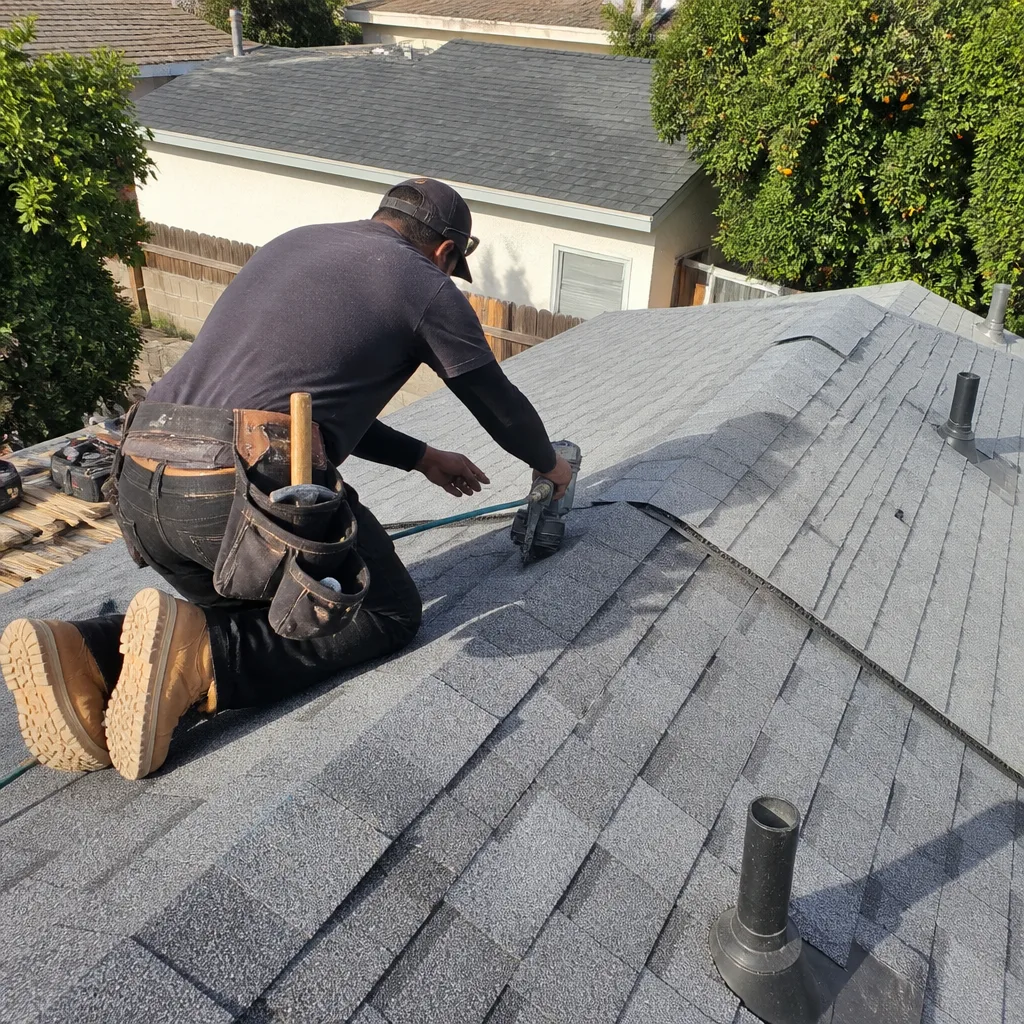 After
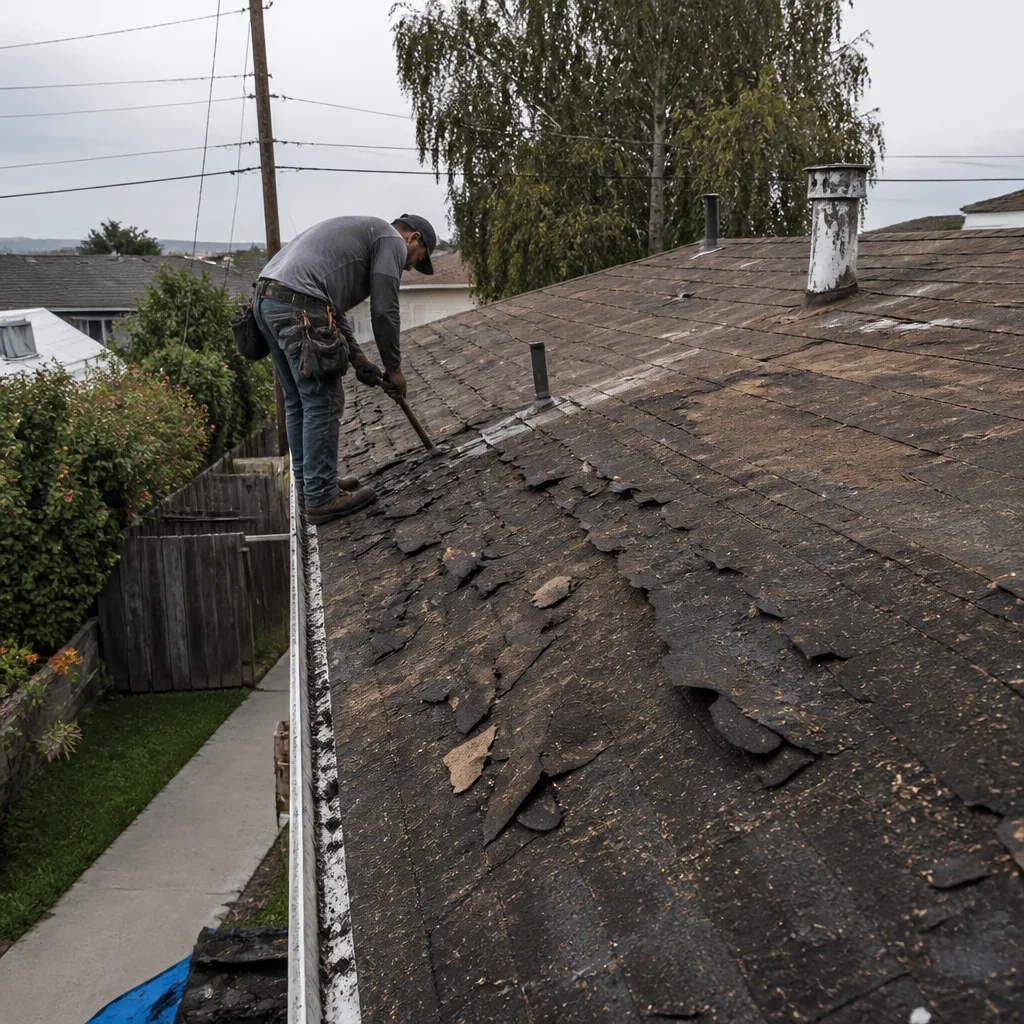 Before
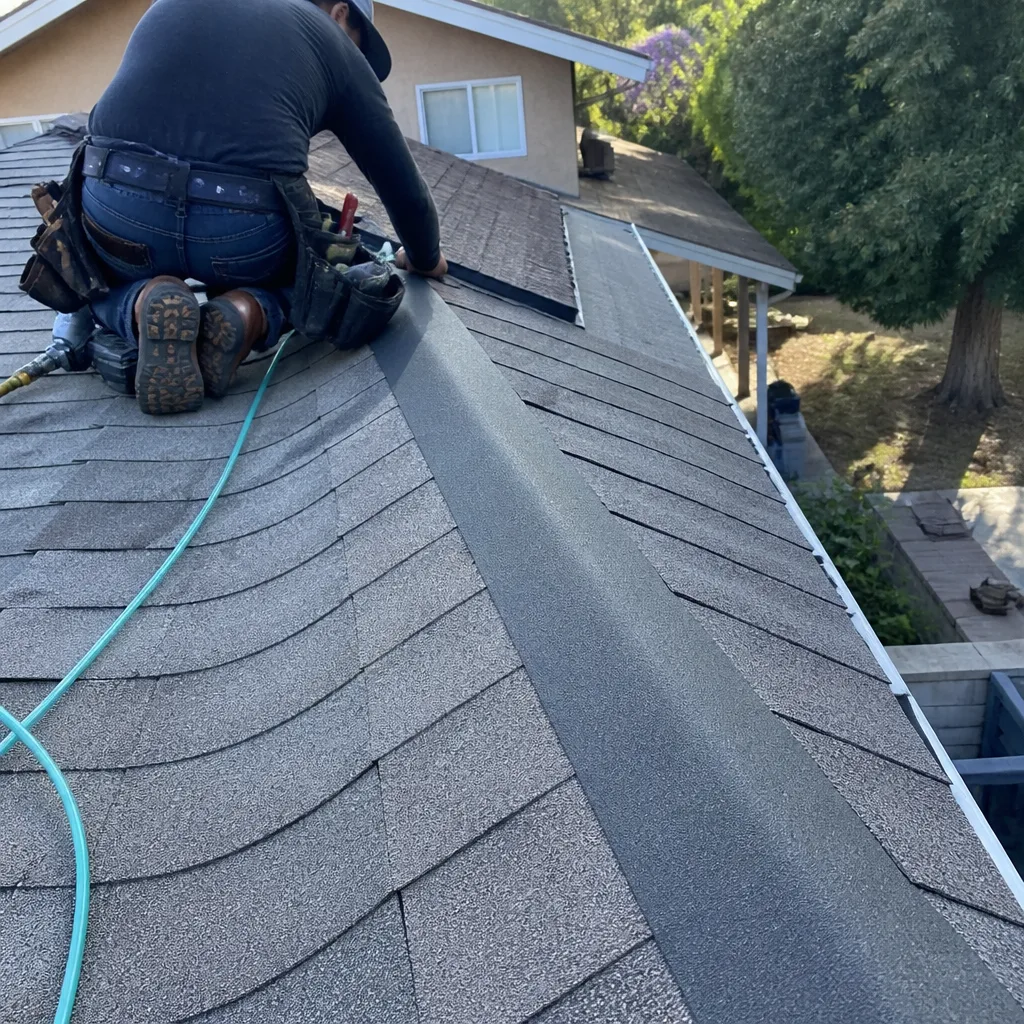 After
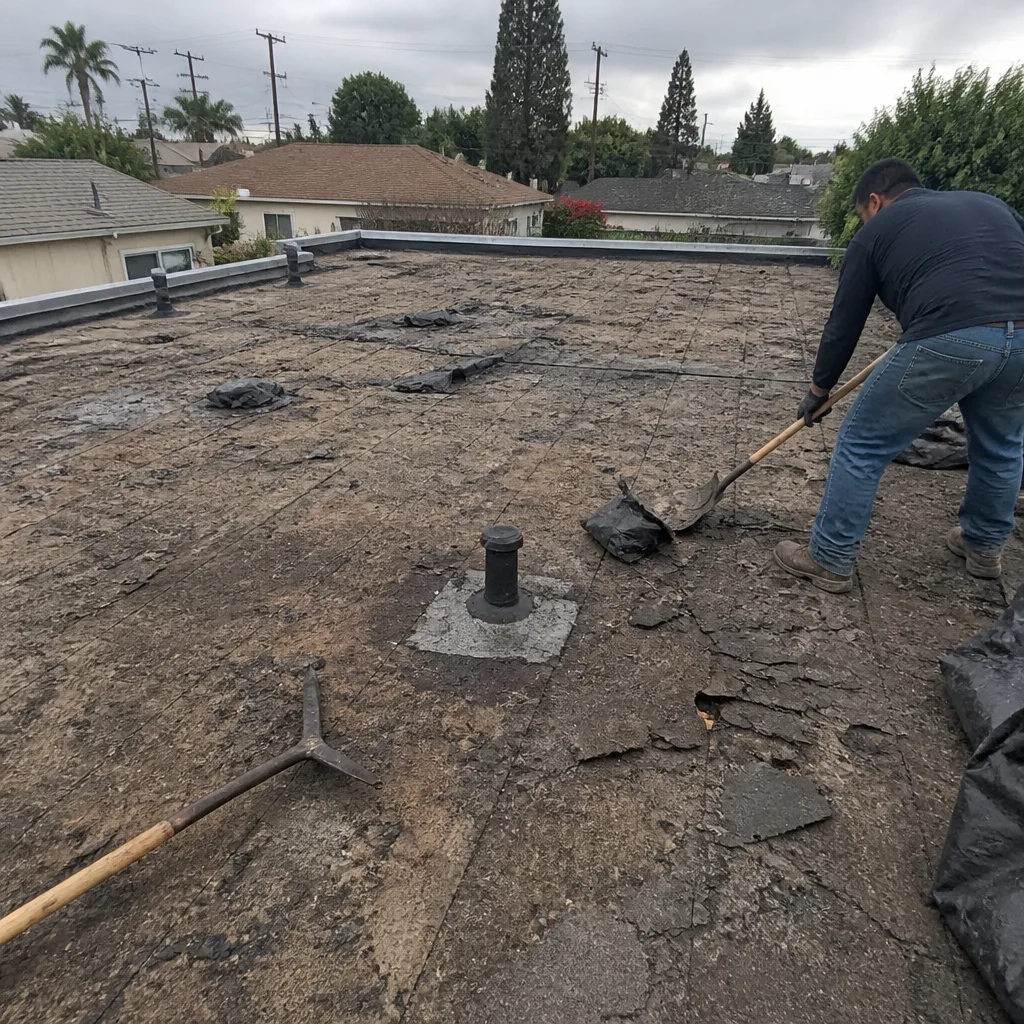 Before
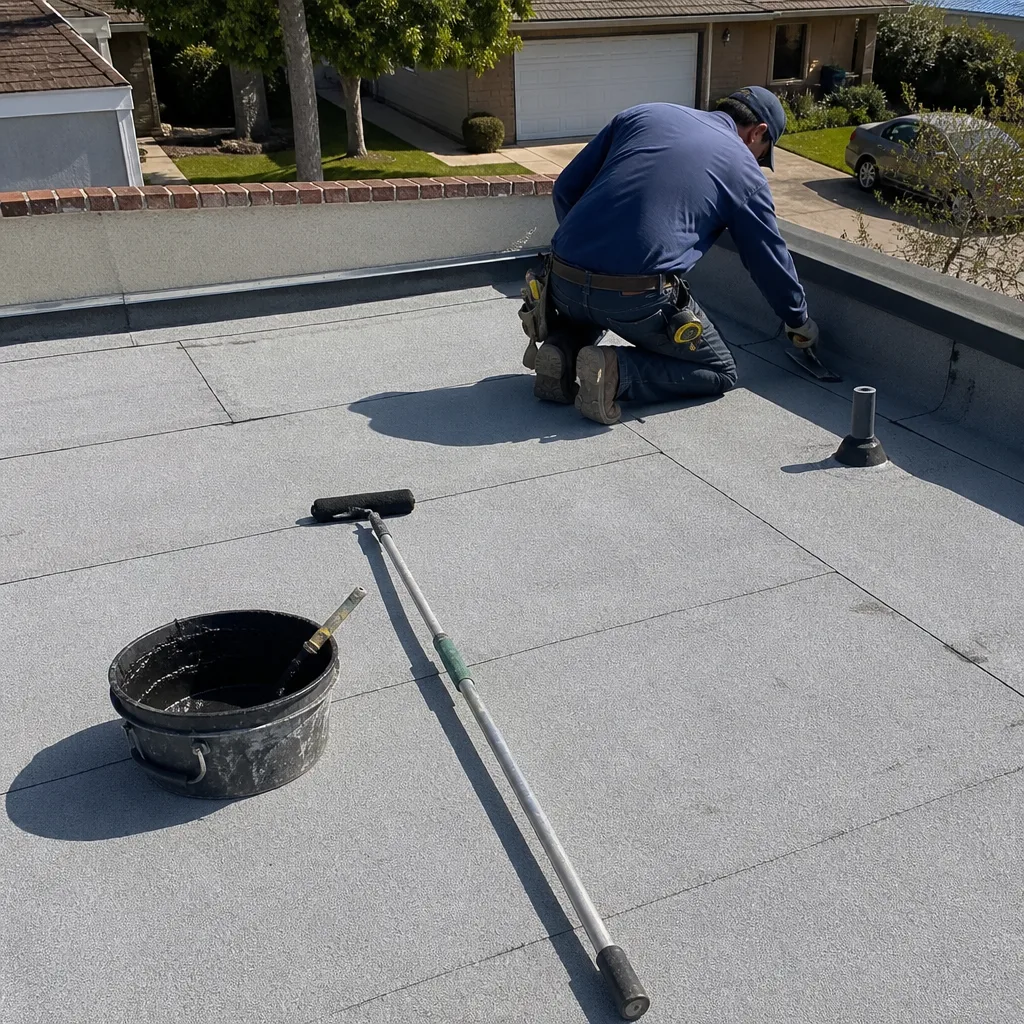 After