Last updated October 31, 2026
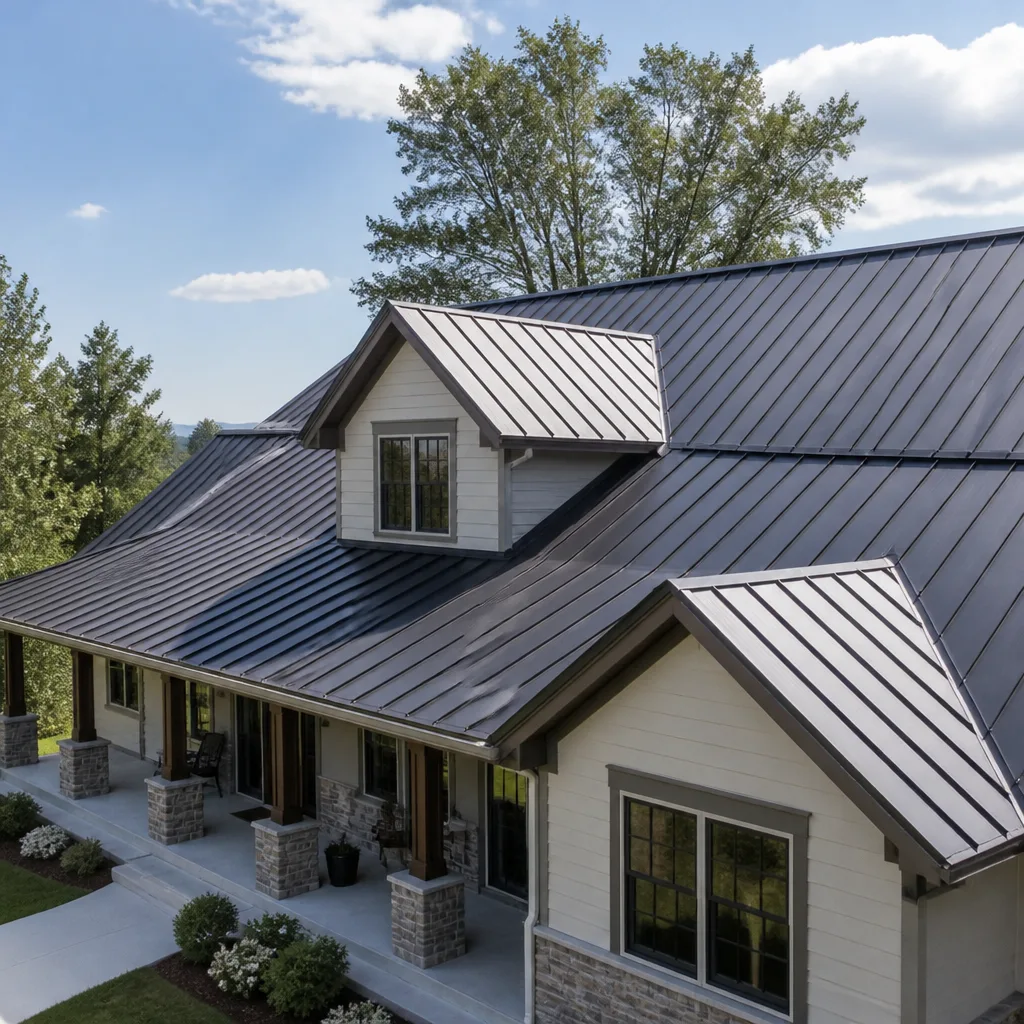 Metal roofing
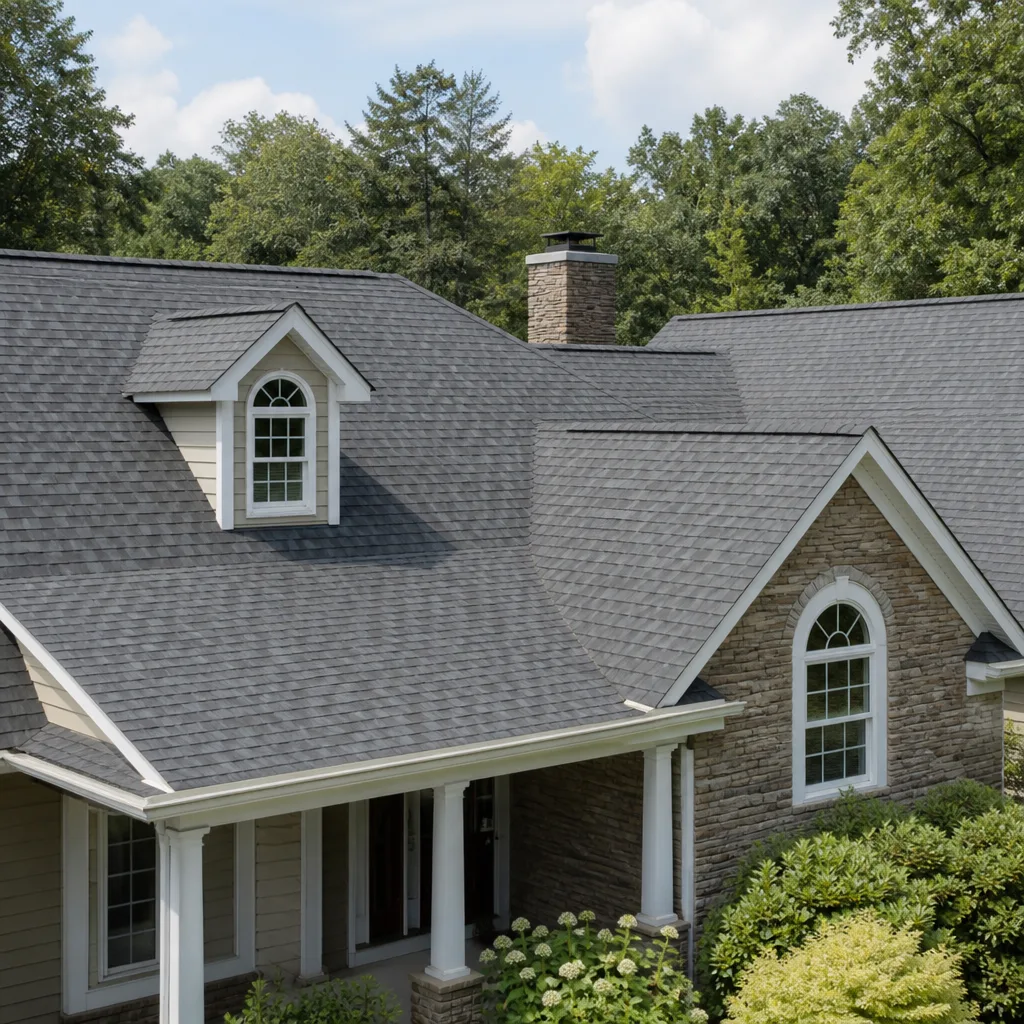 Architectural shingles
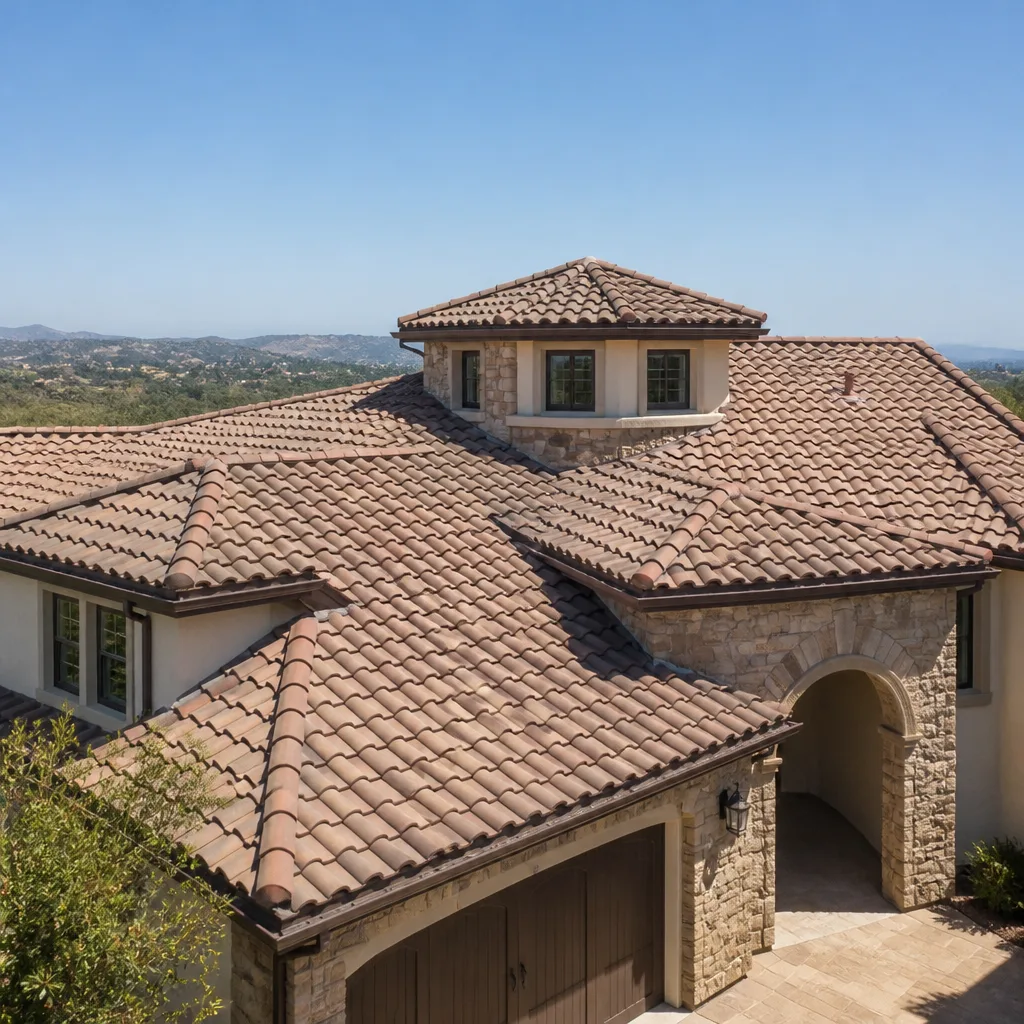 Tile roofing
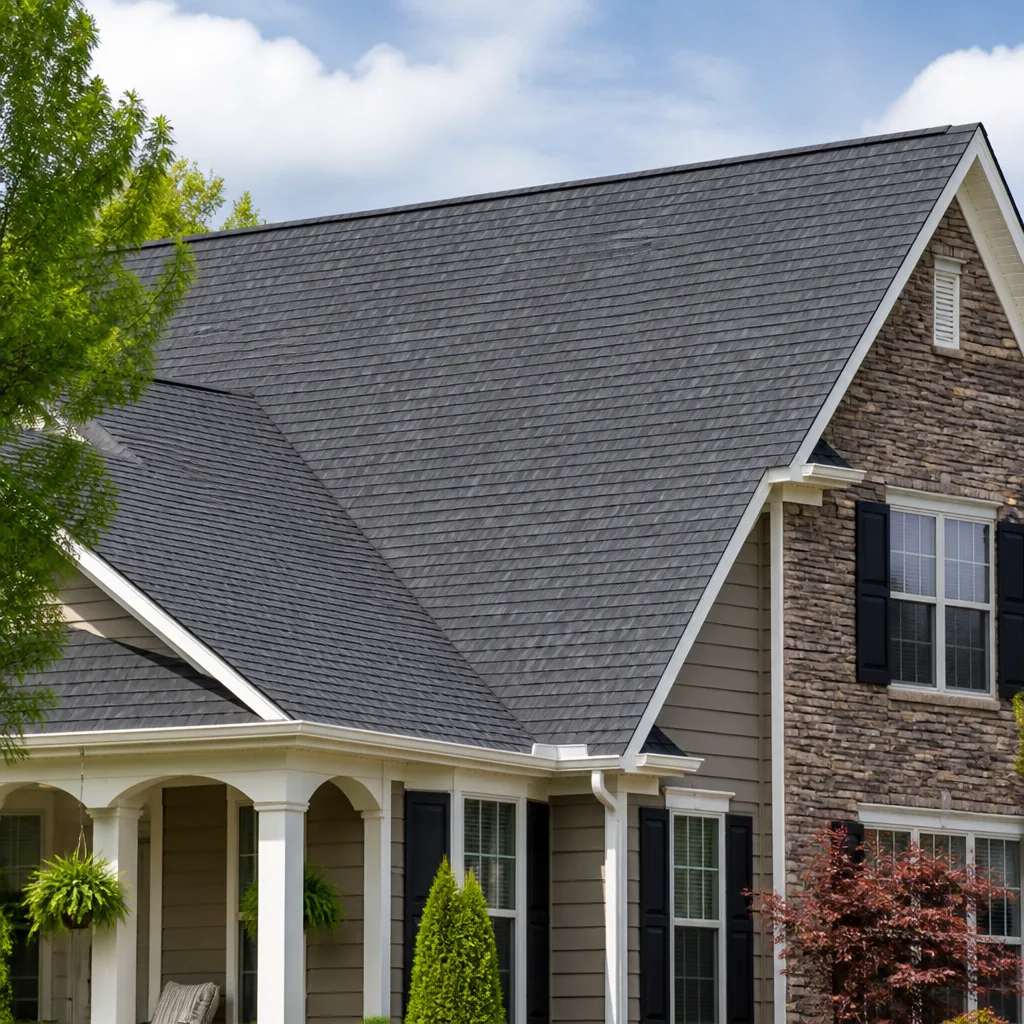 GAF
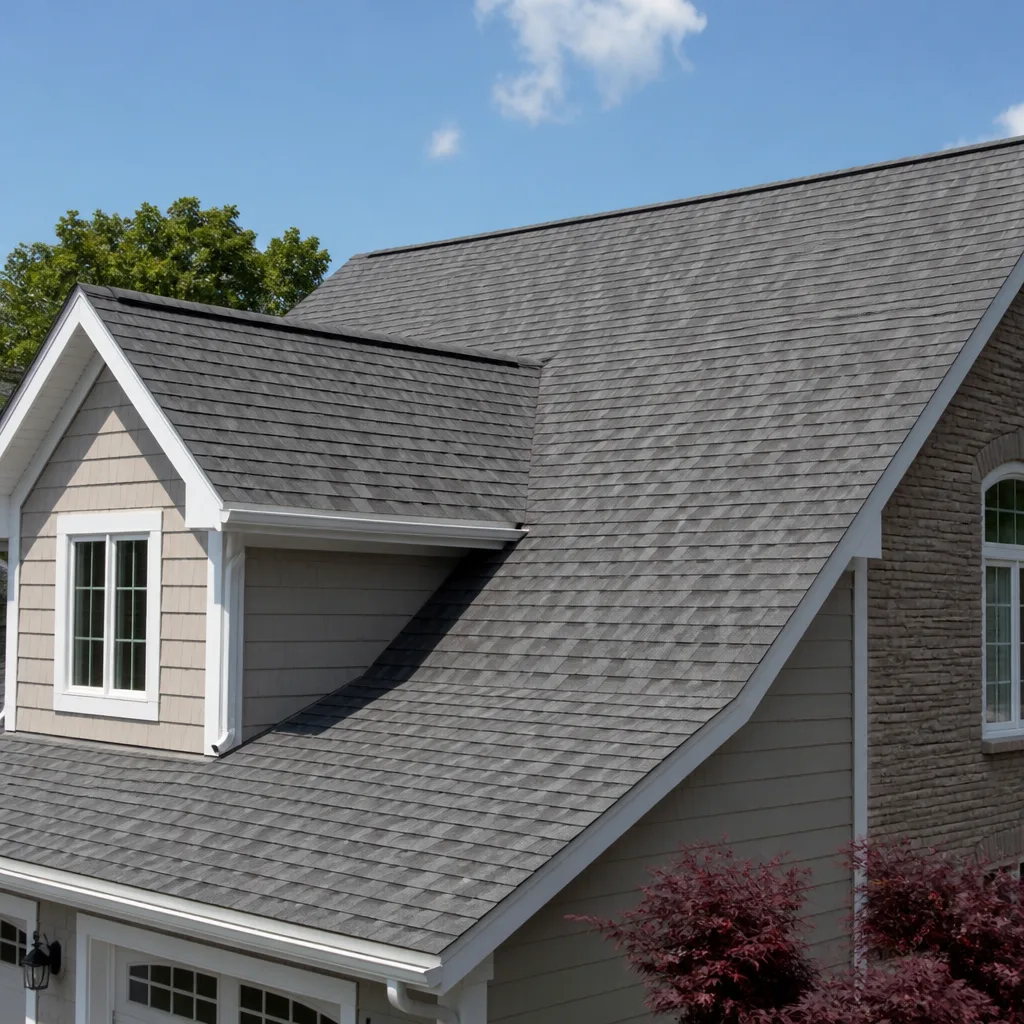 Owens Corning
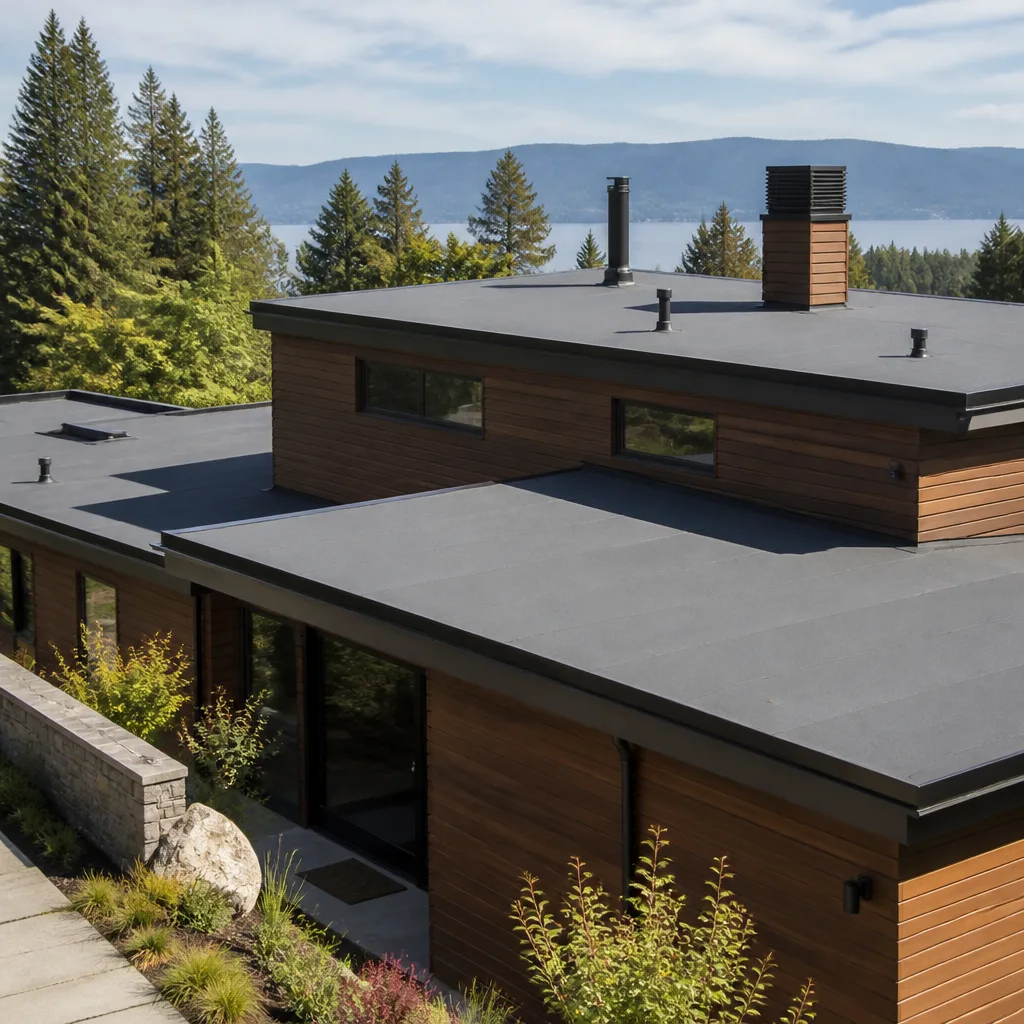 Flat & low-slope
Free roof inspection with deck photos before we talk money - GAF and Owens Corning certified installation
Roofing Cost Breakdown: The Buena Park Homeowner’s Reference for 2026
Two roofing bids for the same Buena Park home can differ by $4,000 and neither contractor is lying. The difference is usually buried in underlayment spec, decking replacement assumptions, and whether the dump fee is itemized or absorbed into labor. This guide decodes each line item so you can compare bids line by line, not just stare at the bottom number. For Roofing Warning Signs: A Buena Park Homeowner’s Reference Guide, see our companion resource. By the end, you’ll know which costs are legitimate, which charges signal markup, and how to ask for exactly what your roof needs without paying for what it doesn’t.
Styles & brands we work with
Quick Answer
A roof replacement in Buena Park typically costs between $8,500 and $28,000 in 2026, depending on roof size, pitch, material choice, and decking condition. Asphalt shingle tear-off and replacement runs roughly $450 to $750 per square (a square is 100 square feet), tile roofs run $900 to $1,600 per square, and flat roofs with modified bitumen run $600 to $950 per square. The single biggest variable is whether the decking underneath needs replacement once the old roof comes off.
Table of Contents
- What Actually Drives Roofing Costs in Buena Park
- Material Pricing: The Real Delta Between Good, Better, and Best
- Asphalt Shingle Roofs: Full Cost Breakdown for 2026
- Tile Roofs: What Buena Park Homeowners Actually Pay
- Flat and Modified Bitumen Roofs: The Overlooked Cost Center
- How to Read a Roofing Bid Line by Line
- Hidden Costs: Permits, Title 24, and Change Orders
- Common Mistakes to Avoid
- When to Call a Professional
- Frequently Asked Questions
- The Bottom Line
What Actually Drives Roofing Costs in Buena Park
Roofing estimates look complicated because they are complicated. But the underlying math is simple: every bid is the sum of materials, labor, disposal, permits, and overhead. What separates an honest bid from a padded one is whether each of those categories is itemized or blurred into one vague number. In Buena Park, we also have specific regional factors that most national cost guides miss entirely: Roofing Permits, Codes & Inspections in CA: What You Need to Know, including seismic code requirements, Title 24 cool-roof standards, and the sheer popularity of clay and concrete tile in this part of Orange County.
Here are the legitimate cost drivers that should show up on any serious bid:
- Roof size and complexity: A simple ranch in the Buena Park downtown grid costs less per square than a two-story home with multiple valleys, dormers, and pitch changes. Valleys and intersections require more cutting, more flashing, and more labor hours.
- Roof pitch: Anything steeper than 6:12 requires safety harnesses, roof jacks, and slower work. A 9:12 roof can add 15-20% to labor versus a walkable 4:12. Flat and low-slope roofs need different materials altogether, which changes the entire cost structure.
- Decking condition: In Buena Park, homes built in the 1950s and 1960s often have 1×6 plank decking that is perfectly serviceable. But homes that went decades with undetected leaks may have rotted plywood that must be replaced. The roof can’t be estimated accurately until the old covering comes off. We always explain this as a conditional line item, not a surprise.
- Number of layers: California building code allows a maximum of two layers of asphalt shingles. If your home already has two, tear-off is mandatory. If it has one, some contractors will quote an overlay, which saves money upfront but shortens the new roof’s lifespan and hides decking problems.
- Chimneys, skylights, and penetrations: Each penetration needs flashing. Chimney flashing alone can add $400 to $900 depending on condition. If a chimney needs repointing or a cricket installed, that is a separate cost most bids will roll into “flashing allowance” without explaining.
- Access and yard constraints: Narrow side yards in older Buena Park neighborhoods make dumpster placement harder. Homes with pools require extra tarps and daily cleanup. These add legitimate labor hours but should be explained as line items, not absorbed into a bloated “general conditions” fee.
When we scope a roof, the goal is to distinguish what the roof genuinely needs from what would be nice to have. That is the foundation of our Roof Inspection in Buena Park service: an honest condition report before any scope of work is proposed.
Material Pricing: The Real Delta Between Good, Better, and Best
Manufacturer tiers confuse homeowners because the marketing names change constantly. Every major brand has an entry-level architectural shingle, a mid-tier laminate, and a premium product with enhanced wind ratings and aesthetics. What actually matters is the price delta and what the extra money buys in Buena Park’s climate, which is mild but subject to Santa Ana winds and occasional heavy rain.
Here is what the tiers actually cost in 2026, based on material pricing for a typical 2,000-square-foot roof (20 squares):
- Entry-level architectural shingles (3-tab is largely phased out): $95-$120 per square. Brands like IKO Marathon and Atlas Pinnacle Pristine sit in this range. These are legitimate products with 25-30 year warranties, but thinner mat construction means slightly less impact resistance.
- Mid-tier architectural/laminate: $130-$165 per square. Owens Corning Duration and IKO Dynasty fall here. Expect 30-40 year warranties, better granule adhesion, and stronger wind ratings. This is the sweet spot for most Buena Park homes, because the incremental cost over entry-level is small but the long-term performance difference is meaningful.
- Premium and designer shingles: $180-$260 per square. Owens Corning Berkshire, Atlas StormMaster Shake, and Tamko Titan XT represent this tier. Wind ratings up to 130-150 mph, heavier shingle weight, and dimensional profiles that mimic shakes or slate. The warranty difference matters: premium lines typically carry lifetime limited warranties versus the 25-30 year terms on entry products.
- Tile (clay or concrete): $300-$600 per square for material alone. Tile is a different conversation altogether, because the material is heavier, requires specialized underlayment, and the labor system is completely different. More on this below.
The warranty difference is worth understanding in plain terms. A mid-tier architectural shingle from a single manufacturer may carry a “lifetime limited” warranty, but the labor coverage drops off after a set number of years unless the roof is installed by a contractor certified by that manufacturer. Premium tiers often include longer labor coverage windows, but only when installed through an authorized installer. Our position is simple: we install products from seven major manufacturers because the right shingle for one house is not the right shingle for the next. We’ll tell you what your roof actually needs, and we’ll match the material to the house, not to the inventory we happen to carry.
Asphalt Shingle Roofs: Full Cost Breakdown for 2026
Most Buena Park homes under 3,000 square feet have asphalt shingle roofs. It is the most common system, and the pricing is the most competitive, which means builders and contractors have been known to quote bare minimums to win jobs. Here is what a full tear-off and replacement should actually cost in the Buena Park market in 2026:
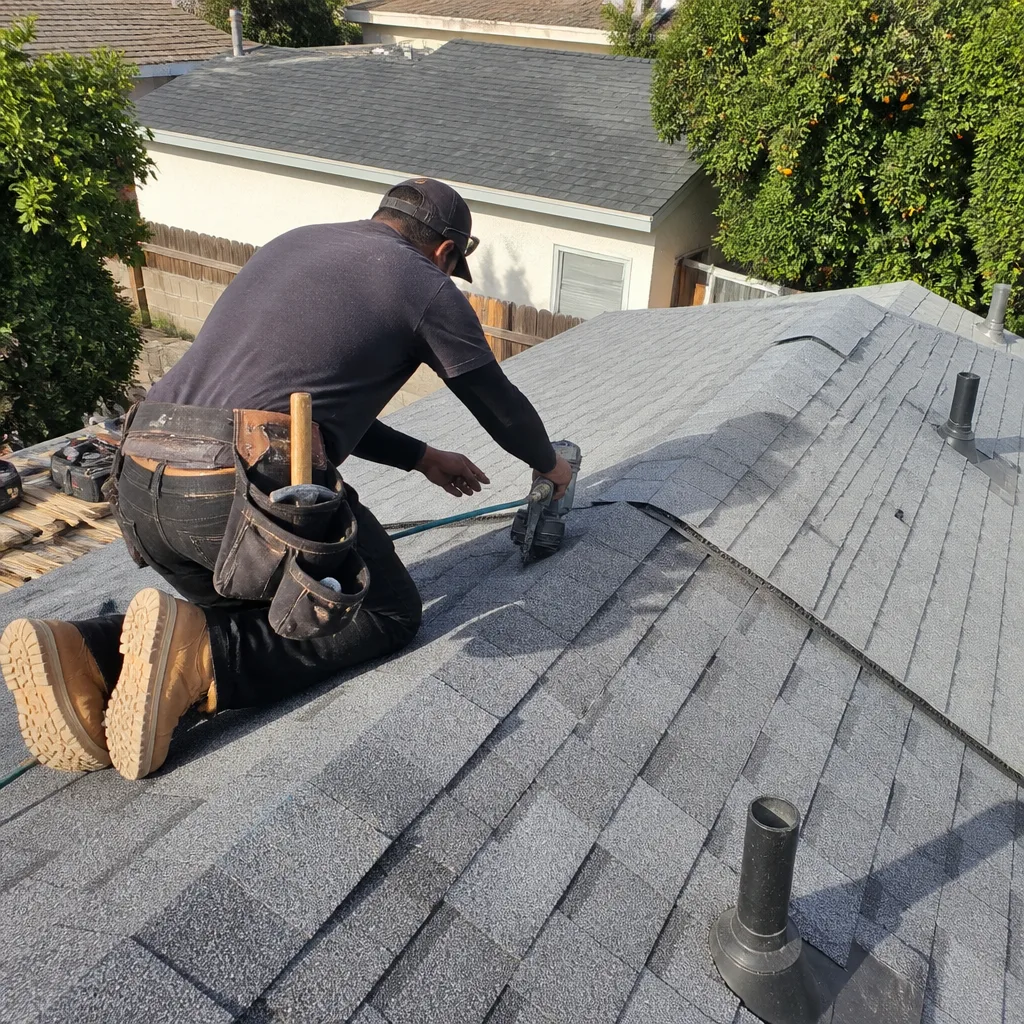
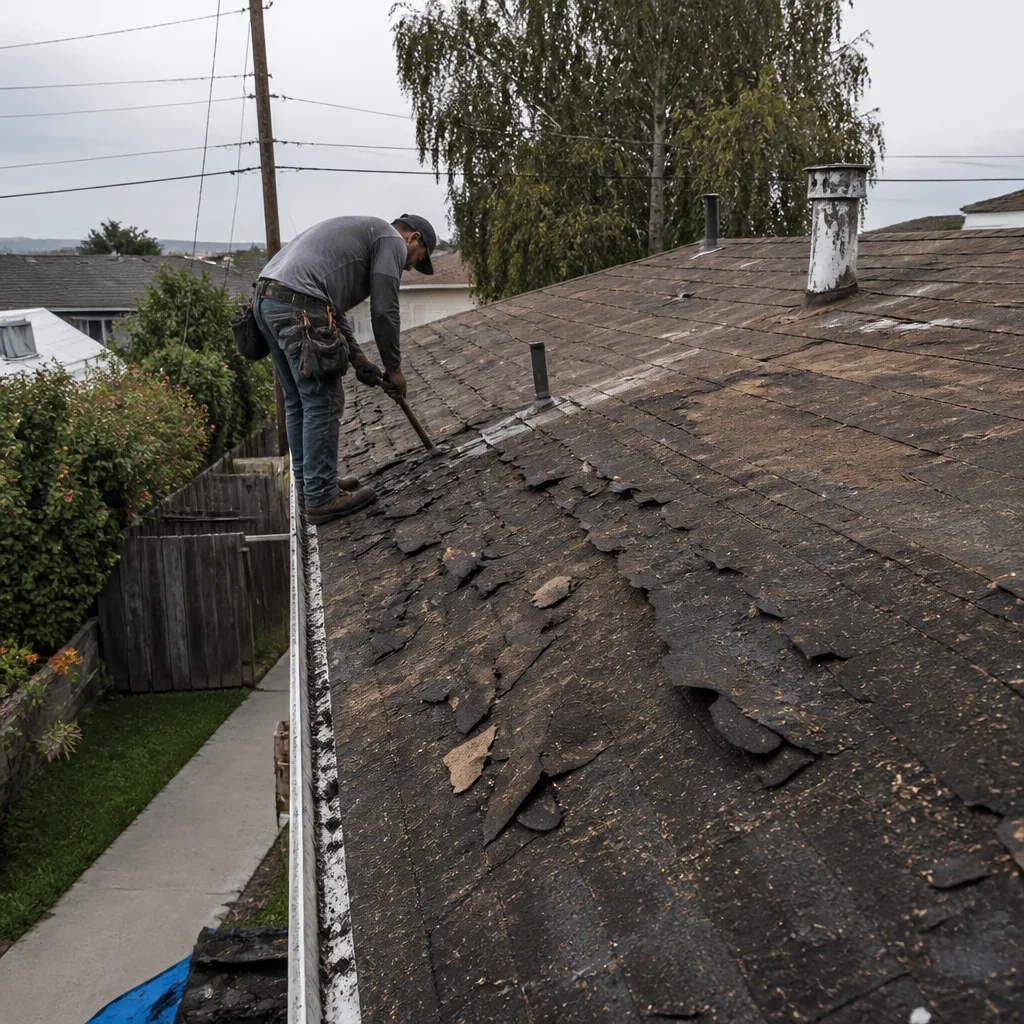
- Tear-off and disposal: $40-$60 per square. This covers removing existing layers, loading into a dumpster, and hauling to an Orange County disposal facility. If your roof has two layers, expect the higher end of that range.
- Underlayment: $25-$45 per square. Standard 30-lb felt is the floor. Synthetic underlayment (like Owens Corning ProArmor) runs $35-$45 per square and provides better tear resistance and water protection. In Buena Park’s dry climate, synthetic is not strictly necessary, but it is the standard we recommend because the cost difference is minor and the durability difference is real.
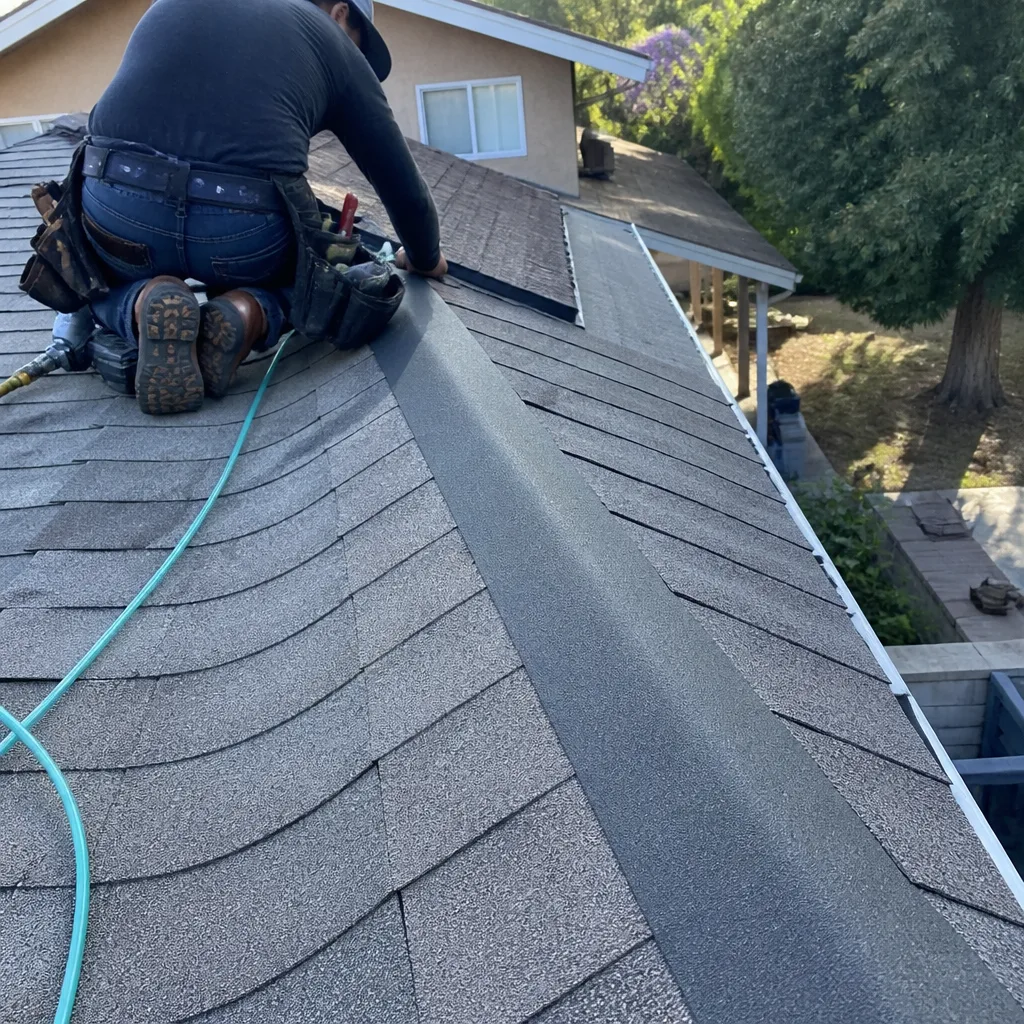
- Labor for shingle installation: $200-$300 per square. This includes nailing pattern, flashing work, ridge cap, and cleanup. Higher labor costs correspond to steeper roofs, complex cut-ups, and homes where access is constrained.
- Flashing and trim: $500-$1,200 total for a typical home. This covers drip edge, step flashing at walls, apron flashing at chimneys, and pipe boots. Cheaper bids often leave this as a vague “flashing as needed” line, which is a red flag.
- Miscellaneous (permit, fasteners, sealants): $300-$600 total. These are real costs, but they should be itemized, not hidden in a lump “project fee.”
For a typical 20-square Buena Park ranch with a walkable pitch and no decking surprises, the full asphalt replacement lands between $9,000 and $14,000. If the decking needs work, add $75-$100 per sheet of plywood replaced. If your home is in the older neighborhoods near Beach Boulevard or Stanton, plan for at least some decking replacement, because those homes have had decades of exposure and may not have been re-roofed in the past 30 years.
We approach every asphalt replacement the same way: inspect first, then scope. The decision point is never “you need a new roof” without evidence. Sometimes a Roof Repair in Buena Park is the honest answer, and the replacement can wait another few years.
Tile Roofs: What Buena Park Homeowners Actually Pay
Buena Park has a lot of Spanish Revival and Mediterranean-style homes, and tile roofs are common in neighborhoods like the ones near Knott’s Berry Farm and along the western edge of the city. Tile costs confuse people because the per-square figures look higher, but the material lasts far longer and the cost structure is different.
Here is the real breakdown for a concrete or clay tile roof:
- Tile material: $300-$500 per square for concrete, $450-$600+ for clay. Clay is more expensive, more fragile during installation, and requires more careful handling. Concrete tile is heavier and more uniform but less aesthetically distinctive.
- Underlayment: $50-$90 per square. Tile roofs require a high-grade underlayment, typically a double layer of 40-lb felt or a self-adhering membrane in valleys and penetrations. This is not the place to save $30.
- Labor: $400-$800 per square. Tile installation is slow, detail-oriented work. Each tile is individually placed, and cuts around hips, valleys, and penetrations require tile saws and experienced installers. This is the largest line item on any tile bid.
- Battens and fasteners: $40-$80 per square. Tile roofs use batten systems, and in Buena Park’s seismic zone, fastening requirements are more demanding. Tile roofs must be anchored to resist uplift and lateral movement.
- Tile lift and reset (repair work): $150-$400 per area, depending on the number of tiles. When only a portion of the roof is damaged, we often recommend a tile lift rather than a full replacement. This is the repair-first approach applied to tile, and it can save homeowners $10,000 or more versus a full replacement.
A full tile roof replacement on a 20-square Buena Park home typically lands between $18,000 and $30,000. The range is wide because tile profile, clay versus concrete, and whether the existing tile can be reused all vary. One thing many homeowners don’t know: if your tile roof is structurally sound and only the underlayment has failed, a tile lift and re-lay is often possible. That means removing the tile, replacing the underlayment, and reinstalling the original tile. The savings versus buying new tile can be substantial.
We carry tile products from manufacturers including Boral, and we match replacement sections to the existing tile profile. If your home has a discontinued Spanish S-tile profile, matching it takes some supplier knowledge. We’ll find the match or tell you honestly if it doesn’t exist.
Flat and Modified Bitumen Roofs: The Overlooked Cost Center
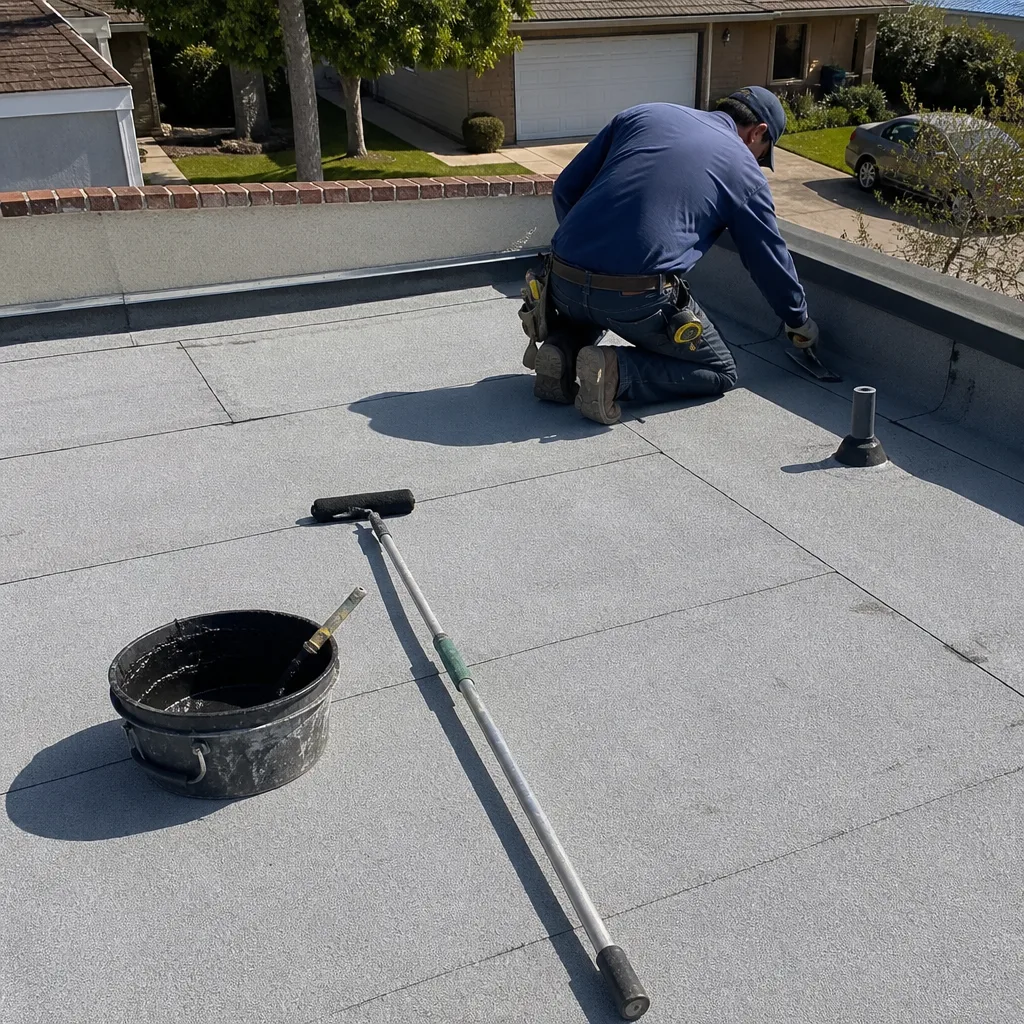
Flat roofs show up in Buena Park on mid-century homes, additions, carports, and patio covers. They are the most misunderstood roof system in residential construction, and the pricing often surprises homeowners who assume flat roofs are cheaper. They are not.
Here is what a modified bitumen flat roof costs in Buena Park in 2026:
- Modified bitumen membrane: $250-$400 per square. This is a rolled asphalt product applied in layers, typically a base sheet and a granulated cap sheet. Brands like GAF and CertainTeed manufacture the leading products in this category.
- Tapered insulation or recover board: $100-$200 per square. Flat roofs need slope to drain. If the existing roof doesn’t have positive drainage, a tapered system may be required. This is a legitimate cost that bad bids omit entirely.
- Labor: $250-$450 per square. Torch-down or cold-applied modified bitumen requires skilled crews. Torch work is dangerous and requires specialized training. This is not handyman territory.
- Flashings, scuppers, and edge metal: $800-$2,000 total. Flat roofs fail at the details: the edges, the drains, the penetrations. Cutting corners here guarantees leaks.
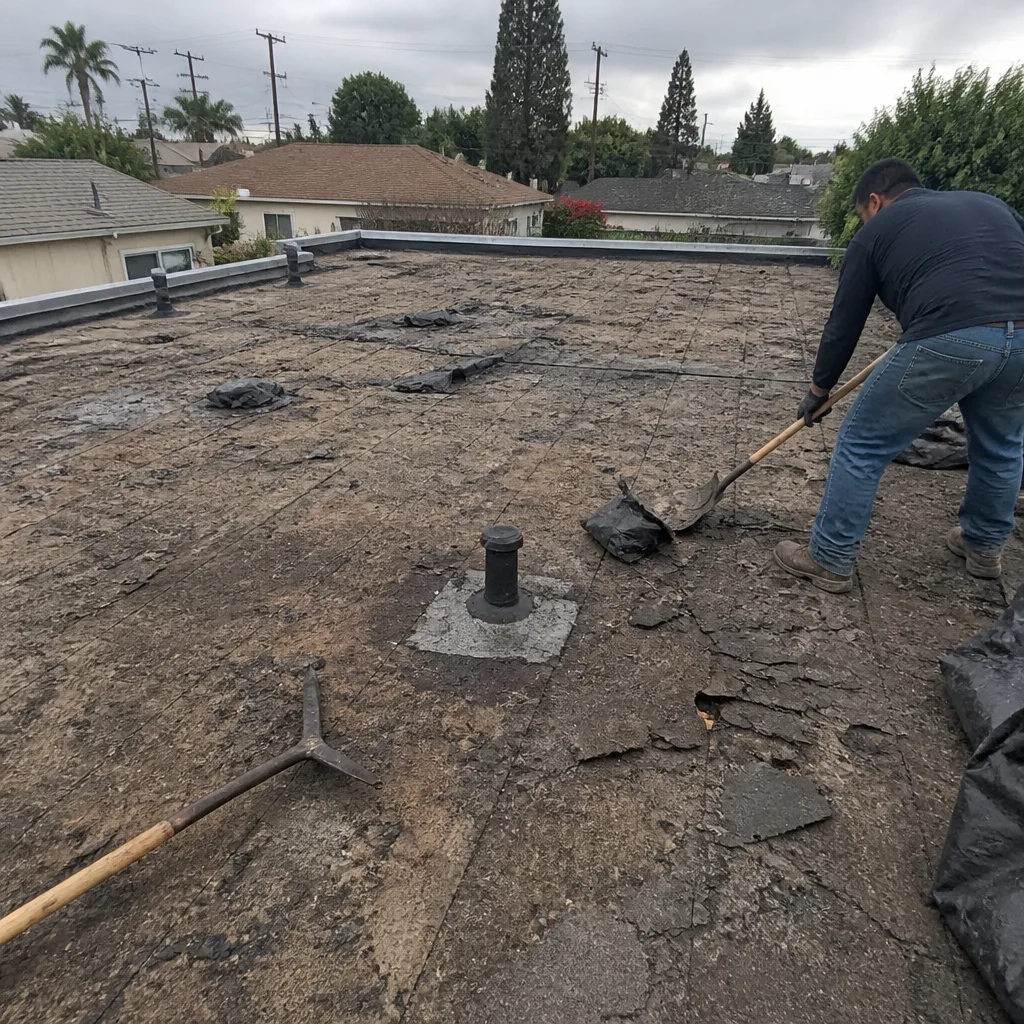
- Recoating and repair (alternative to replacement): $3-$6 per square foot for a full coating system. If the membrane is intact but aging, a silicone or acrylic coating can extend its life by 5-10 years. This is a fraction of replacement cost and often the right answer.
Flat roof work carries specific safety concerns. Torch-applied modified bitumen involves an open flame on your roof deck. We take that seriously, and we recommend that any homeowner considering a torch-down system verify that the contractor is trained and insured specifically for that application. We evaluate every flat roof in Buena Park with the same repair-first standard: if the membrane can be patched or coated effectively, we’ll tell you. If replacement is the only honest option, we’ll show you the evidence.
How to Read a Roofing Bid Line by Line
Most roofing bids are not designed to be compared. They are designed to look similar enough to seem equivalent but different enough to justify whatever price the contractor wants. Here is how to read one critically:
- Look for the tear-off line. If it says “tear-off and disposal included” without a separate disposal figure, the contractor is building the dump fee into labor. That is not necessarily dishonest, but you cannot verify whether the dump fee is $300 or $900. A fair dump fee for a 20-square roof in Orange County runs $350-$600 for the dumpster and haul. If the bid won’t tell you that number, ask.
- Check the underlayment spec. If the bid says “standard felt” without a brand or weight, expect the cheapest 15-lb product. A serious bid will specify “30-lb felt” or “synthetic underlayment” with a product name. The underlayment is your roof’s second line of defense, and the cost difference between cheap and proper is about $25 per square.
- Scrutinize the decking clause. Many contracts say “decking replacement billed at $X per sheet if needed.” That is standard and fair. What is not fair is a bid that assumes decking replacement without having looked at the roof from above. A contractor should be able to tell you whether the decking is likely fine from an attic inspection. If they say “we won’t know until we tear it off” but also price the bid assuming significant replacement, they are baking in contingency without telling you.
- Find the flashing scope. Vague language like “flashing as needed” is not an estimate, it is an open-ended change order waiting to happen. A professional bid will say exactly which flashings are being replaced: “replacement of all pipe boots, step flashing at all wall intersections, and chimney apron.”
- Look for the permit line. Buena Park requires roof permits, and the fee is based on the project valuation. If there is no permit line, the contractor either forgot (unlikely) or plans to add it later as a change order. Which is worse.
We write our estimates with every line item spelled out, because an honest bid is one you can actually verify. That is the whole philosophy behind Roof Replacement in Buena Park done right: you should know exactly what you are paying for before work starts.
Hidden Costs: Permits, Title 24, and Change Orders
The most common way a low bid becomes a high final bill is through omissions. The contractor quotes a number that wins the job, then discovers “unexpected” costs after the old roof comes off. Some of those surprises are legitimate. Many are not.
Here is what Buena Park homeowners should watch for:
- Permit fees: Buena Park building permits for a reroof typically run $300-$600 depending on valuation and project scope. The city also schedules inspections, which means a work stoppage while the inspector reviews nailing patterns, underlayment, and flashing. A contractor who plans to work without permits saves you money now and creates liability later. We pull permits on every replacement.
- Title 24 cool-roof requirements: California’s Title 24 energy code requires that replacement roofs meet minimum solar reflectance standards. Most modern asphalt shingles with granulated surfaces comply, but some dark tile profiles may require specific products. If a contractor quotes a product that does not meet Title 24, the permit will fail inspection and the material cost will change.
- Decking replacement: This is the largest legitimate change order. Rot is often invisible until the old roof covering is removed. The difference between reasonable and predatory is whether the contractor warned you beforehand and priced it as a conditional, or whether the first mention of the extra $4,000 comes after the old roof is in the dumpster.
- Dump fees: Orange County disposal rates have climbed steadily. A contractor absorbing $500 in dump costs and adding it back into “labor overage” is not being transparent. A fair bid itemizes it.
- Re-nailing or upgrading the roof structure: Older Buena Park homes sometimes have spaced sheathing that does not meet current nailing requirements for shingles. If the inspector requires re-nailing or an overlay board, that cost is significant. We check for this during the attic inspection stage, before any tear-off, so the contingency is understood up front.
The contracting practice we find most frustrating is the “bait quote”: a low number that assumes everything goes perfectly, followed by a series of change orders that bring the final price above what an honest contractor quoted in the first place. The way to protect yourself is to ask one question: “What line items in this bid are conditional, and what is the worst-case cost if all of them trigger?” If the contractor cannot or will not answer, walk.
Common Mistakes to Avoid
- Choosing the lowest bid without reading the line items. Roofing is a market where low bids are often written to win the job, not to do the job. If one bid is $4,000 lower than the other two, the difference is somewhere. Find it.
- Signing a contract with vague “as needed” language. “Flashing as needed” and “decking as needed” are not specifications, they are open invoices. Insist on a written scope that names what is included and what is conditional with a per-unit price.
- Skipping the attic inspection. A contractor who quotes a roof without looking in the attic has not actually assessed the decking, the ventilation, or the structural condition. In Buena Park’s older housing stock, attic inspection reveals problems that drive real costs.
- Assuming tile roofs never need work. Tile protects the roof, but the underlayment beneath it ages. Four decades of sun and heat will crack underlayment even if the tile above looks fine. If water is getting in but the tile is intact, the problem is usually below the surface.
- Accepting an overlay to save money without understanding the tradeoff. A second layer of shingles over an existing layer is cheaper and faster, but it means the decking will not be inspected, the weight load increases, and the new roof will not last as long. In most cases, a tear-off is the honest choice.
- Financing a roof without a written specification. Lenders will finance whatever number is in the contract. If the scope is vague, you are financing vagueness. Get the spec in writing before you sign anything.
- Waiting for visible damage before calling anyone. Roof problems are cheapest to fix before they become visible. A stain on the ceiling means water has already traveled through the assembly. A roof inspection can catch failing flashing or cracked underlayment before the leak ever reaches your living space.
When to Call a Professional
Roof work is dangerous, and the dangerous parts are not always obvious. A roof that looks walkable from the ground may have hidden soft spots. Steep pitches, tile roofs with loose pieces, and any torch-applied flat roof system should be handled by trained professionals with the right equipment and insurance. If you have a leak, the time to call is before water reaches the decking, not after. If you have a tile roof with cracked or sliding tiles, a professional can assess whether the underlying underlayment is still protecting the home. In Buena Park, Buena Park Roof Repair offers free estimates for repairs, replacements, and inspections. Call (866) 282-5070 to schedule a roof inspection and get an honest condition report before committing to any scope of work.
Frequently Asked Questions
A full asphalt shingle roof replacement in Buena Park typically costs between $9,000 and $14,000 for a 20-square home in 2026, while tile roofs run $18,000 to $30,000 and flat roofs run $12,000 to $19,000. The actual number depends on roof pitch, decking condition, and material choice. Call (866) 282-5070 for a free estimate specific to your home.
Asphalt architectural shingles are the most common material on Buena Park homes built since the 1970s, while older Spanish-style homes frequently have clay or concrete tile. Flat modified bitumen appears on mid-century additions, carports, and patio covers. Each material has a different cost structure and lifespan.
The difference is usually in the specifications, not the labor. One contractor may be pricing a full tear-off while another assumes an overlay. One may include synthetic underlayment while the other quotes minimum felt. The decking contingency, flashings, and permit fees are often buried differently. Reading the line items tells you where the money actually goes.
Most roofs can be repaired effectively if the damage is localized and the underlying structure is sound. A full replacement is needed when the underlayment has failed, the decking is compromised in multiple areas, or the shingles have reached the end of their functional life. Buena Park Roof Repair evaluates every roof with a repair-first standard: we will tell you if a repair is the honest answer. Call (866) 282-5070 to schedule an inspection.
Yes, the city of Buena Park requires a building permit for reroofing projects, and the fee is based on project valuation. The permit includes scheduled inspections to verify that the installation meets California building code and Title 24 energy requirements. A contractor who proposes working without permits is cutting a corner that creates liability for the homeowner.
A thorough roof inspection takes 30 to 60 minutes depending on roof size and complexity. Buena Park Roof Repair offers a standalone inspection service with no repair commitment required. You will receive an honest condition report with photos and a written recommendation. Call (866) 282-5070 to schedule one.
The Bottom Line
Roofing costs in Buena Park are driven by material choice, decking condition, roof pitch, and the honesty of the contractor writing the bid. The best defense against overpaying is not finding the lowest number, it is understanding what the numbers mean. Ask for itemized estimates. Demand written specifications. Verify that permits and inspections are included. For more guides & resources, visit our blog. And above all, work with a roofer who will tell you what your roof actually needs, whether that is a patch, a coating, or a full replacement. Buena Park Roof Repair installs products from seven major manufacturers, which means material choice is yours, not ours. If you want a straight answer about your roof, call (866) 282-5070 for a free estimate. We’ll tell you what it actually needs.
Written by the team at Buena Park Roof Repair, serving Buena Park since 2018.
See the difference
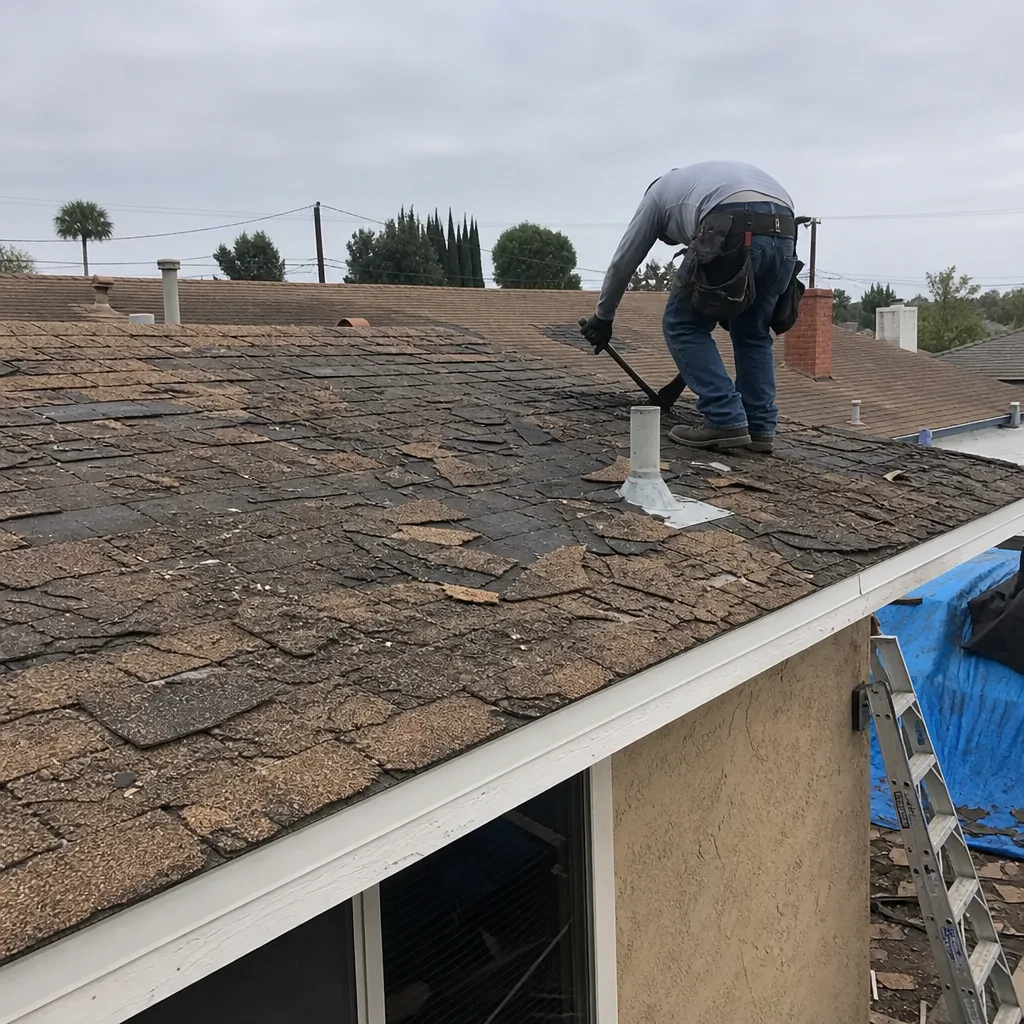 Before
 After
 Before
 After
 Before
 After